The phrase New York halalflation has become a defining issue for the city’s beloved street food scene. Once known for offering quick, affordable meals at unbeatable prices, New York’s iconic halal carts and food vendors are now caught in a perfect storm of rising costs, dwindling foot traffic, and outdated regulations. As Mayor Zohran Mamdani pushes to make the city more affordable, the question on everyone’s mind is whether his promises can truly bring relief to the people who feed New Yorkers every day.
A Veteran Vendor Ready to Walk Away
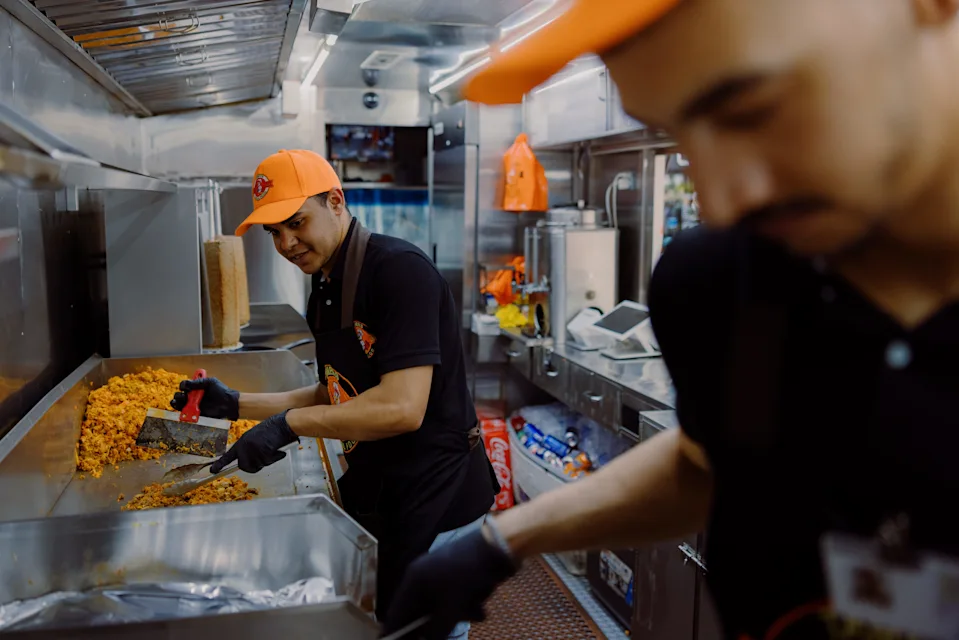
Tamer Hassan, 45, has spent a decade managing four food carts on 49th Street near Times Square. He sells smoothies, hot dogs, and chicken and rice — staples of New York’s bustling street food culture. Although he loves the work, Hassan has decided that he wants out of the business within the next five years. The long hours, harsh weather, and shrinking returns have taken a serious toll.
He explained that two years ago, he could sell hot dogs for three dollars and still earn an 80-cent profit. Today, even with prices raised to five dollars, his profit remains the same. The increase isn’t about boosting earnings — it’s simply keeping pace with rising supply costs. After paying for ingredients, fuel, equipment, insurance, and his staff, Hassan walks away with around 200 dollars per day on a 3,000-dollar gross.
He hopes either to sell the business or convince his 18-year-old engineering student son to take it over.
Mamdani’s Affordability Promise
When Mayor Zohran Mamdani took office, he made affordability the heart of his platform. From housing to childcare to groceries, his administration aims to ease the financial burden on everyday New Yorkers. One of his earliest and most viral campaign slogans, “make halal eight dollars again,” resonated with thousands of residents who had watched the price of their favorite street meal climb to around ten dollars or more.
The promise sounds appealing, but for many vendors, it raises more questions than answers. Many of the issues fueling halalflation are not entirely within the mayor’s control.
A Look at Vendors’ Daily Struggles
Abdelhafeez Aly, 60, has been operating his cart in the Financial District since 1991. His routine begins with a 1:45 a.m. alarm and a long day stocking doughnuts, juice, and pastries. He spends a minimum of 400 dollars each day just to restock supplies.
Aly explained that the costs of essentials such as American cheese, meat, and other basic items have skyrocketed in recent years. Yet, due to fierce competition with surrounding restaurants, he cannot raise his prices freely. On a good day, he earns just ten dollars an hour.
The data backs up these struggles. Food costs across U.S. cities have risen by about 22 percent over the past five years, and the war in Iran has pushed gas prices above four dollars per gallon. Inflation has touched every corner of vendor operations, from coffee and dairy to paper cups and ice.
Congestion Pricing Adds More Pain
New York’s new congestion pricing program is another challenge weighing on vendors. The system, which charges drivers entering central Manhattan, was designed to ease traffic and fund transit improvements. However, for vendors who live in outer boroughs and store their carts there, the daily nine-dollar toll is yet another financial blow.
For workers already operating on slim margins, the toll adds up quickly, eating into already thin profits.
Mamdani’s Street Vendor Reform Package
To address some of these issues, Mamdani introduced his Street Vendor Reform Package. The plan includes the creation of a Division of Street Vendor Assistance within city government, providing direct support to small operators. It also backs legislation allowing carts to be placed two feet from the curb, reducing the chances of vendors receiving fines for non-compliance.
While these reforms are promising, the rollout has been slow, and vendors say tangible relief is still far away.
Tourism and Office Slumps Hurt Sales
Vendors agree that one of the biggest reasons their incomes have declined is the change in foot traffic. The pandemic permanently shifted office culture, with many white-collar workers still working remotely or only commuting a few days a week. Once-reliable lunch crowds in financial and corporate districts have thinned significantly.
International tourism has also dropped, with New York seeing a three percent decline in foreign visitors between spring 2024 and 2026. Combined with locals tightening their budgets, this has created a difficult environment for vendors who depend on consistent sales volume.
Ahemed Hassan, 30, who sells soft pretzels in front of the Museum of Natural History, said it has been one of his slower weeks. He hopes the summer travel season will bring some relief.
The Loyalty Trap
Several vendors said that they cannot simply raise prices to match rising costs. Their regular customers expect food to remain at familiar price points, and even small increases risk losing those repeat sales.
One vendor explained that if his daily regulars saw the price jump from nine or ten dollars to higher, many of them would stop coming back. This creates a tricky balancing act between staying profitable and keeping customers loyal.
The Six-Figure Cost of Starting Out
For Mohamad Mohamad, who runs a cart at Columbus Circle, becoming a vendor came with a hefty price tag. He shared that getting started can easily cost six figures, including the cost of custom carts that range from 16,000 to 50,000 dollars.
While he supported Mamdani during election season, even displaying his portrait on his cart, Mohamad remains skeptical that the mayor can solve every issue. On strong days, he earns 200 dollars, but it rarely covers all of his overhead expenses.
The Permit Crisis
Perhaps the most direct issue the city government can address is the permit system. New York is home to roughly 20,000 food vendors, but a 1979 cap limits the number of available licenses to just 6,880. This shortage forces many vendors to either rent permits from third parties or buy them on a costly secondhand market.
Some vendors told reporters that they pay 15,000 to 20,000 dollars to rent a permit, despite the city only charging 200 dollars for a two-year sales permit and 50 dollars for a vending license.
A Landmark Reform Begins
Relief may finally be on the way. A landmark City Council bill passed in December lifted the decades-old permit cap, requiring New York City to make nearly 17,000 food vendor permits available by 2031, along with around 1,300 specifically reserved for veterans and disabled vendors.
In addition, criminal penalties for unlicensed vending have been repealed, and the Mamdani administration appointed Carina Kaufman-Gutierrez, former Co-director of the Street Vendor Project, to lead the implementation effort starting in March.
Hope and Skepticism in Equal Measure
Despite these reforms, many vendors remain cautious. Bringing back tourists, restoring office foot traffic, and reversing inflation are all challenges that go beyond what local government can directly fix. Vendors continue their daily grind in the hope that better days are ahead, even as they brace for more difficult ones.
For Hassan in Times Square, twelve dollars feels like a fair price for a meal in today’s economy, even if Mamdani’s vision of an eight-dollar plate sounds appealing. He is counting down the days until he can step away from the cart for good.
A Sweet Ending to a Bitter Reality
As one of the conversations wrapped up, Hassan handed over a freshly made strawberry-mango smoothie, refusing payment. It was a simple yet powerful reminder of the warmth and generosity that define New York’s street food culture, even in the toughest of times.
While the New York halalflation challenge is far from over, the resilience of these vendors continues to shine through. Whether through reform, recovery, or sheer determination, they remain at the heart of the city — feeding New Yorkers and visitors alike, one plate at a time.
Author