Midsize cities population growth has emerged as one of the more surprising stories in the latest census data — a pocket of stability in a country whose overall growth has slowed dramatically. While the nation expanded at one of the slowest rates in its history over the past year, midsize U.S. cities largely held their ground, according to new estimates the Census Bureau released Thursday.
A Nation Growing at a Crawl
The new figures track population changes from July 1, 2024, to July 1, 2025, and they reveal a country in a pronounced demographic slowdown.
Over that span, the U.S. population rose by roughly 1.8 million, reaching nearly 342 million by July 1. That amounts to a growth rate of about 0.5 percent — the weakest since 2021, when the Covid-19 pandemic pushed deaths up and migration down.
Two long-running trends are driving the deceleration:
- A sharp drop in immigration, tied to tighter border policies introduced toward the end of the Biden administration and aggressive enforcement under the Trump administration.
- Falling birthrates, with the nation’s fertility rate sinking to a record low.
The Largest Cities Took the Hardest Hit
The slowdown wasn’t felt evenly. The steepest declines in average growth landed on the biggest cities — and Northeastern metros in particular. Among the largest cities, average growth rates dropped by at least half compared with the year before, and some major hubs even recorded small population losses.
The reason comes down largely to immigration. As William Frey, a demographer at the Brookings Institution, put it, the growth slowdown in bigger cities is closely linked to the recent downturn in immigration, because immigrants tend to settle in those cities first. He warned that further declines are likely as immigration continues to be restricted.
The immigration numbers underscore the point. Net immigration added almost 1.3 million people to the U.S. population during the measured period — well below the roughly 2.7 million added the previous year. Should current trends persist, net immigration could fall to around 321,000 for the year ending June 30.
Midsize Cities Found a “Goldilocks Zone”
So how did midsize cities — generally defined as municipalities with populations between about 25,000 and 70,000 — manage to stay steady?
Census Bureau statistician Matt Erickson described their position as a “Goldilocks zone.” In these communities, a blend of domestic and international migration, combined with new housing construction, helped them sidestep both the stagnation hitting small towns and the sluggishness affecting big metropolitan centers.
Fort Mill, S.C., is the standout example. It was the fastest-growing city in the country, expanding its population by 6.8 percent to 38,673 residents — outpacing neighboring Charlotte, N.C., the nation’s 14th-largest city. In other words, the growth was happening not in the major hub, but in the midsize city beside it.
How Small Towns Compared
Small towns — places with 5,000 or fewer residents — saw outcomes that split sharply along regional lines:
- In the Northeast, small towns posted small population declines.
- In the Midwest, they held essentially flat.
- In the South and West, they managed sluggish growth.
A Shifting Map of Winners and Losers
The geographic patterns in the data are striking. New York City, still the nation’s most populous city, lost 12,196 people — the largest numeric decline anywhere in the country, though only a modest share of its total population. Yet some incorporated areas just outside the city, led by Port Chester, N.Y., ranked among the fastest growing.
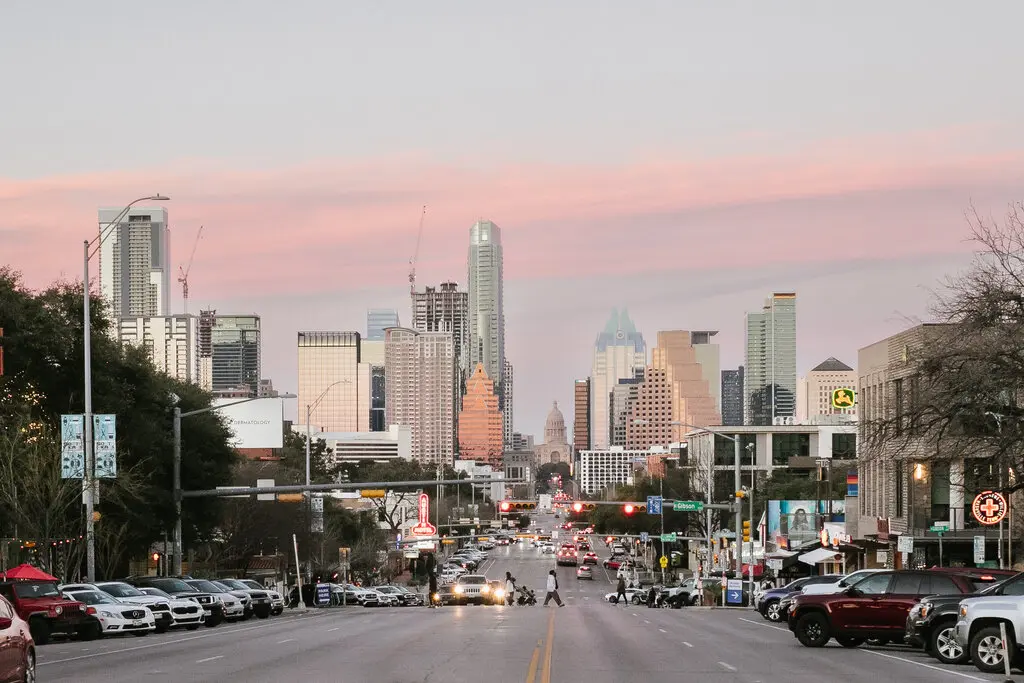
Texas, meanwhile, dominated the growth charts. Among cities with populations above 20,000, the fastest-growing were concentrated in the state — four of them clustered in the Dallas-Fort Worth metroplex and a fifth located outside Houston. The year also brought milestone moments: Austin, Texas, reached one million residents, and Raleigh, N.C., crossed the 500,000 threshold.
Housing Kept Growing Even as People Didn’t
One trend bucked the broader slowdown. While population growth cooled, housing growth carried on.
The total number of housing units climbed to 148.3 million in 2025, up about 1 percent from the prior year — though still short of what housing experts say is needed to close the country’s supply shortage. California added the most housing units, followed by Texas and Florida.
The Bottom Line
The story of midsize cities population growth is really a story about where Americans are landing as the country’s demographic engine slows. With immigration falling and birthrates at record lows, the largest cities — long the natural magnet for new arrivals — are absorbing the brunt of the slowdown. Midsize cities, by contrast, have hit a balance of migration and fresh housing that’s keeping them stable. Paired with steady construction and the gravitational pull of Texas, the latest census numbers suggest America’s growth isn’t simply stalling — it’s quietly relocating.
Author