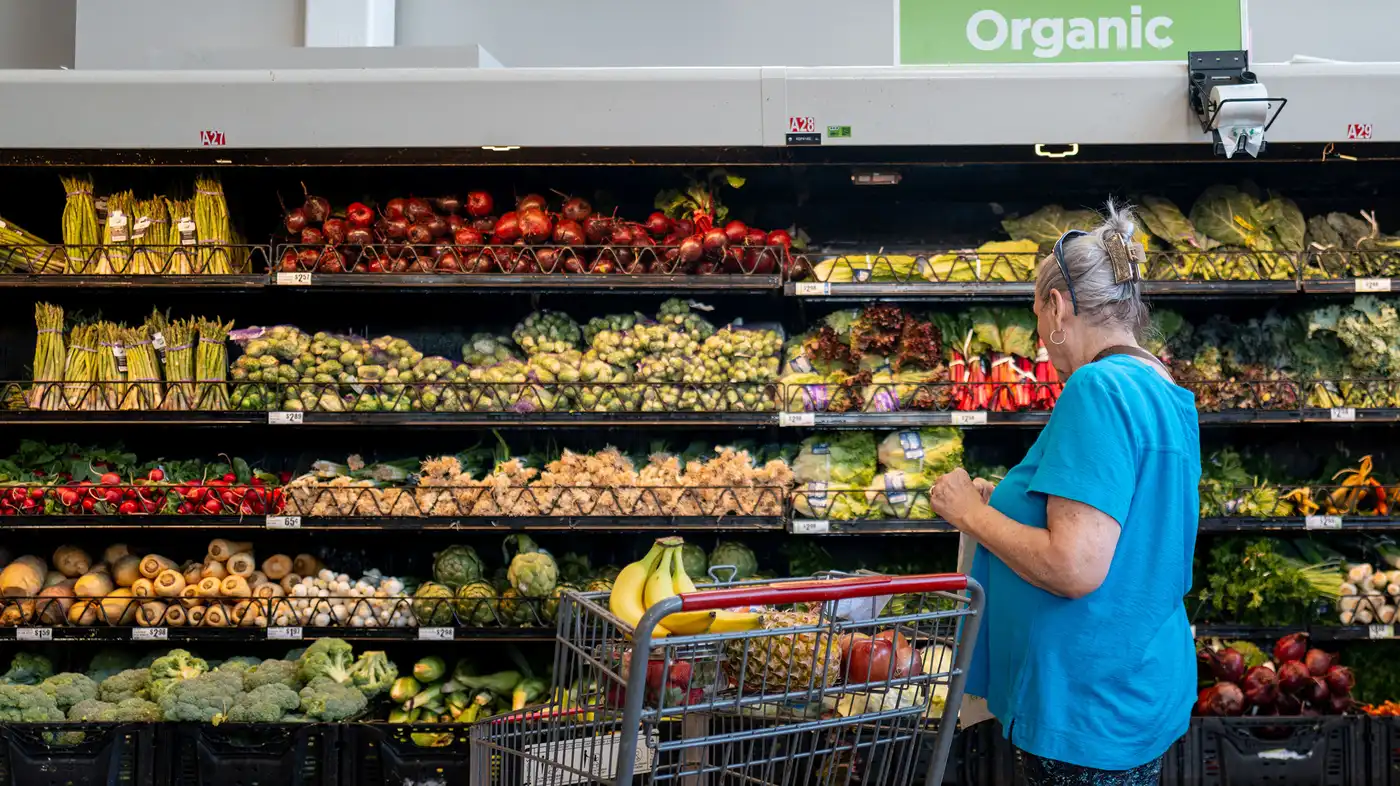
Grocery prices jumped the most in four years last month, and if your weekly shopping trip suddenly felt more expensive, the data confirms you weren’t imagining it. New figures from the Labor Department show food-at-home costs rose sharply in April — and the pressure on household budgets is coming from several directions at once.
The Numbers Behind the Spike
The headline figure is striking. Food-at-home prices rose 0.7% in April, the largest monthly increase since 2022. Over the past 12 months, grocery costs are up 2.9%.
That increase isn’t happening in isolation. Gasoline prices have climbed a staggering 28.4% year-over-year, meaning many Americans are getting squeezed at the pump and the checkout line simultaneously.
As David Ortega, a food economist and professor at Michigan State University, explained, pressure on food prices is currently converging from multiple sources. The key takeaway, he said, is that consumers aren’t facing a single shock — they’re facing several at the same time.
How the Iran War Is Showing Up in Your Cart
One major driver is energy — and specifically, what economists call the “cold chain,” the supply chain for perishable foods.
Refrigerated trucking runs on diesel, and diesel prices are up sharply. According to Ortega, the categories that depend most heavily on that cold chain saw some of the steepest monthly increases. Prepared salads, for example, jumped about 3% in a single month, with fresh produce and dairy also hit hard.
Worryingly, Ortega expects these energy-related impacts from the Middle East conflict to keep building over the coming months. There’s also a longer-term threat: higher fertilizer prices tied to the Iran conflict could push food costs up further, though that effect may not be fully felt until next year.
Category-Specific Problems Pile On
On top of the energy pressures, several individual food categories were already dealing with their own issues:
- Beef prices rose 2.7% in April and remain at record highs. Ortega notes the U.S. cattle herd is at its smallest level in decades, while demand stays unusually strong — partly because of the broader high-protein diet trend. Beef helped drive a 1.3% rise in the meat, poultry, fish, and eggs index.
- Tomatoes have been hit by weather problems in both Mexico and Florida, and Mexican imports also carry a tariff.
- Coffee prices reflect constraints from prior harvests, along with lingering effects from last year’s tariffs on coffee imports.
Notably, not everything went up. Pork prices stayed flat, while poultry and eggs actually fell — a detail that turns out to matter for shoppers looking to save.
Households Are Already Cutting Back
For many Americans, these increases are translating into real sacrifices.
Ed Moore, 79, of Louisville, Kentucky, said prices at his local grocery store have risen considerably over the past year — his latest trip cost $95 for a week’s worth of food for just one person. Retired and on a fixed income, he has stopped buying new clothes, shops for deals, avoids name brands, and earns Kroger points redeemable for gas discounts. But with gas prices so high, he’s not sure how much that discount will even help. Since the Iran war began, he’s cut back from filling his tank twice a month to once.
The strain isn’t limited to fixed-income households, either. Koji Hosokawa, 65, of Norwalk, Connecticut, takes home about $10,000 a month but has still pulled back his spending. He’s shifting investments toward dividend-generating stocks to boost his cash flow while supporting his wife and a recently laid-off son. As he put it, the prices of groceries and gas are beyond his control — so the thing he can control is his income.
That sense of pressure is widespread, especially because price increases are now outpacing wage growth, leaving households with less buffer to absorb these shocks than they had a few years ago.
Smart Swaps Can Make a Real Difference
The good news is that the choices shoppers make can meaningfully change their final bill.
Michael Swanson, chief agricultural economist at the Wells Fargo Agri-Food Institute, points to protein as a prime example. The question of whether you want beef on the table has a big impact at checkout — especially when pork is flat and poultry and eggs are down. The same logic applies in the produce aisle: if you simply leave tomatoes alone for a month or so until the next crop comes in, Swanson says, you can make that cost disappear from your budget entirely.
Four Ways to Save on Your Grocery Bill
Ortega offered several practical strategies for shoppers trying to keep costs down:
- Shop around. Grocery stores are competing hard for your business and running promotions on specific items. Comparing weekly ads and taking advantage of deals can add up to meaningful savings over a month.
- Shift protein sources where you can. Beef has surged, but chicken and pork sit at more affordable price points and have stayed relatively flat or fallen recently. Eggs are also significantly cheaper than a year ago as flocks have rebuilt. Even substituting one or two meals a week can lower your bill.
- Buy produce in season and locally. Seasonal and local produce is less exposed to long-haul transportation costs, making it a smart way to dodge the impact of higher diesel prices.
- Consider store brands and private labels. These typically sell at a much lower price point, and the quality of most staples is comparable to national brands.
The Bottom Line
Grocery prices jumped in April because of a rare pileup of pressures — surging diesel costs rippling through the cold chain, record-high beef prices, weather-hit tomato crops, and lingering tariff effects, all landing at once. With energy-related costs likely to keep climbing and wages failing to keep pace, affordability is now front and center for millions of households. The forces driving prices up are largely out of any shopper’s hands, but the strategies for blunting the impact — smart swaps, seasonal buys, store brands, and a little comparison shopping — are very much within reach
Author