Hantavirus Outbreak Prompts CDC to Monitor 41 People Across the United States
The Hantavirus Outbreak linked to a recent expedition cruise has put health agencies on high alert, with the Centers for Disease Control and Prevention now monitoring 41 people across the United States. While there are no confirmed cases on American soil so far, officials are taking the situation seriously after the virus claimed three lives aboard the ship and spread fear among passengers and crew.
Health authorities both in the US and abroad are working together to track potential exposures, isolate at-risk individuals, and prevent the virus from spreading further. The cautious response reflects how unpredictable hantavirus can be, especially the rare strain involved in this outbreak.
What Happened on the Cruise Ship
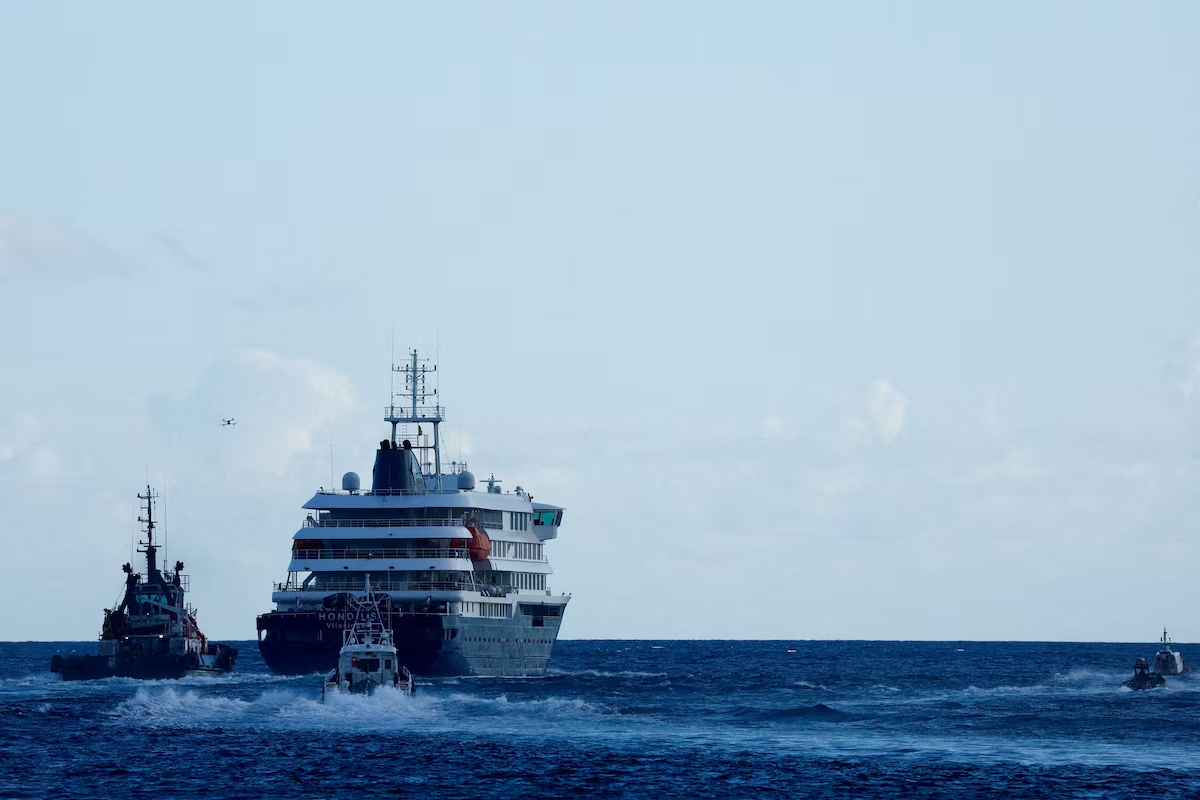
The outbreak originated aboard the expedition vessel Hondius, where a Dutch couple is believed to have been the first to contract the virus during a stop in South America. The husband died on April 11 while still on the ship, and his wife later passed away in Johannesburg on April 26, after disembarking and traveling onward.
A third passenger also died during the incident. According to the World Health Organization, every known confirmed or suspected case has been connected to either passengers or crew members of the Hondius, suggesting the outbreak has stayed contained within that group.
CDC Steps In to Track Potential Exposures
David Fitter, the CDC official leading the US response, confirmed during a Thursday briefing that 41 individuals across the country are now being monitored. He emphasized that none of them have tested positive, but each is being closely watched as a precaution.
The 41 individuals fall into three distinct groups:
- Eighteen passengers recently flown back from the Canary Islands, now being monitored in specialized facilities in Nebraska and Georgia
- Passengers who had already left the ship and returned home before the outbreak became public
- People who may have been exposed during flights involving a known, symptomatic patient
The flight-related exposures trace back to the wife of the first patient, who flew to Johannesburg after leaving the cruise. Anyone seated near her on those flights is being assessed for possible risk.
Voluntary Monitoring Instead of Mandatory Quarantine
In a notable decision, the CDC is not invoking its federal quarantine authority. Instead, individuals are being asked to voluntarily monitor their health and stay in close contact with local and state health departments.
Fitter explained that this collaborative approach reflects respect for passengers who have already endured a stressful experience. The agency continues to support each person on a case-by-case basis, ensuring access to testing and medical care if any symptoms appear.
Those being monitored are urged to:
- Stay home for the entire 42-day monitoring period
- Avoid traveling
- Limit contact with others
- Watch for symptoms and report them quickly
Most people in the monitoring program are categorized as high-risk exposures, which makes strict self-monitoring even more important.
Understanding the Andes Virus Connection
The strain at the center of this outbreak is believed to be the Andes virus, the only known type of hantavirus that can spread from person to person. This makes the situation more concerning than typical hantavirus cases, which usually spread only through contact with infected rodents or their droppings.
To accurately assess risk, the CDC has created a detailed questionnaire designed to identify possible exposures. Investigators are asking individuals whether they engaged in any close-contact activities with a confirmed or possible Andes virus patient after that person became sick.
High-Risk vs. Low-Risk Contacts
The CDC has divided known contacts into two main categories to help prioritize monitoring and care.
High-risk contacts include:
- Anyone who was aboard the Hondius from April 6, when the first patient began showing symptoms, until passengers from the affected group left the ship
- Anyone who answered “yes” to any item on the CDC’s exposure questionnaire
- Anyone who was seated within two seats in any direction of a sick person on a flight
Low-risk contacts include:
- Anyone who answered “no” to every question on the questionnaire
- Anyone who was on a flight with a sick person but was seated more than two seats away
What the CDC Questionnaire Covers
The CDC’s questionnaire focuses on the types of close interactions that could lead to virus transmission. Some of the activities investigators ask about include:
- Kissing, hugging, or providing direct care
- Sharing a bed, towels, or sleeping in the same room
- Sharing a bathroom or cleaning shared spaces
- Sexual contact
- Sharing utensils, food, drinks, or toothbrushes
- Using the same cigarette, hookah, or vaping device
- Coming into contact with body fluids such as saliva, blood, sweat, or respiratory droplets
- Being within six feet of an infected person in an enclosed space for at least 15 cumulative minutes
A CDC official noted at a Nebraska news conference that the six-foot distance is a general guideline based on previous patterns of how hantavirus has spread.
What Comes Next
For now, the focus remains on careful monitoring, fast testing, and strong coordination between federal, state, and local health agencies. The CDC has stressed that everyone being watched is considered a partner in protecting public health, not a patient being punished or restricted unnecessarily.
While the Hantavirus Outbreak has shaken those connected to the Hondius cruise, the cautious and transparent response from health agencies offers reassurance. If no new symptoms emerge within the 42-day monitoring window, the situation could quietly fade out without further spread. Until then, vigilance remains the top priority for everyone involved.
Author