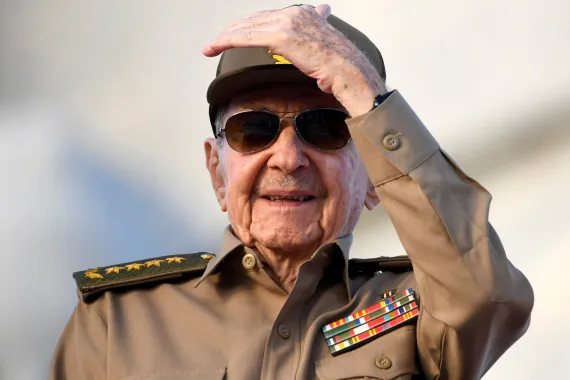
The Raúl Castro indictment, unsealed this week in a Miami federal courtroom, has reopened one of the most painful chapters in the long and bitter history between the United States and Cuba. Federal prosecutors in Florida have formally charged the 94-year-old former Cuban leader, along with five others, in connection with the 1996 downing of two civilian aircraft operated by the exile group Brothers to the Rescue. Four people died in that incident nearly three decades ago, and for their families, this moment has been a long time coming.
Charges That Reach the Top of Cuba’s Power Structure
Raúl Castro, the younger brother of Fidel Castro, has been one of the most influential figures in Cuban politics for more than half a century. He served as the country’s president from 2008 to 2018 and led the Communist Party of Cuba until 2021. At the time of the shootdown, however, he was Cuba’s defense minister, putting him directly in command of the armed forces.
The indictment, handed down on April 23 and unsealed publicly later, lists serious charges against him, including conspiracy to kill U.S. nationals, four counts of murder, and two counts of destroying aircraft. Prosecutors argue that Castro personally authorized military commanders to take “decisive and deadly action” against the Brothers to the Rescue flights weeks before the planes were shot out of the sky.
What Happened in February 1996
The Brothers to the Rescue group, based in Florida, was known for flying small Cessna aircraft over the Florida Straits to search for Cuban refugees attempting to escape the island by raft. On February 24, 1996, a Cuban MiG-29 fighter jet opened fire on two of those Cessnas, killing three American citizens and one U.S. legal resident.
According to a United Nations aviation investigation, the planes were flying in international airspace when they were destroyed. The report also noted that Cuban authorities never tried to use peaceful methods, such as radio communication, to redirect the aircraft. Cuba has continued to reject these findings, arguing the planes had crossed into its airspace and that the group had violated its sovereignty multiple times before.
A Network of Spies and Hidden Operatives
A striking part of the indictment focuses on how Cuban intelligence operated quietly inside the United States. Prosecutors describe an operation called the Wasp Network, which was tasked with infiltrating Brothers to the Rescue and feeding information back to Havana.
One name that stands out is Juan Pablo Roque, an alleged Cuban double agent who defected to the United States in the early 1990s but suddenly returned to Cuba just one day before the shootdown. The indictment claims Roque deliberately misled the FBI by saying the group would not be flying that weekend. Roque, who passed away last year, always denied being a spy. Several other members of the Wasp Network were convicted in U.S. courts years ago, including its alleged leader, who later returned to Cuba in a 2014 prisoner exchange.
Will Castro Ever Face Trial?
This is the question hanging over the entire case. Cuba does not extradite its citizens to the United States, and Raúl Castro is unlikely to ever appear in a Miami courtroom voluntarily. Acting Attorney General Todd Blanche, however, insisted the case is not symbolic.
He emphasized that the Justice Department fully intends to prosecute and hinted that there are different ways to bring defendants from abroad onto American soil. The recent example of former Venezuelan leader Nicolás Maduro, who was captured by U.S. forces and flown to New York earlier this year, suggests the government is willing to take bold steps when it chooses to.
Cuba Pushes Back
Havana has rejected the indictment as politically motivated. Cuban Foreign Minister Bruno Rodríguez Parrilla called the charges illegitimate, repeating Cuba’s long-standing position that the planes were shot down in self-defense. He also described Brothers to the Rescue as a terrorist organization that had repeatedly violated Cuban airspace and even planned attacks on the country’s infrastructure.
Cuban officials shared declassified FAA documents from 1996 to support their argument that American agencies had been aware tensions could turn deadly long before the planes were brought down.
A New Chapter in U.S.–Cuba Tensions
The timing of the indictment matters. It comes during a period of heightened pressure from the Trump administration, which has threatened tariffs against any country shipping oil to Cuba. The result has been worsening fuel shortages and frequent power outages across the island. Secretary of State Marco Rubio has openly criticized Cuba’s leadership, calling for sweeping political and economic reforms.
At the same time, dialogue has not completely stopped. CIA Director John Ratcliffe recently met with Castro’s grandson, often called “Raulito,” who has emerged as a key contact between the two governments. The U.S. has also offered $100 million in humanitarian assistance.
President Trump has sent mixed signals, talking about negotiation in one breath and a possible “friendly takeover” of Cuba in another. Whether this indictment becomes a turning point or simply another flashpoint in a complicated relationship remains to be seen, but for the families of those killed in 1996, it represents long-awaited recognition that their loved ones have not been forgotten.
Author