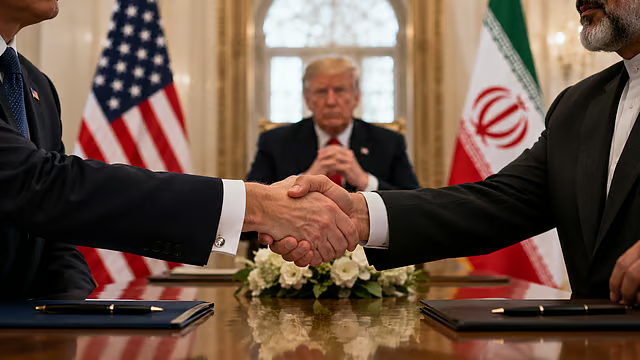
US-Iran Deal Awaits Final Decision as Negotiators Iron Out Last Details
A tentative US-Iran deal is reportedly within reach, but the breakthrough still depends on whether President Donald Trump chooses to put his name on it. According to US Vice President JD Vance, negotiators are close, though a handful of unresolved wording issues continue to stand in the way of a final agreement.
Speaking about the state of talks, Vance described the situation as still “TBD,” signaling that nothing is locked in until Trump personally weighs in. His comments captured the cautious mood surrounding what could become a significant diplomatic development between Washington and Tehran.
What the Proposed Agreement Includes
US officials say the two sides arrived at a preliminary understanding on Thursday. The framework reportedly centers on two major commitments: reopening the strategically vital Strait of Hormuz and launching a fresh round of negotiations focused on Iran’s nuclear activities.
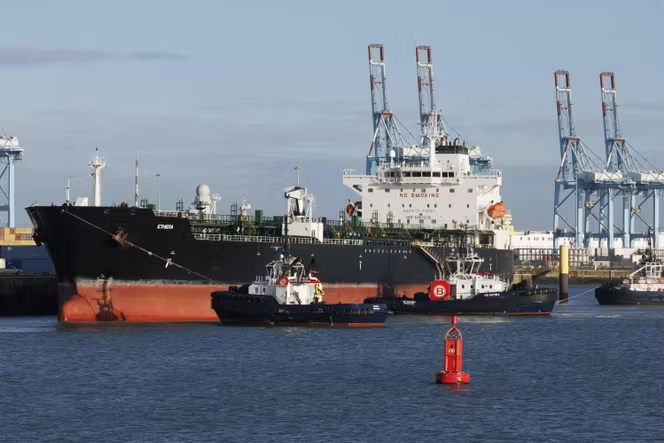
The Strait of Hormuz is one of the world’s most important shipping corridors, and any disruption there ripples through global energy markets. Restoring open passage through the waterway would ease tensions that have rattled international trade and oil prices in recent weeks.
On the nuclear front, sources indicate the tentative arrangement would trigger an additional 60 days of dialogue concerning Tehran’s nuclear program. That window would give both governments time to hammer out terms on an issue that has long divided them.
So far, Iranian officials have stayed quiet, offering no public response to reports of the emerging deal. Their silence leaves room for uncertainty about whether Tehran views the framework the same way Washington does.
Vance: Progress Is Real, but Wording Still Matters
Despite the open questions, Vance struck an optimistic note. He acknowledged that “a couple of language points” remain under discussion but insisted that the broader peace effort is moving forward. In diplomacy, even small differences in phrasing can carry enormous weight, shaping how commitments are interpreted and enforced down the line.
The careful attention to wording suggests both sides understand the stakes. A poorly worded clause could unravel months of effort or leave loopholes that one party might later exploit. For now, negotiators appear committed to getting the details right rather than rushing to announce a finished product.
Tensions Flare Near the Strait of Hormuz
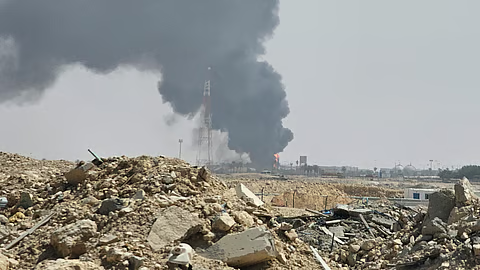
Even as diplomats talk, the situation on the water remains tense. Iran’s Islamic Revolutionary Guard Corps navy reported firing warning shots at four vessels near the Strait of Hormuz. According to a post on a Telegram channel linked to the Guard, the ships were attempting to move through the waterway without prior coordination or proper authorization.
The incident underscores how fragile the moment is. While officials negotiate behind closed doors, military forces on the ground continue to assert control over contested zones. Episodes like this serve as a reminder that a tentative deal does not automatically calm long-standing rivalries.
Satellite Images Reveal Iran Rebuilding Its Missile Stockpile
Adding another layer of complexity, a CNN analysis of recent satellite imagery shows that Iran is rapidly recovering access to a large portion of its missile arsenal. The findings challenge earlier claims by Trump that US-led strikes had effectively destroyed Tehran’s missile capabilities.
During the conflict, joint Israeli and US strikes managed to knock many of Iran’s underground missile complexes out of action. The strategy focused on sealing entry points, which trapped numerous launchers underground and severely limited Iran’s ability to fire missiles.
Now, the imagery tells a different story. Iran appears to be reversing that damage using surprisingly basic equipment. Rather than relying on advanced technology, the country is deploying bulldozers and dump trucks to clear blocked entrances and regain access to its stored weapons.
The contrast is striking:
- A massive coalition of Israeli and US firepower was required to disable the sites.
- Iran is undoing much of that effort with ordinary construction machinery.
This development raises questions about how lasting the military campaign’s effects truly were and whether Tehran’s deterrent capabilities were ever as diminished as some officials suggested.
The Pentagon Defends Its Campaign
Despite the new findings, the Pentagon continues to stand behind the results of its operation. US defense officials maintain that the strikes achieved their intended goals during the war, even as fresh evidence suggests Iran is working quickly to recover.
The differing narratives highlight a broader debate about how to measure success in modern military operations. Destroying infrastructure is one thing; ensuring an adversary cannot rebuild is another challenge entirely.
What Comes Next
For now, the future of the US-Iran deal rests largely in Trump’s hands. Negotiators have done significant work, and the framework appears within reach, but final approval remains pending. The coming days could determine whether the two nations step toward a more stable relationship or fall back into familiar patterns of confrontation.
Several factors will shape the outcome:
- Whether Trump endorses the tentative framework.
- How quickly negotiators resolve the remaining language disputes.
- Whether Iran publicly accepts the terms.
- How incidents near the Strait of Hormuz affect the fragile mood.
If the agreement holds, it could open a 60-day path toward deeper nuclear negotiations and ease pressure on a critical global waterway. If it collapses, the region may once again find itself on edge, with rebuilt missile arsenals and unresolved grievances fueling the next chapter of tension.
Either way, the world will be watching closely as Washington and Tehran navigate one of the most delicate diplomatic moments in recent memory.
Author