Trump Kennedy Center Dispute Erupts After Judge Orders His Name Stripped From Memorial
The Trump Kennedy Center saga took a dramatic turn this week after a federal judge ruled that the president’s name had to come off the famous Washington performing arts complex. Within hours, Donald Trump fired back publicly, declaring he had “no interest” in the institution at all and signaling plans to hand it over to Congress entirely.
What unfolded was a day full of political twists, legal pushback, and a lengthy social media post that caught many observers off guard.
A Long Wait, Then an Unexpected Subject
Earlier in the day, Trump had told the public he was heading into the White House Situation Room to deliver what he described as his “final determination” on whether peace had been reached with Iran. The announcement built anticipation, with many expecting a major foreign policy statement to follow.
Instead, silence stretched on for roughly six and a half hours.
When the president finally resurfaced online, the topic had nothing to do with Iran. He published a sprawling 578-word message centered entirely on his frustration with the judge who ordered his name removed from the Kennedy Center.
Trump Targets the Judge Behind the Ruling
In his statement, Trump first went after the background of the judge himself. He pointed out that US district judge Christopher Cooper had originally been appointed to the federal bench under former president Barack Obama, framing the decision as politically motivated.
A large portion of his anger focused on a separate element of the ruling. The court had also directed the Trump administration to stop its plan to shut down the performing arts venue for a two-year renovation project. Trump pushed back hard against that order.
The 14-Day Deadline to Remove “TRUMP”
The core of the dispute, though, came down to the building’s name.
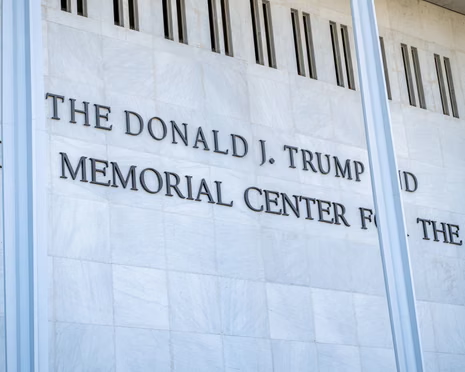
Judge Cooper gave the administration just 14 days to strip the “TRUMP” label from both the Kennedy Center’s physical facade and its official website. According to the ruling, the board members Trump had personally selected overstepped their authority.
Those members had voted unanimously to rebrand the venue as “The Trump Kennedy Center.” The court determined they had no legal right to make that change, meaning the name had to be taken down.
Trump’s Plan: Hand It Over to Congress
After pages of grievances, Trump closed his post with a surprising proposal. Rather than fight to keep control, he announced he wanted to offload the entire institution.
He said he had directed the Department of Commerce to coordinate with Congress on a complete transfer of the Kennedy Center. Under his plan, lawmakers would take on full responsibility for running, maintaining, and managing the venue.
In his own framing, he described the move as transferring what he called a “failing Institution” back to Congress, though the practical details of how such a handover would work remained unclear.
The Kennedy Family Celebrates the Decision
While Trump expressed outrage, members of John F. Kennedy’s family had reason to celebrate.
The court order came down on Friday, which happened to fall on the late president’s birthday. Relatives welcomed the ruling, viewing it as confirmation that adding Trump’s name to the cultural complex had been done improperly and unlawfully. With the two-week deadline now in place, the original Kennedy Center identity is set to be restored.
Other Major Developments From the Day
The Kennedy Center fight wasn’t the only story making headlines. Several other significant developments emerged from the second Trump administration on the same day:
- Possible disruption to the midterm elections. A draft rule from the US Postal Service, expected to be published soon, could create serious complications. The proposal would require states to hand over lists of voters who received mail-in ballots, raising concerns about chaos heading into the upcoming midterms.
- A quiet but consequential vaccine order. With little public attention, Trump signed an executive order on Friday that could reshape children’s health policy. The directive instructs the CDC to reduce the number of recommended childhood vaccines from 17 down to 11, a move likely to spark intense debate among medical experts and parents alike.
- A redrawn map in Louisiana. Republicans in Louisiana approved a new congressional map that would eliminate a majority-Black district. That district had been central to a landmark Supreme Court decision that significantly weakened Section 2 of the Voting Rights Act.
Why the Kennedy Center Story Matters
At first glance, a dispute over a building’s name might seem like a minor political squabble. But the Trump Kennedy Center controversy touches on bigger themes that have defined much of the current era in American politics.
It highlights ongoing tensions between the executive branch and the judiciary, questions about how much authority appointed boards actually hold, and the deeply personal way political branding has become tied to public institutions.
For supporters, Trump’s willingness to walk away and push the venue toward Congress reflects frustration with what he sees as judicial overreach. For critics, the ruling represents an important check on attempts to reshape cultural landmarks for political purposes.
The Bottom Line
The Trump Kennedy Center clash captured the unpredictable rhythm of modern Washington in a single day. A long-awaited foreign policy update never came. Instead, the spotlight shifted to a legal battle over a name, a defiant social media post, and a proposal to hand a national arts institution back to Congress.
Whether the transfer ever materializes remains to be seen. For now, the court has spoken, the clock is ticking on the 14-day deadline, and the Kennedy Center appears headed back to the identity it carried long before the recent rebranding attempt.
Author