Putin’s position on the Ukraine war remains as rigid as ever, but beneath the surface of Russia’s tightly controlled public sphere, subtle signs of a shifting conversation are beginning to emerge. As the war grinds into its fifth year, the question of whether it should end is no longer entirely off-limits, even if discussing it openly still carries clear risks.
A Nation That Refuses to Apologize
If Vladimir Putin’s Russia could be summed up in a single phrase, it might be the defiant attitude on full display in 2026. Foreign Minister Sergei Lavrov once captured it bluntly, saying Russia is what it is and feels no shame in showing it.
A more colorful version came from veteran pop and folk singer Nadezhda Babkina. After receiving an award from Putin, she told a Kremlin audience that Russia would never surrender, crediting the country’s multi-ethnic unity. Anyone who disliked that, she added pointedly, could go and poison themselves.
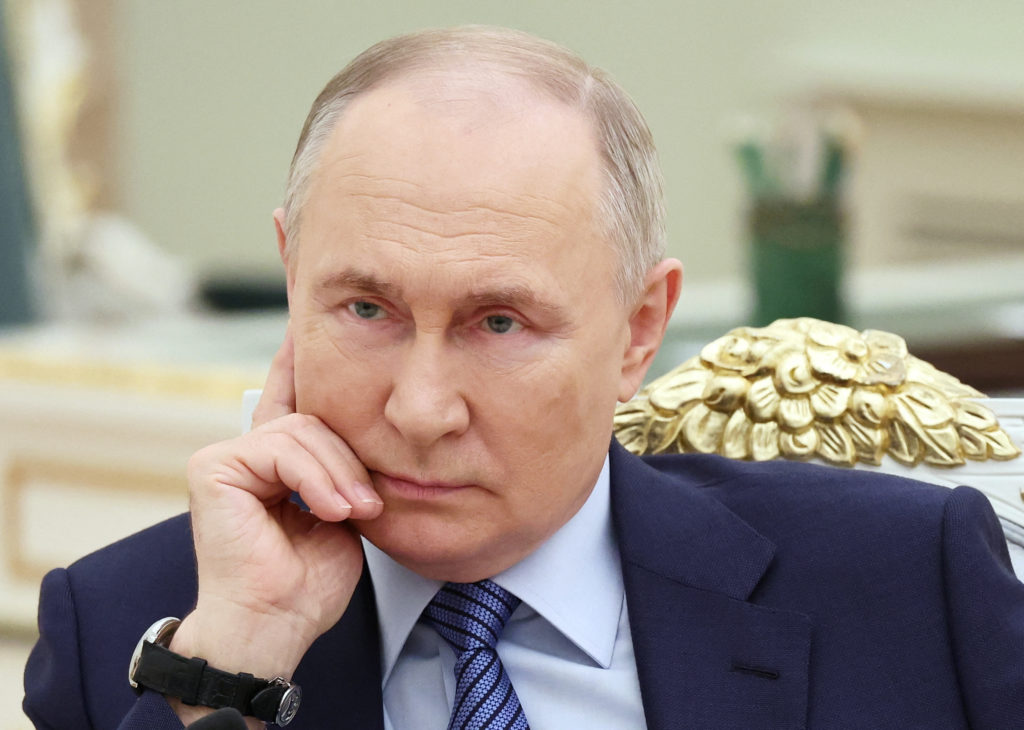
That spirit, unapologetic, unrepentant, and uncompromising, mirrors Putin himself.
Putin’s Unwavering Stance
Since ordering the full-scale invasion of Ukraine, the Kremlin leader has shown no regret, no remorse, and no willingness to halt the fighting. His public position has stayed firmly in place, including his continued demand that Ukraine surrender the entire Donbas region to Russia.
This week, Russia launched yet another massive missile and drone barrage across Ukraine, a stark reminder that Putin’s position on the Ukraine war has not softened.
The timing was notable. The strike came on the eve of the St Petersburg International Economic Forum, an annual event meant to present Russia favorably to the world.
A Forum Without the West
The forum’s diminished standing speaks volumes. High-profile Western investors and politicians stopped attending long ago, though organizers insist delegations from more than 130 countries and territories will still take part.
For a nation hoping to attract foreign investment, more than four years of war hardly makes for an appealing pitch. Yet, true to form, the attacks on Ukraine continued regardless of the gathering.
The Fading “Spirit of Anchorage”
While Putin himself has not changed, one element in the Kremlin’s calculations has, and it centers on Donald Trump.
Last year, Russian officials appeared confident that the U.S. president would help broker a peace deal on Moscow’s terms, pressuring Kyiv into accepting Russia’s maximalist demands. After a U.S.-Russia summit in Anchorage, Alaska, senior officials spoke glowingly for months about the so-called “spirit of Anchorage,” suggesting a mutual understanding favorable to Moscow.
But no peace deal ever materialized. Recently, Putin’s foreign policy aide Yuri Ushakov distanced himself from the phrase entirely, claiming on Russian state TV that he had never used it. The optimism, it seems, has begun to evaporate, likely adding to Putin’s evident frustration.
Mounting Pressures on Russia
That frustration is not without cause. What Putin had envisioned as a swift “special military operation” has become a brutal war of attrition now in its fifth year. The toll has been severe, including:
- Heavy battlefield losses since February 2022
- Significant damage to the Russian economy
- Technological decline under the weight of sanctions
The war has also crept closer to home. Ukrainian drones now strike deep inside Russia, regularly targeting oil refineries and energy infrastructure. A large-scale drone attack on the Moscow region last month exposed vulnerabilities in the capital’s air defenses. Fears of further strikes even forced the annual Victory Day parade on Red Square on May 9 to be scaled back.
Economically, more than four years of conflict and thousands of international sanctions have strained Russia heavily, with a growing budget deficit and a stagnating economy.
Escalation, Not Retreat
The Kremlin’s response to these mounting challenges has not been to pull back. Instead, judging by recent large-scale air raids on Ukrainian cities, Moscow has chosen escalation.
Russia, however, refuses to accept responsibility. It blames Kyiv, framing its strikes as retaliation for a Ukrainian attack on a college dormitory in Starobilsk, in Russian-occupied eastern Ukraine, where official figures say 21 students were killed. Ukraine’s military stated it had struck the headquarters of Russia’s elite Rubicon drone unit in Starobilsk, without confirming whether it was the same building Russia identified.
With both sides entrenched, an end to the fighting appears as distant as ever.
What the Forum Might Reveal
In past years, Putin has used the St Petersburg forum to broadcast his worldview and air grievances against the West. This year, he is again expected to meet chief editors of international news agencies and deliver a keynote address.
Whether he will use the platform to signal any shift on Ukraine remains uncertain, and so far there is little to suggest he will.
Cracks in the Narrative
Yet within Russia, a quiet but notable discourse is taking shape over whether the war should end. Even in the country’s heavily controlled media, hints of doubt have surfaced.
Writing in the journal Russia in Global Affairs, which maintains close ties to the foreign policy establishment, political scientist Vasily Kashin concluded that eliminating what Moscow calls the anti-Russian regime in Ukraine would require fully occupying the entire country for a long period, something he deemed technically impossible for Russia.
Days later, the pro-Kremlin tabloid Moskovsky Komsomolets quoted commentator Alexander Nosovich, who described an expert community split between those wanting to continue the operation and those convinced it is time to stop, warning that the worst outcome was not defeat but an endless military operation.
In the same paper, lawyer Dmitry Krasnov made an even more striking argument, suggesting that throughout Russian history, lost wars and humiliating truces had often paved the way for reform and even future victories.
The Limits of Debate
In a country whose national identity is built around the idea of Russia as a land of victors, seeing such an article in print was remarkable. It appeared to hint that Russia might consider ending the war without achieving its stated goals.
But the boundaries of this discourse quickly became clear. When the author attempted to revisit the article online days later, the page had vanished, replaced by an “Error 404” message and denied access.
A Country at a Crossroads
The picture emerging from Russia in 2026 is one of contradiction. Putin’s position on the Ukraine war stays publicly unyielding, even as the costs mount and quiet doubts surface among commentators and analysts.
The central tensions now defining the moment include:
- A leader determined to press on despite battlefield, economic, and technological setbacks
- The collapse of hopes that Washington would deliver a favorable peace
- Growing vulnerability at home as Ukrainian drones reach deep into Russian territory
- Tentative signs of an internal debate about ending the war, swiftly constrained by censorship
For now, escalation remains the Kremlin’s chosen path. But the faint stirrings of a different conversation, however quickly silenced, suggest that even in a system as controlled as Russia’s, the strain of a prolonged war is becoming harder to fully suppress.
Author