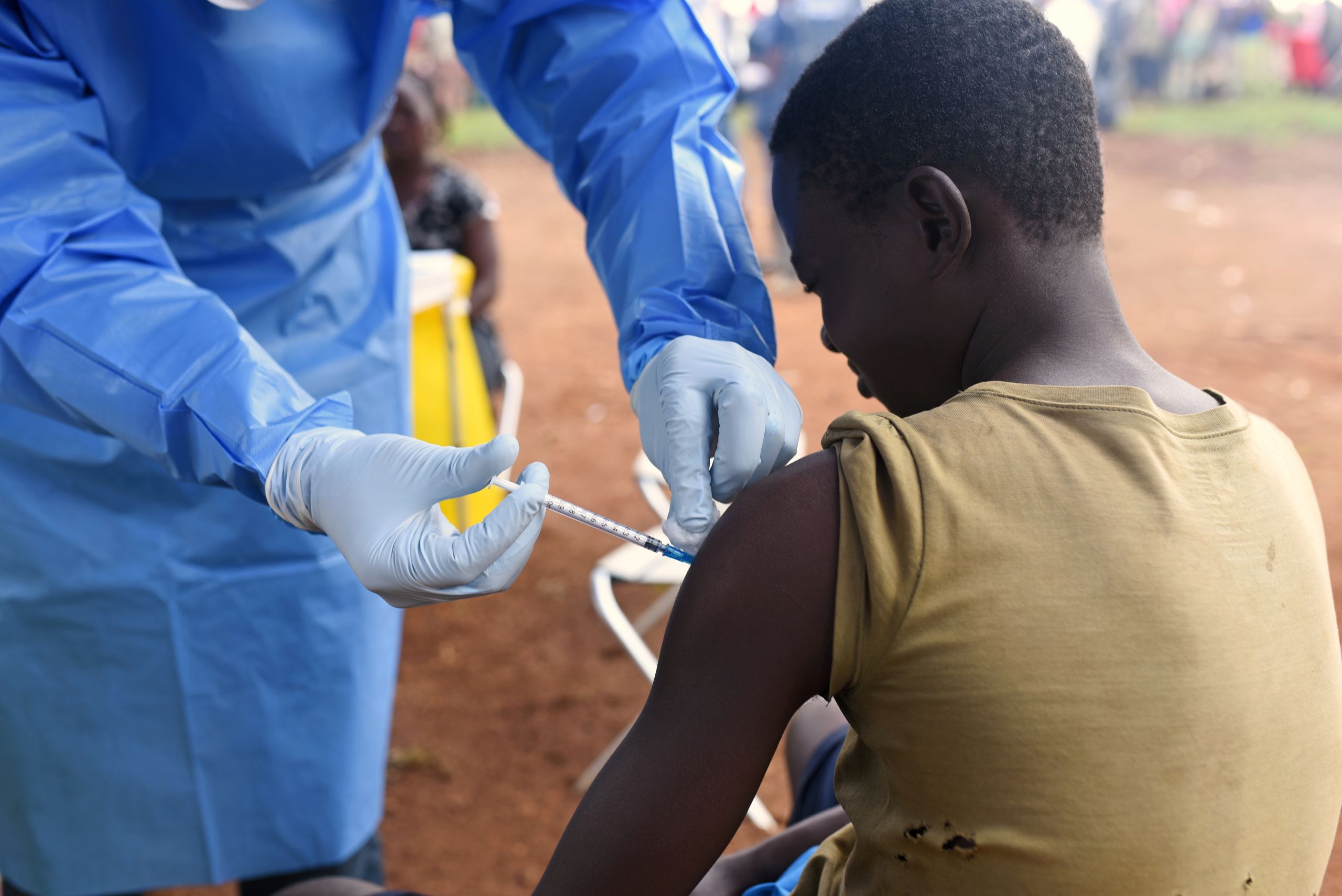
DRC Ebola outbreak continues to worsen nearly a month after it was officially declared, with case numbers steadily rising as health officials struggle to stay ahead of the virus. The situation has grown more complex by the day, drawing in neighbouring countries and igniting international tensions over how the global response is being handled.
The Numbers Keep Climbing
As of Thursday, June 11, the Democratic Republic of the Congo had reported 676 confirmed cases, 136 deaths, and an additional 119 suspected cases. Across the border, Uganda has confirmed 19 cases of its own, along with two deaths.
This outbreak, caused by the Bundibugyo strain of Ebolavirus, has already become the third largest on record. Yet health experts warn that the worst may be far from over. There is growing concern that the virus had been quietly circulating for months before the outbreak was formally declared on May 15, meaning the true scope could be considerably larger than current figures suggest.
The Hunt for Patient Zero
Investigators with the DRC health ministry are now working backward in an effort to trace the very first case, often referred to as patient zero. According to reporting from Reuters, their search has led them to what may have been an early superspreader event dating back to February 4.
The trail points to the funeral of a 44-year-old pastor in Mongbwalu, a remote gold-mining town. The pastor reportedly died of a severe abdominal infection, a condition that could have been an undiagnosed manifestation of Ebola. Crucially, he was never tested for the virus.
The funeral itself appears to have been a turning point. More than 80 people attended, and in the days that followed, many relatives and community members began falling ill. Within just two weeks of the burial, the town recorded nearly 50 deaths, with many victims showing symptoms consistent with Ebola, including fever, vomiting, and bleeding.
A Sobering Forecast From the CDC
As the full picture of the outbreak slowly comes into focus, the US Centers for Disease Control and Prevention released modeling that paints a worrying outlook. The central warning was clear: without swift and forceful public health interventions, particularly contact tracing and case isolation, the outbreak could rival or even surpass the largest Ebola crisis ever recorded.
That benchmark refers to the devastating 2014 to 2016 West Africa outbreak, which ultimately led to more than 28,000 cases and over 11,000 deaths. The comparison underscores just how serious the current situation could become if containment efforts fall short.
The worst-case projections are especially alarming. In one scenario where only 20 percent of Ebola cases are successfully isolated, most simulations predicted more than 20,000 cases and over 4,000 deaths within a span of just three months. The message from these models is that speed and strength of response will determine the outcome.
A Weakened Global Response
Complicating matters is the diminished role of the United States in the response effort. Following the US withdrawal from the World Health Organization and the dismantling of the US Agency for International Development, American contributions have been slower and weaker than in previous outbreaks. The reduced involvement has left a noticeable gap in the overall international response.
This pullback comes at a time when coordinated global action is widely seen as essential to containing a virus that spreads quickly and crosses borders with ease.
Controversial Quarantine Plans
At the centre of the growing international friction is the Trump administration’s isolationist approach, which has involved travel restrictions and border closures. The administration has signalled plans to prevent even US citizens from returning home if they have been exposed to or infected with the virus.
Instead of bringing those individuals back to American soil, the US is attempting to establish a makeshift quarantine facility at a military base in Kenya, a country that currently has no cases of the outbreak. The decision to locate the facility in an unaffected nation has proven deeply contentious.
Outrage and Violence in Kenya
The quarantine plans have triggered intense outrage and violent protests across Kenya. As reported by The New York Times, demonstrators accuse Kenyan officials of yielding to pressure from the Trump administration at the expense of national safety. Their core grievance is that the country is being asked to accept potentially infected Americans whom the United States itself is unwilling to take in.
The anger has been voiced forcefully by medical professionals. The Kenya Medical Practitioners Pharmacists and Dentists Union issued a statement expressing deep disgust at what it described as the government’s apparent willingness to trade national biosecurity and the lives of its citizens for foreign aid.
The unrest has turned tragic. Hundreds of people have gathered to protest in Nanyuki, the town closest to the air base. According to the Kenya Human Rights Commission, at least three protesters have been shot and killed during clashes with police.
Legal Resistance Meets Political Will
The opposition hasn’t been limited to the streets. A Kenyan court temporarily suspended the opening of the quarantine facility, offering a legal check on the plans. Despite that ruling, the Trump administration has continued to push forward, signalling its intent to proceed regardless of the resistance it faces.
What Lies Ahead
The DRC Ebola outbreak now sits at a critical juncture. With case numbers rising, a weakened international response, and mounting political tensions in the region, the path forward remains uncertain. The CDC’s modeling makes clear that decisive action could still alter the trajectory, but the window for effective intervention may be narrowing.
As investigators continue tracing the origins of the virus and communities grapple with both the disease and the controversy surrounding it, the coming weeks will be pivotal. For now, the outbreak stands as a stark reminder of how public health emergencies can quickly become entangled with politics, diplomacy, and the difficult choices that come with confronting a deadly virus.
This is a sensitive and developing health crisis. If you or someone you know is affected by the situation in the region, reaching out to local health authorities or established international health organisations can provide the most accurate and current guidance.
Author