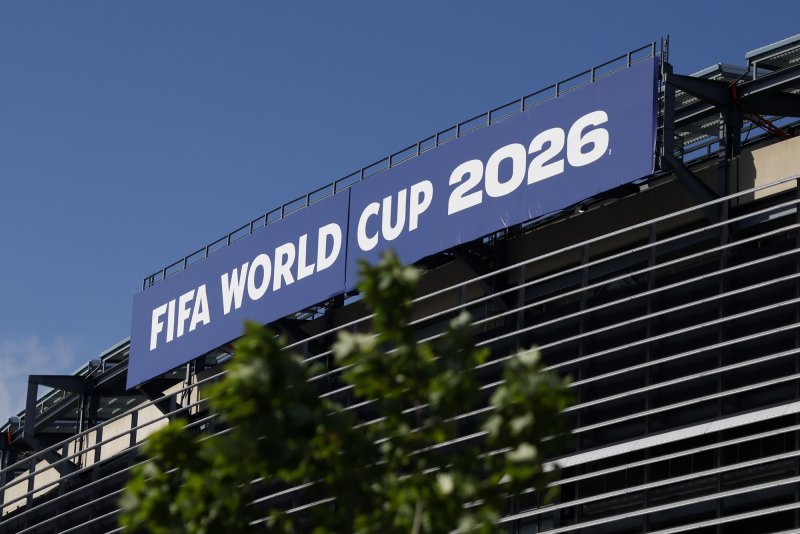
World Cup infectious diseases have become a major focus for public health officials as the 2026 FIFA World Cup kicks off, running through July 19 across the United States, Canada, and Mexico. With millions of fans set to gather in stadiums and city squares, experts are preparing for the reality that large crowds don’t just share excitement, they share pathogens too.
A Tournament on the Radar of Disease Experts
In early April, Krutika Kuppalli, MD, delivered a presentation to Texas doctors outlining the infectious diseases they might encounter during the tournament. As co-director of the Texas Department of State Health Services World Cup Infectious Diseases Consultation Hotline, part of her job is to anticipate which illnesses could surface among players and spectators.
Knowing that Dallas would host the Argentinian team, Kuppalli briefly flagged the Andes hantavirus. At the time, she had no way of knowing it would soon make headlines for sparking a cruise ship outbreak. She explained that while hantavirus was on her list of considerations, it wasn’t among the most common threats she expected. If a patient arrived from a region of Argentina where the virus is known to circulate, she said, it would certainly appear on her diagnostic list, but it wasn’t her primary concern.
Instead, she and hundreds of other public health experts across the country are bracing for far more ordinary illnesses such as flu, COVID-19, chlamydia, and norovirus. With more than 6.5 million fans converging on 16 cities, the opportunities for everyday pathogens to spread are enormous.
Why Measles Tops the Worry List
The tournament features 48 national teams competing in 104 games across 16 cities spread over 11 metro areas. The US host cities include Atlanta, Boston, Dallas, Houston, Kansas City, Los Angeles, Miami, New York/New Jersey, Philadelphia, Seattle, and the San Francisco Bay Area.
Public health teams in these metros have spent months preparing. In Philadelphia, deputy health commissioner James Garrow, MPH, has worked with colleagues for roughly 18 months on readiness and response. In many respects, the work mirrors the department’s routine duties, but with a sharper edge. As Garrow put it, disease surveillance happens every day, but the World Cup changes just how intense that surveillance needs to be.
Among all the threats, one stands out for him. Measles is his department’s top worry, and they have already alerted regional healthcare providers about what symptoms to watch for. The concern is well founded. With recent outbreaks in the United States, declining vaccination rates, and large numbers of people travelling, the odds of a fan with measles sitting in the stands feel higher than ever.
What makes measles especially dangerous in crowded venues is how it lingers. Garrow explained that the virus floats in the air as tiny particles and can remain suspended for up to two hours after an infected person has left a space. In a packed stadium or Fan Festival, that means countless people could pass through a contaminated area long after the original carrier is gone.
The Four Categories of Crowd Diseases
Even in years without dramatic outbreaks, experts know that infectious diseases thrive wherever large numbers of people gather. Amesh Adalja, MD, a senior scholar at the Johns Hopkins Center for Health Security, framed the World Cup as a classic mass gathering event, the kind where so-called crowd diseases naturally spread.
These illnesses generally fall into four broad categories:
- Respiratory ailments, including flu, COVID-19, and RSV
- Sexually transmitted infections, such as gonorrhea and chlamydia
- Vector-borne infections carried by insects, like dengue and chikungunya
- Gastrointestinal illnesses, most notably norovirus
As Kuppalli noted, officials have to consider the entire gamut of possible infections rather than fixating on any single one.
Why Ebola Isn’t the Real Threat
With the ongoing Ebola outbreak in the Democratic Republic of the Congo dominating headlines, many fans have understandably wondered whether it poses a risk at the tournament. According to the experts, the answer is reassuring.
Rebecca Katz, PhD, MPH, director of the Center for Global Health Science and Security, acknowledged that the global health community is watching the Ebola situation with deep concern, but stressed that the threat to the general public in North America remains quite low. The reason lies in how the virus spreads. Ebola requires contact with bodily fluids, which is why it tends to infect healthcare workers and those involved in burial rituals. As Katz bluntly put it, you simply won’t catch Ebola from the person sitting beside you in a stadium.
The Everyday Infections That Will Show Up
Far more likely are the common illnesses that follow crowds everywhere. Respiratory viruses like COVID-19 and RSV are expected, and flu is a particular wildcard. While most Americans aren’t thinking about influenza in summer, it’s flu season in the Southern Hemisphere, meaning teams and fans from that region could arrive carrying it. Bernard Camins, MD, of the Icahn School of Medicine at Mount Sinai, noted that fans could board a plane before feeling sick and land already contagious.
Gastrointestinal illnesses round out the picture. Norovirus has a well-documented history of disrupting major sporting events, and Adalja warned that it can cause substantial outbreaks in mass gathering settings, depending on how closely people interact. Eating outdoors at festivals adds another layer of risk. Camins pointed out that people in public spaces often lack easy access to soap or hand sanitizer, making them more likely to consume contaminated food or transfer germs from surfaces to their mouths.
STIs and the Social Side of the Tournament
For many attendees, the World Cup is a celebration, and that often includes socialising, drinking, and intimacy. Adalja didn’t mince words, stating that gonorrhea and chlamydia will definitely be attending the World Cup. Mass gatherings bring together large numbers of people engaging in all sorts of activities, including multiple sexual encounters.
He added that alcohol and drug use tends to lower inhibitions, which in turn raises the likelihood of contracting a sexually transmitted infection. It’s a predictable but often overlooked dimension of large-scale events.
Keeping an Eye on Insect-Borne Threats
Finally, health officials are monitoring the possibility of arboviruses, which spread through insects like mosquitoes. Katz explained that while mosquitoes carrying dengue and chikungunya do exist in parts of the United States, most cases here have historically been imported. The concern is that with so many visitors arriving from regions actively experiencing these diseases, careful monitoring becomes essential.
The Bottom Line
The conversation around World Cup infectious diseases ultimately comes down to preparation and perspective. The headline-grabbing threats like Ebola and hantavirus are far less likely to affect everyday fans than the familiar culprits of crowded spaces. Measles, flu, norovirus, and STIs represent the real challenges that public health teams are gearing up to manage.
As millions of people pour into host cities to celebrate the world’s biggest sporting event, the experts’ message is clear. Vigilance, smart surveillance, and basic precautions will do far more to keep fans healthy than worrying about the rare and exotic. The diseases of crowds are predictable, and with the right preparation, they can be managed.
If you’re planning to attend, staying current on vaccinations, practising good hand hygiene, and being mindful of personal health choices remain the most effective ways to enjoy the tournament safely.
Author