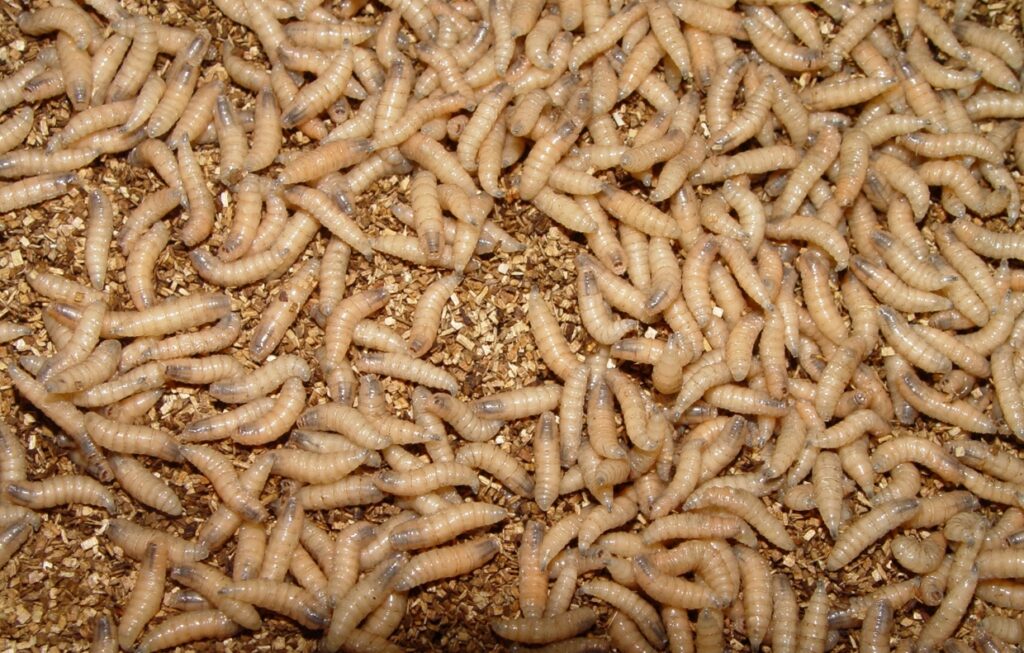
The New World screwworm Texas crisis has put the nation’s cattle industry on edge, as a flesh-eating parasite once eradicated from the United States makes an unwelcome return—six decades after scientists thought they had driven it out for good.
This week, U.S. Agriculture Secretary Brooke Rollins traveled to a Texas ranch where one of the first cases surfaced, watching as sterile flies were released as part of a massive containment effort. But alongside the science, a sharp political fight is already brewing over who’s to blame.
A Pest That Eats Living Flesh
Screwworms are no ordinary nuisance. These flies lay their eggs in the open wounds of warm-blooded animals, and unlike most parasites, their larvae feed on living tissue rather than dead flesh.
During her visit, Rollins pointed to a calf where screwworms had been discovered six days earlier, lodged in the wound where its umbilical cord had once attached. The young animal, she said, had bounced back. “He couldn’t be happier. He’s bouncing around the pasture,” she remarked.
For decades, scientists have relied on a clever biological trick to control the population: releasing sterile flies. Because female screwworms mate only once, a sterile partner means their eggs never hatch—and over time, the population collapses.
A Billion-Dollar Battle Plan
Containing the pest won’t come cheap. The USDA estimates it will spend more than $1 billion to protect cattle herds and other livestock.
The centerpiece of that effort is a roughly $750 million facility designed to produce up to 300 million sterile flies a week. Here’s how the broader response breaks down:
- A new plant to mass-produce sterile flies for release
- Quarantine zones spanning 12 miles around every confirmed case
- Redeployment of USDA staff toward the screwworm fight
- International cooperation to push the pest back toward Panama
The goal is to shield the U.S. cattle industry from devastation. Experts believe that, as long as the situation doesn’t spiral into a full outbreak with large-scale cattle deaths, it shouldn’t immediately drive up near-record beef prices. Importantly, screwworms pose no risk to food safety.
Already Disrupting Trade
The economic ripple effects are already visible. The parasite has badly disrupted Mexico’s beef industry, prompting the U.S. to close its southern ports to Mexican livestock last summer.
Mexico has logged more than 28,000 screwworm cases since the flies reappeared two years ago, mostly concentrated in its southern states. In response, the Mexican government halted nearly all live-animal imports from the U.S. after the pest turned up north of the border. Even Canada has temporarily suspended imports of cattle, horses and other livestock from Texas.
A Mystery Decades in the Making
For 60 years, the U.S. remained almost entirely free of screwworms, after scientists across North and Central America gradually pushed the population down to a containment zone in Panama. Then, in 2023, the flies broke loose and began creeping north again.
Why exactly that happened remains unclear. “I don’t have the answer to that one, and I don’t know if anyone does. It doesn’t help us to speculate,” said Jonathan Cammack, a livestock entomology professor at Oklahoma State University, who stressed that the priority now is ramping up the sterile fly program and securing international help.
Climate change appears to be playing a role. The screwworm thrives in heat and humidity, and warming temperatures are opening up new territory. Lee Haines, a research professor at the University of Notre Dame, noted that the fly’s entire life cycle—from egg to adult—can wrap up in as little as three weeks under tropical conditions. The parasite favors humid areas where temperatures hit at least 77°F, and those conditions are spreading further north each year.
The Blame Game Heats Up
As the science unfolds, so does the politics. Rollins has pinned the parasite’s return on the Biden administration, noting it was in office when the flies began moving north again.
Without offering evidence, she also suggested the flies arrived alongside animals brought by migrants and through illicit cattle trafficking tied to Mexican cartels. “People moving north to America, bringing their livestock with them, the Mexican cartels with the illicit cattle traffic, we knew it was coming,” she told the U.S. Senate Agriculture Committee.
Democrats see things very differently. Nearly a dozen Democratic senators wrote to Rollins questioning whether USDA job cuts have weakened food inspections and livestock safety programs. Their letter pointed to a striking statistic: nearly 20% of U.S. counties that began 2025 with at least one Animal and Plant Health Inspection Service employee ended the year with none.
Rollins countered that she has shifted more than 100 USDA employees into the screwworm response, calling it one of her top priorities since taking the helm.
But Rep. Ted Lieu of California pushed back hard on the finger-pointing. He noted that a screwworm’s life cycle lasts only about 14 to 54 days, while the Trump administration has been in power for over 500. “This is on the Trump administration. They need to own up to it, and they need to apologize,” Lieu said.
For now, experts agree on one thing regardless of politics: the screwworm is here to stay, at least through the summer. With seven cases already confirmed across Texas and New Mexico, the race is on to contain a tiny pest with the potential to inflict billion-dollar damage.
Author