The Rubio Jaishankar Hormuz call laid bare a sharp divergence between Washington and New Delhi, as the two diplomats offered starkly different accounts of the same conversation. While India pressed its furious protest over the killing of three Indian mariners in a US strike, the United States used the moment to reinforce a blunt message: all commercial vessels in the Strait of Hormuz must obey American orders.
Two Versions of One Phone Call
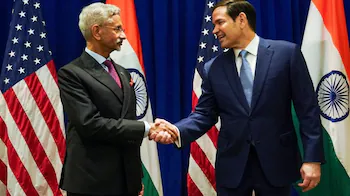
On Friday, US Secretary of State Marco Rubio spoke by phone with India’s External Affairs Minister S Jaishankar. What followed was a revealing split in how each side chose to frame the exchange.
From New Delhi’s perspective, the conversation was about grief and grievance. In a post on X, Jaishankar said he had reiterated India’s strong protest over the attacks by the US Navy in the Gulf that killed three Indian mariners, declaring that such lethal actions against commercial shipping are not justified.
Washington’s readout struck an entirely different tone. According to Tommy Pigott, the principal deputy spokesperson for the State Department, Rubio stressed that all commercial vessels should immediately comply with orders from US forces seeking to uphold peace and security in the strait. He added that the secretary underscored that violations of the US blockade and the illicit transport of Iranian oil would not be tolerated.
The Deadly Strike at the Heart of the Dispute
The protest stems from a fatal incident in the Gulf of Oman, near the Strait of Hormuz. Three Indian-crewed vessels came under attack as Washington carried out strikes, killing three Indian crew members.
The human toll on the targeted ship was significant. Reports identified one of the vessels as a Palau-flagged oil tanker carrying 24 crew members, of whom 21 were rescued. The episode has become a flashpoint in India’s increasingly tense relationship with the United States over the conflict.
India’s Diplomatic Pushback
New Delhi has responded forcefully through official channels. India lodged a strong protest and summoned the most senior American diplomat in the capital, US Charge d’Affaires Jason Meeks, to condemn the killings, telling him the strikes on commercial vessels with Indian crew were unacceptable.
The United States, for its part, defended the action, saying the vessel had been targeted after it failed to comply with instructions issued by American forces. That justification sits at the core of the disagreement: Washington views compliance with its blockade as non-negotiable, while India insists that lethal force against civilian shipping cannot be defended.
Earlier, External Affairs Ministry spokesperson Randhir Jaiswal had called for attacks on merchant vessels carrying Indian crew to cease immediately, urging dialogue and diplomacy to bring an early return to peace in West Asia.
The Blockade and the Closed Strait
The strikes are unfolding within a larger crisis over one of the world’s most vital waterways. The US military has been enforcing a blockade of Iran’s ports in response to Tehran effectively closing the Strait of Hormuz, a passage that accounts for nearly 20% of global oil and gas traffic.
That closure and the resulting blockade have created a dangerous environment for the many commercial ships that transit the region, including those crewed by Indian seafarers, who make up a large share of the global maritime workforce.
A Rising Indian Death Toll
For India, the cost of the conflict has been steadily mounting. The war in West Asia, which began on February 28 with coordinated US-Israeli strikes on Iran, and the subsequent naval blockade of Iranian ports, have placed many Indian lives at risk.
The toll so far is grim:
- At least 13 Indians have been killed since the start of the conflict.
- One Indian is reported to be missing.
- Indian crew members have been caught up in repeated attacks on commercial shipping in the region.
These losses have steadily intensified domestic pressure on the Indian government to push back against Washington, even as the two nations navigate a broader and consequential strategic relationship.
A Fragile Path Toward Peace
The diplomatic friction comes at a delicate moment. The US and Iran remain engaged in discussions over a possible agreement to end the war in West Asia, even as the two sides hold to a fragile ceasefire.
Analysts have warned that Washington’s hardline messaging could prove counterproductive. One American expert cautioned that Rubio’s remarks, with their emphasis on enforcement rather than the Indian deaths, risk further inflaming anti-US sentiment at a sensitive time.
The Bigger Picture
The contrasting accounts of the Rubio-Jaishankar call capture the broader tension running through the crisis. One government is mourning its citizens and demanding accountability; the other is determined to assert control over a strategic chokepoint and enforce its blockade without exception.
As negotiations over the conflict’s end continue, the deaths of Indian mariners stand as a stark reminder of how the standoff in the Strait of Hormuz reaches far beyond the immediate combatants, drawing in nations like India whose people crew the very ships caught in the crossfire. How Washington and New Delhi reconcile these competing positions may prove an important test for both the peace effort and their own relationship.
Author