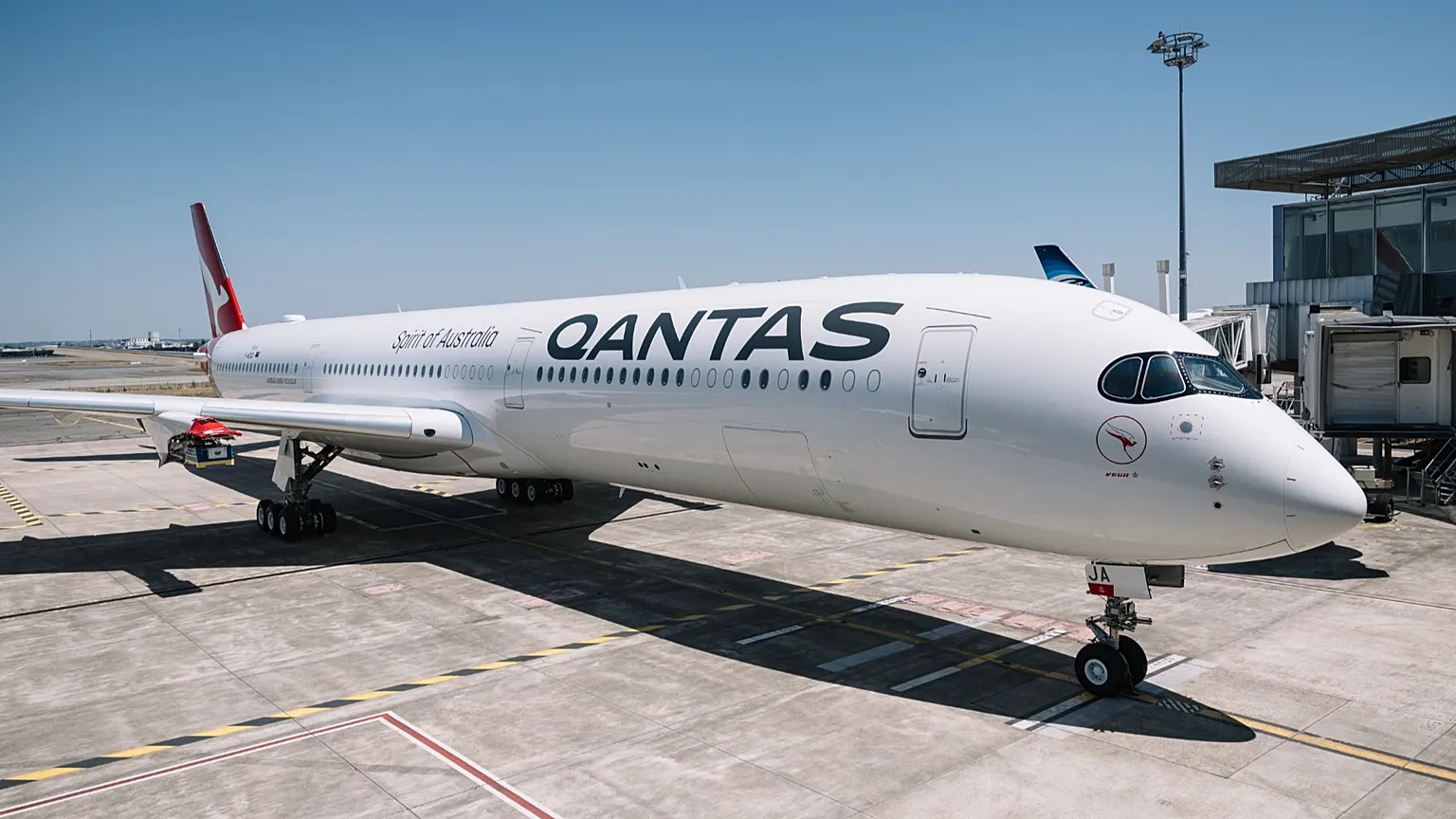
The Qantas London to Sydney nonstop flight is set to make aviation history, promising to become the world’s longest direct air route when it launches next year. The ambitious service will whisk passengers between the two cities on opposite sides of the globe in a single journey lasting up to 22 hours, eliminating the need for any stopover along the way.
A Record-Breaking Journey
Qantas is preparing to redefine what’s possible in long-haul travel.
The Sydney-based airline unveiled the first of its specially modified Airbus A350-1000 jets, which will regularly undertake the staggering 17,015-kilometer (10,573-mile) journey starting in October next year. Depending on conditions, these flights connecting the two distant cities are expected to take between 19 and 22 hours.
It’s a feat that pushes the boundaries of both aircraft engineering and passenger endurance.
Beating the Current Record-Holder
This new route will comfortably surpass the existing champion of ultra-long-haul flying.
At present, the longest regularly scheduled direct flight belongs to Singapore Airlines, connecting its home base to New York City. That route covers 15,349 kilometers (9,537 miles) and is completed in under 19 hours.
However, there’s a key distinction between the two services. Singapore’s Flight SQ24 doesn’t carry any economy passengers at all, catering exclusively to premium travelers. Qantas, by contrast, intends to offer economy seating on its marathon route.
A Carefully Customized Aircraft
To make such an extraordinary journey possible, Qantas had to rethink its aircraft configuration entirely.
While a standard Airbus A350-1000 can carry up to 480 passengers, the customized A350-1000ULR version will accommodate just 238 travelers. Of those, 140 seats will be in economy, colloquially known as “cattle class,” on the London to Sydney route.
This dramatic reduction in capacity wasn’t arbitrary. According to Sharon Petersen, chief executive of the Australia-based website AirlineRatings, the smaller passenger count serves two purposes:
- Enhancing overall passenger comfort on the grueling journey
- Compensating for an additional fuel tank carrying 20,000 liters (5,283 gallons) of fuel
The extra fuel is essential to cover the immense distance without stopping.
Comfort for the Long Haul
Recognizing that 22 hours in the air is no small feat, Qantas has built in features designed to ease the experience.
Petersen noted that economy seats on the London to Sydney route would offer more leg room than most long-haul airlines provide. Beyond seating, passengers will also have access to a dedicated “Wellbeing Zone” located between the economy and premium economy cabins.
In this space, travelers can stretch their limbs, move around, and help themselves to drinks and snacks, a thoughtful addition aimed at combating the discomfort of such an extended flight.
Pushing Past the Current Economy Record
For economy travelers, this route represents a significant leap forward.
Currently, the farthest an economy passenger can fly nonstop anywhere in the world is on another Qantas route, between London and Perth on Australia’s west coast. That journey spans 14,499 kilometers (9,009 miles) and takes between 16 and 18 hours.
Since Sydney sits on Australia’s east coast, the new service extends well beyond that existing benchmark, setting a fresh record for how far economy passengers can travel without touching down.
The Price of Convenience
Such cutting-edge convenience won’t come cheap.
Qantas has confirmed that passengers will pay more for the direct flights than they would for routes that include a stop in Singapore. When tickets go on sale in February, travelers will need to weigh the premium against the benefits.
The main draw is time savings. Qantas says the nonstop service will shave up to four hours off the total travel time compared to flights that make a stopover, an appealing prospect for those eager to reach their destination faster.
Is 22 Hours in Economy Worth It?
Despite the impressive engineering, not everyone is convinced the longest option is the best one for economy flyers.
Petersen offered a candid perspective on the trade-offs. For business class passengers who could potentially sleep for eight hours uninterrupted, she sees the direct flight as a great option. But personally, she would prefer to break up the journey rather than endure 22 hours in economy.
Her reasoning was refreshingly down to earth. She pointed out the very real risks of being seated for nearly a full day next to someone who is unwell and coughing, a baby having an uncomfortable flight, or an oversized passenger needing extra space.
In her view, two shorter flights offer a safer bet. As she put it, if one flight goes badly, you at least get a break before the next, improving your odds of a more pleasant overall experience.
The Business Behind the Flight
The economics of such an extreme route reveal why premium passengers matter so much.
Petersen explained that ultra-long-haul flights like this one depend heavily on premium travelers to turn a profit. Because the flight is so long, the aircraft can’t rely on carrying cargo due to weight constraints.
As a result, the plane becomes passenger-heavy, and specifically reliant on premium passengers, to achieve a healthy profit margin. This dynamic helps explain the reduced overall capacity and the emphasis on comfort for those willing to pay more.
What Comes Next
Qantas isn’t stopping at London to Sydney.
Once this landmark route is firmly established, the airline has its sights set on another ambitious ultra-long-haul service: a direct connection between Sydney and New York. That journey, while still immense, covers a slightly shorter distance of 16,013 kilometers (9,950 miles).
It’s a clear signal that Qantas intends to lead the charge in redefining global connectivity.
The Bottom Line
The Qantas London to Sydney nonstop flight represents a bold milestone in aviation, promising to connect two far-flung cities in a single, record-breaking journey. With specially modified aircraft, thoughtful comfort features, and the allure of significant time savings, it’s an offering that will appeal to many travelers.
Yet the experience won’t suit everyone, particularly those facing 22 hours in economy. As Qantas prepares for its October launch next year, passengers will ultimately have to decide for themselves whether the convenience of flying nonstop outweighs the challenge of spending nearly a full day in the sky. Either way, the airline is firmly cementing its reputation as a pioneer of ultra-long-haul travel.
Author