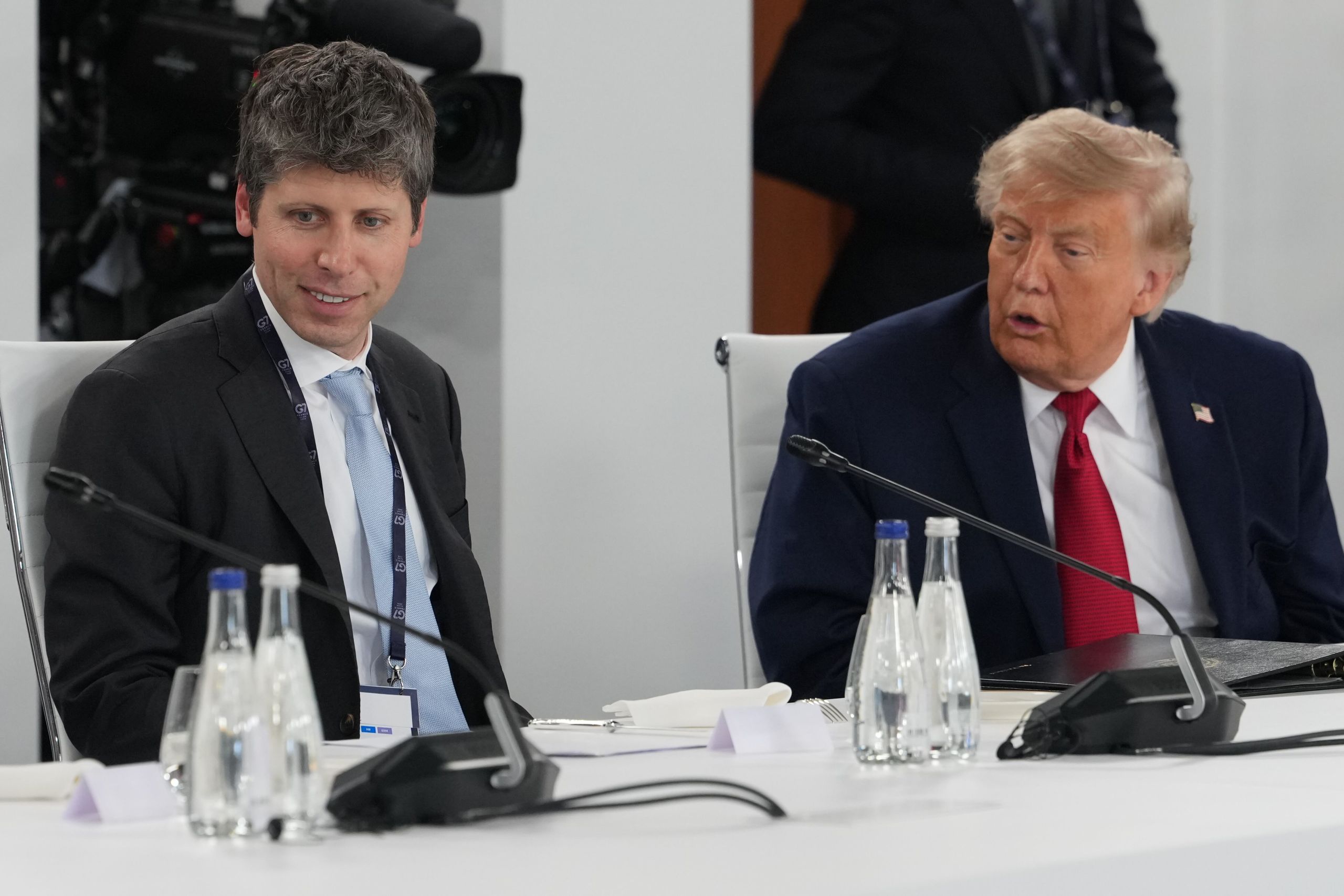
US government AI access vetting has taken a dramatic leap forward as the Trump administration expands its policy of screening which companies can use the most advanced artificial intelligence technology. The move signals a sweeping new chapter in how Washington regulates Silicon Valley, with the government now positioning itself as a gatekeeper to the industry’s most powerful systems.
A Widening Federal Role
The latest developments unfolded rapidly. OpenAI, the maker of ChatGPT, said Friday that the U.S. government would initially approve who gains access to its newest release while the company and the administration work out a longer-term regulatory plan for the sector.
Just hours later, the Commerce Department sent a letter to rival developer Anthropic, informing the company that it could provide its newest model, Mythos 5, only to a restricted list of U.S.-based companies, according to a copy reviewed by The Washington Post.
Together, these actions underscore a striking evolution in American AI policy. President Donald Trump returned to office promising a hands-off approach to the industry and criticized the Biden administration’s efforts to establish safety standards for new AI models. That stance shifted, however, after the emergence of systems capable of finding security vulnerabilities in software alarmed officials in Washington and beyond.
A Rapid Policy Reversal
The speed of the change has drawn sharp commentary. Dean Ball, a former Trump AI adviser who announced last week that he will join OpenAI to work on policy, wrote that in just a matter of weeks, U.S. federal AI policy had gone from implausibly libertarian to increasingly draconian and opaque.
Industry leaders have not welcomed the added oversight. OpenAI chief executive Sam Altman made his discomfort clear, writing that he disliked the idea of the government picking customers, though he expressed confidence that things would eventually reach a better place.
The Standoff With Anthropic
The letter to Anthropic arrived two weeks after the administration barred the company from providing access to its Mythos 5 and Fable 5 models to any non-U.S. citizen, including its own employees, a restriction that led Anthropic to withdraw both models from use.
Anthropic has reportedly negotiated with the government every day since, but had not been able to lift the export ban, according to a person familiar with the discussions. In his letter, Commerce Secretary Howard Lutnick wrote that he had determined appropriate safeguards were in place to permit certain trusted partners to access the Mythos 5 model. Notably, non-U.S. citizens at approved companies can use the technology, and the government retains the right to alter the list of companies at any time.
While the letter did not name the companies on the trusted list, a person familiar with the matter said it included around 100 firms. Anthropic confirmed it had received notice that it could redeploy Mythos 5 to what it described as a small group of cyber defenders and infrastructure providers, and said it was working to restore their access.
Mounting Criticism
The administration’s approach has drawn pointed criticism from both industry figures and politicians. The head of Chamber of Progress, a lobbying group representing tech companies including Apple, Google, and OpenAI, warned that American AI innovation running into what he called Trump’s patronage-and-tribute administration was a troubling combination.
Representative Sam Liccardo of California offered an even sharper assessment, arguing that the administration had positioned itself as an unreviewable gatekeeper of the world’s most powerful technology, with no clear standards for deciding which companies make it through the gate.
OpenAI itself voiced reservations. In a blog post, the company said it did not believe this kind of government access process should become the long-term default, warning that it keeps the best tools away from users, developers, enterprises, cyber defenders, and global partners. Still, OpenAI framed the arrangement as a short-term step it believed offered the strongest path toward broader availability in the coming weeks.
The New Model at the Center
OpenAI described its new model, called Sol, as its most powerful yet, with improvements in coding and cybersecurity tasks. Only government-approved companies will receive access, and there is no process for individual users to obtain it.
According to a White House official, the administration signed off on a list of companies OpenAI requested but excluded a handful of entities located outside the United States. Another official said the government was working with AI labs to develop a long-term strategy for getting the technology to more users.
A Shift From Earlier Promises
The current posture marks a significant departure from the expectations that surrounded Trump’s return to office. His reelection drew vocal support from tech executives and investors who had complained that President Joe Biden was too restrictive of AI development. Big Tech CEOs attended his inauguration, and venture investor David Sacks, a staunch opponent of government limits on tech, was named White House AI and crypto czar.
The administration’s thinking began to change after Anthropic unveiled its Mythos model in April and cautioned that its ability to identify security holes could be dangerous in the wrong hands. Relations between the administration and Anthropic, already strained by the company’s earlier request for limits on military use of its technology, deteriorated further when the Commerce Department imposed export controls on Mythos and Fable.
The intervention with OpenAI, disclosed Friday, marked the first time the administration had extended customer vetting beyond Anthropic. OpenAI had been providing its own cybersecurity-focused model to companies without government oversight for over a month.
Global Ripple Effects
The shift has stirred anxiety abroad, where governments fear their citizens, companies, and agencies could be cut off from top technology. Anthropic had provided some non-U.S. companies and governments with access to Mythos 5 before the export ban, but the recent Commerce Department letter specified that only U.S.-based companies now qualify.
There are limited exceptions. A British Member of Parliament noted that Britain’s AI Security Institute had access to OpenAI’s new model, reportedly the only non-U.S. entity with such access. Concerns about over-reliance on American AI surfaced prominently at the recent Group of Seven summit in France, where the leaders of France and Canada warned about becoming dependent on U.S. companies the White House could restrict. Shortly afterward, Canadian firms Cohere and Bell announced a partnership to build sovereign AI operated from data centers within the country.
A Search for Stability
Despite the disruption, some in the industry hold out hope for a workable system. Umesh Sachdev, CEO of AI software company Uniphore, described the new rules as a brute-force approach but expressed hope that the process would eventually settle into something repeatable, predictable, and well understood.
For now, the administration’s expanding role leaves the future of American AI access uncertain, as developers, lawmakers, and international partners await clarity on the standards that will determine who can use the most powerful technology the industry has produced.
Author