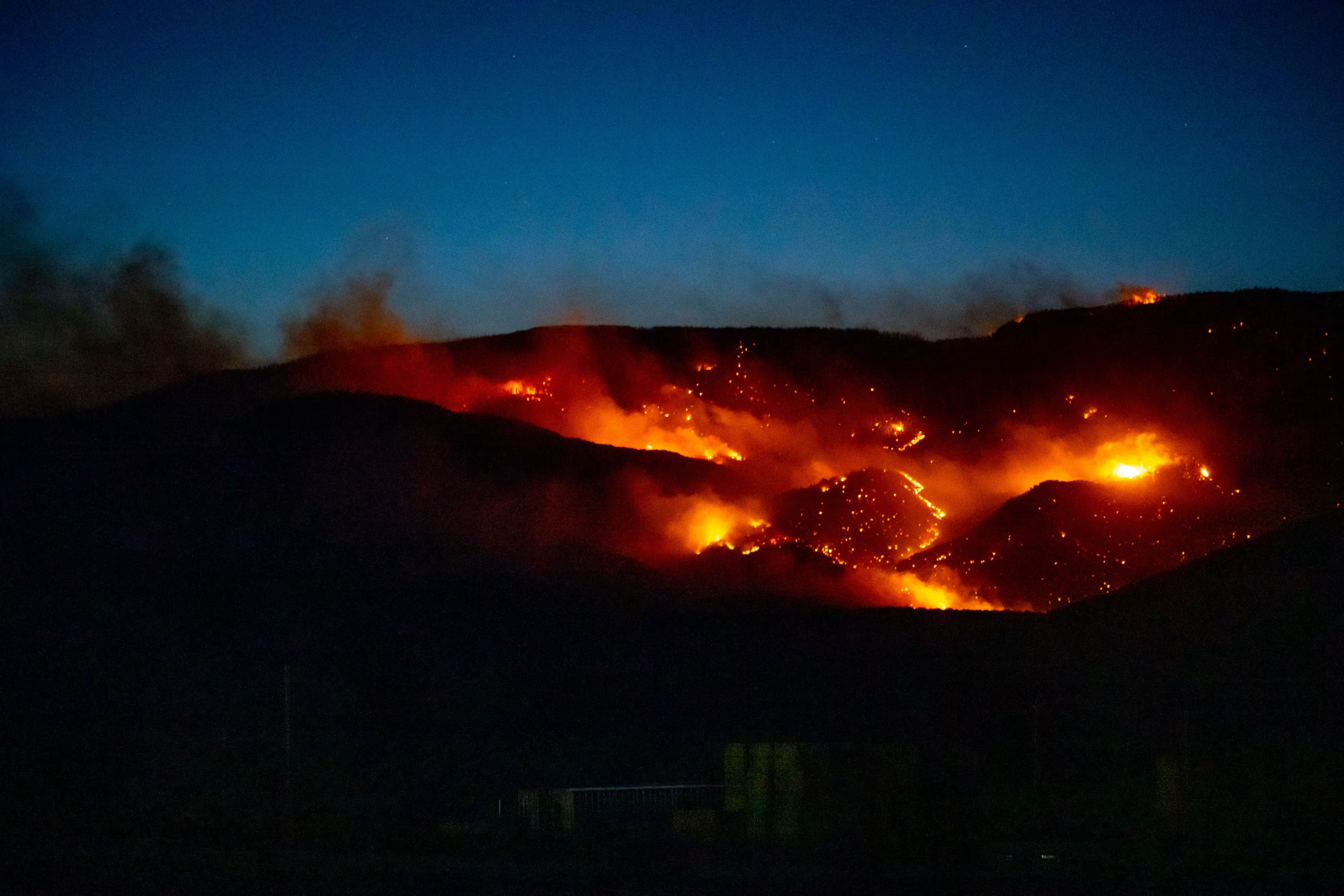
A Utah wildfire of staggering size is testing the limits of firefighters as dangerous weather grips the region. Across the Great Basin and Southwest, crews and residents are steeling themselves for some of the most extreme fire conditions of the year, with little relief expected before the weekend ends.
A Warning Without Precedent
The severity of the situation became clear on Friday when the National Weather Service office in Salt Lake City took an unusual step. For the first time in its history, the office issued a “particularly dangerous situation” red flag warning for parts of Utah. The decision reflected an alarming mix of factors: powerful winds, soaring temperatures, and bone-dry air.
These critical conditions are forecast to linger into Sunday, making an already difficult job even harder. At the center of the crisis is the Cottonwood Fire, currently the largest active blaze in the United States. It continues to spread across a thinly populated stretch of southern Utah, defying efforts to bring it under control.
Battling the Elements
For the crews on the ground, the numbers paint a grim picture. A spokesperson assigned to the fire, Alyssa Mason, described the core problem facing her team. Humidity levels have dropped into the single digits, while wind gusts are reaching roughly 45 miles per hour. On top of that, the moisture content in the surrounding vegetation sits somewhere between 2 and 8 percent, turning the landscape into a tinderbox.
Conditions grew so hazardous on Friday afternoon that incident managers made the call to temporarily withdraw firefighters from the front lines for their own safety. The high winds also forced helicopters and other aircraft to stay grounded, stripping crews of a vital tool. Having scorched an area larger than the city of Salt Lake itself, the fire remains entirely uncontained.
The Drought Behind the Disaster
The fire is unfolding against a backdrop of severe water scarcity. Much of the Intermountain West, including Utah, Nevada, and Colorado, is locked in widespread drought after an unusually dry winter left the region parched.
The warning signs appeared months ago in the mountains:
- Researchers recorded the lowest snow levels ever documented in parts of the Rocky Mountains this past winter.
- Utah’s snowpack, a critical source of the state’s water once it melts, reached its peak roughly three weeks earlier than usual.
- That same snowpack registered as the lowest on record, according to the state’s division of water resources.
With so little moisture stored in the landscape, the conditions for explosive fire growth were essentially set well before the first flames appeared.
A Glimmer of Hope, and a Statewide Response
There may be a brief break ahead. Forecasters with the National Weather Service expect cooler temperatures and rising humidity to move into the region next week, which could offer firefighters a small measure of relief.
Even so, the combination of persistent drought and multiple large fires straining available resources prompted Governor Spencer Cox to act. Last week, he issued an emergency order temporarily limiting fireworks displays through the Fourth of July holiday. Speaking at a press conference, Cox urged residents to heed the warnings of those who spend their lives protecting the state, stressing that this year carries unusual danger and demands attention.
Why Wildfires Are Growing Worse
Human behavior plays an enormous role in the wildfire problem. According to the U.S. Forest Service, the overwhelming majority of wildfires in the country are sparked by people each year. Beyond simply starting these fires, human activity is also fueling the warming climate that makes them larger and more destructive.
The scale of that change is striking. A study published this week in the Proceedings of the National Academy of Sciences found that forest fires now consume ten times more acreage annually than they did back in 1985.
Not All Fire Is the Enemy
It’s worth remembering that wildfire isn’t inherently harmful. Fire is a natural force, and many American forests and ecosystems actually depend on low to moderate blazes to clear away undergrowth and encourage new growth. In the right conditions, these fires play a restorative role.
The trouble lies in how the landscape has changed. A century of aggressive fire suppression has left many forests dangerously overgrown. When that buildup combines with rising temperatures and shifting rainfall patterns, the result is destructive. The recent study found that in California, severe fires that kill vast numbers of trees have now become more common than the beneficial kind.
The consequences reach far beyond aesthetics. As Mitchell Hung, the earth-systems researcher who led the study during his time as a graduate student at UCLA, put it, the loss of these forests carries serious socioeconomic weight. He emphasized that high-severity forest fires translate into real financial losses year after year, a cost that extends well past the disappearance of scenic views.
For now, the people of southern Utah can only wait, watch the skies, and hope the promised cooler weather arrives before the Cottonwood Fire grows any larger.
Author