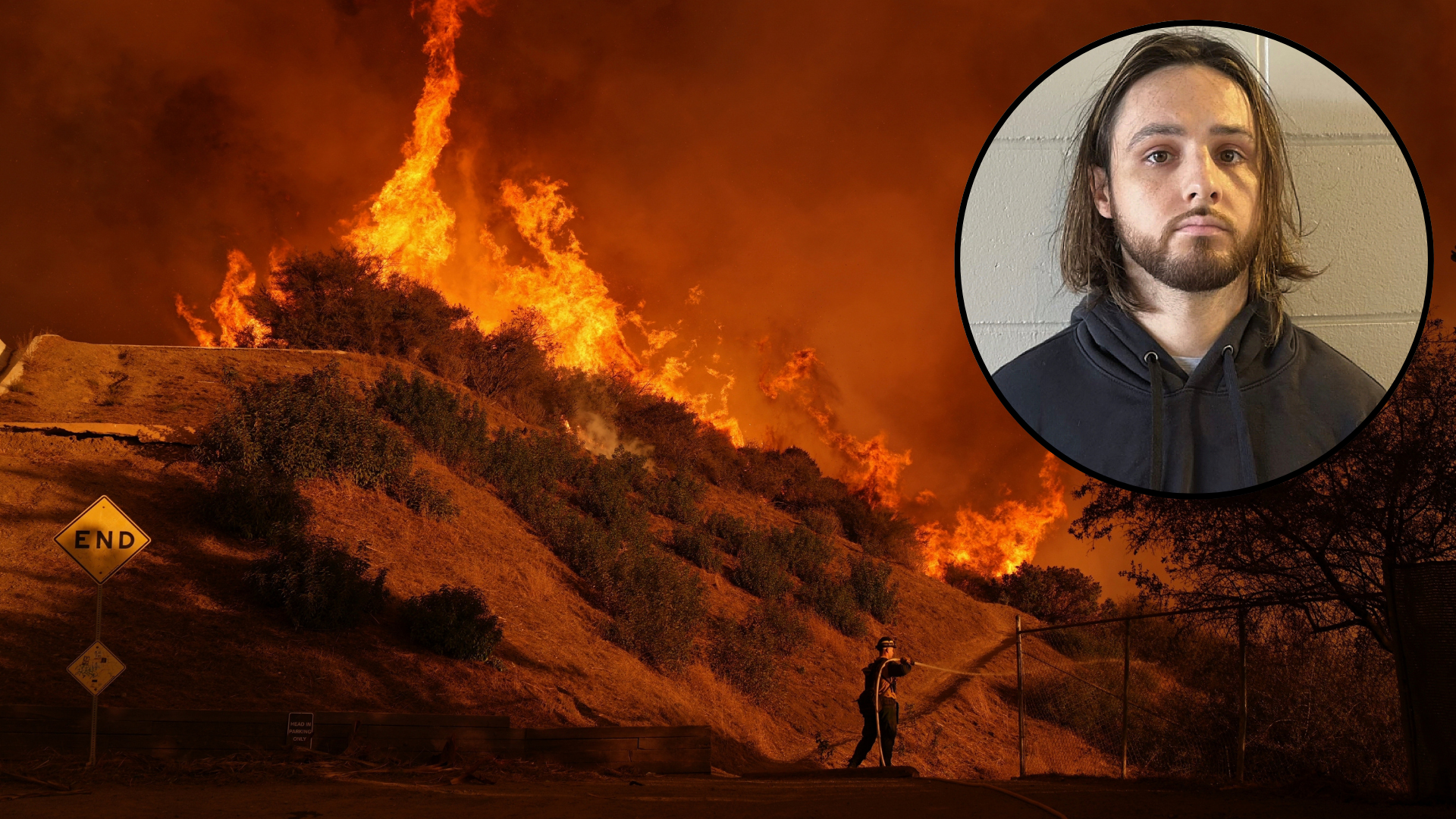
Palisades Fire mistrial became the outcome Friday after jurors failed to reach a unanimous decision in the arson case against Jonathan Rinderknecht, the man accused of igniting the blaze that grew into one of California’s deadliest wildfires. Federal prosecutors quickly signaled they intend to take the case to trial again.
A Deadlocked Jury
The judge declared the mistrial after the jury announced Thursday that it could not agree on a verdict for the 30-year-old defendant, who faced three federal counts: arson, malicious destruction by fire, and setting timber ablaze. The proceedings stretched across two and a half weeks.
The split was lopsided. Ten jurors leaned toward acquittal, while only two were determined to convict. In a note to the court, the panel described members on both sides as firmly entrenched and unwilling to shift their positions. They added that nothing the court could offer would break the impasse and that they were divided on all three charges.
Prosecutors asked Judge Anne Hwang to push the jury toward more deliberation, but she declined, citing a genuine risk of coercion given how firmly the jurors had dug in.
What Comes Next
Following the mistrial, Hwang tentatively scheduled a retrial for October 19 and set a status conference for July 15. Despite objections from the defense, she ordered Rinderknecht to remain in federal custody until the new trial, explaining she could find no set of conditions that would reliably guarantee his appearance at future hearings unless he stayed behind bars.
Voices From the Courtroom
After the jury was released, one juror who identified herself only as Syrena spoke with reporters outside the courthouse. She said she did not believe the evidence was strong enough to conclude he started the initial fire, referring to the earlier Lachman Fire. Even if he had, she questioned why he should bear responsibility for the entire Palisades disaster when others’ mistakes also played a role.
Syrena described the emotional intensity of deliberations, admitting she had expected to feel isolated as a not-guilty voter but was relieved to find herself in the majority rather than the lone holdout. She expressed sadness that the group could not reach a conclusion, saying she almost wished she could return and try again.
Defense attorney Steve Haney called the vote a strong sign of his client’s innocence. He argued that a ten-to-two split sent an overwhelming message that the government had failed to prove its case, and he predicted a future trial would likely end in acquittal. He also took a jab at prosecutors, suggesting that if the lead U.S. attorney wanted to criticize from the sidelines, he should step in and try the case personally.
On the other side, First Assistant U.S. Attorney Bill Essayli insisted the evidence strongly tied Rinderknecht to igniting the January 1, 2025 fire that eventually became the Palisades Fire, affirming that prosecutors fully intend to retry the matter.
The Digital Trail Against Him
The trial leaned heavily on electronic records alongside eight days of testimony from investigators, experts, and witnesses. Key points the prosecution emphasized included:
- Security footage helped pinpoint where the January 1 fire is believed to have begun, on a mountainside spot off a trail in a neighborhood Rinderknecht knew well.
- He had dropped off his final Uber passenger nearby shortly before midnight, then placed more than a dozen 911 calls.
- Geolocation data from his phone placed him at the clearing and walking down the trail as he reported the fire.
Jurors also reviewed material drawn from his phone, email, Uber account, social media, and OpenAI records, which showed he frequently turned to ChatGPT. In one exchange, he reportedly asked why he felt angry so much of the time.
The Interview With Investigators
Weeks after the fire, before he was considered a suspect, Rinderknecht spent roughly eight hours speaking with an agent from the Bureau of Alcohol, Tobacco, Firearms and Explosives. The agent, Matthew Beals, drove with him to the site so he could retrace his movements, but according to testimony, that account clashed with the location and timing of his 911 calls.
Beals said Rinderknecht grew agitated when pressed for specifics, at one point accusing the agent of treating him like a suspect. He reportedly voiced repeated frustration over political issues and speculated that someone angered by inequality might hypothetically set a fire in a wealthy neighborhood. An expert in arsonist behavior, Kevin Kelm, testified that such conduct aligned with a “societal revenge motivated” arsonist.
The Defense Points to Fireworks
Haney countered that investigators uncovered no searches about arson, no research on starting fires, and no purchases of fire-starting materials. While his client’s DNA appeared on a barbecue lighter in his car, the defense argued there was no proof a lighter caused the blaze, only that it began with an open flame.
The defense pressed the theory that fireworks were the likely culprit on New Year’s Eve. Supporting that argument:
- A firefighter recalled hearing fireworks in the area around midnight.
- Two residents and a security guard testified to seeing flashes of light or hearing fireworks.
- Two witnesses reported seeing a group of teenagers running down the trail afterward.
A former Los Angeles fire investigator, Ed Nordskog, accused officials of confirmation bias, noting he had personally responded to many New Year’s Eve fires, most sparked by fireworks. He argued investigators interpreted the evidence in an unfairly sinister light.
The defense also raised concerns that the scene may have been compromised, since access was not sealed off until January 14, nearly two weeks after the first fire. During closing arguments, Haney challenged jurors to consider whether anyone could be convicted based on a crime scene that had been stripped of potentially exonerating evidence.
The Devastation Behind the Case
Prosecutors maintain that the fire Rinderknecht allegedly set on January 1, 2025 smoldered undetected deep in root systems before flaring up again on January 7. The Palisades Fire went on to kill 12 people and destroy thousands of homes as it tore through hillside neighborhoods in Pacific Palisades and Malibu. Recovery has been sluggish, with only 17 homes certified for occupancy so far.
The trial opened on June 8 and featured eight days of detailed testimony. Jurors ultimately spent 13 hours deliberating over two days before concluding they could not deliver a unanimous verdict.
Author