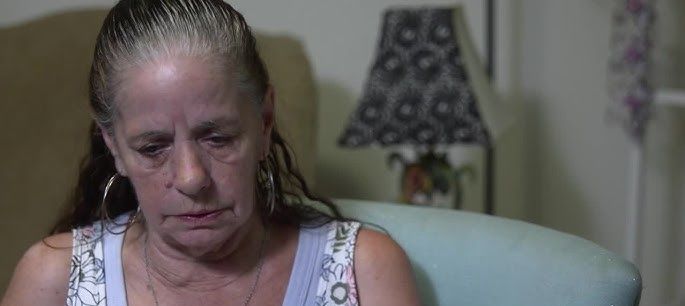
The Davis stabbing survivor verdict handed down Tuesday left Kimberlee Ramona Guillory struggling to make sense of what a jury had decided. Carlos Dominguez was found not guilty of attempted murder in the attack that nearly killed her — a conclusion she says she cannot reconcile with what she lived through.
Her reaction was immediate and unfiltered. She described the attack as the most traumatic experience of her life, one her daughter has also had to carry, and said the outcome simply was not fair. She could not understand what the jurors were thinking.
What the Jury Decided
The verdict was not a full acquittal.
Jurors convicted Dominguez of involuntary manslaughter in the deaths of David Breaux and Karim Abou Najm. On the attempted murder charge involving Guillory, they returned not guilty.
That split reflects the central question the trial revolved around: not whether Dominguez committed the acts, but whether his mental state made them criminal in the way prosecutors alleged.
The Mental Health Question
Much of the courtroom argument centered on Dominguez’s schizophrenia and whether his marijuana use aggravated the condition and shaped his behavior during the attacks.
That framing places the case in genuinely difficult legal territory. Criminal liability generally requires intent, and severe psychotic illness can undermine the capacity to form it. Juries asked to weigh that question are being handed one of the hardest tasks the justice system produces.
Guillory is not persuaded.
She pointed to a specific detail that has stayed with her — that when a police officer asked Dominguez his name, he supplied a full first, middle, and last name, all fabricated. To her, that level of composure and deliberate deception is difficult to square with the argument that he did not understand what he was doing.
She does not buy it.
Living With What Happened
Three years on, the attack remains part of her daily existence rather than a memory.
She described the moment with painful specificity: the knife came down through the tent and went straight into her. Her assessment of the damage was blunt — that he did a fairly thorough job of tearing up her insides.
The physical wounds have healed. The pain has not entirely stopped, and she says she experiences it daily.
Her circumstances have improved in one meaningful way. She noted with evident relief that she is no longer homeless.
But fear has proven more durable than injury. She lives with it every day, she said, and does not believe it will ever fully lift.
Two Families, Two Responses
The reaction from the families of the two men who died reflects the difficulty of the case.
Karim Abou Najm’s parents told KCRA 3 News they feel betrayed and deeply disappointed by the justice system — language that leaves little ambiguity about how they view the outcome.
Maria Breaux, David Breaux’s sister, took a different tone. She expressed relief that the trial has concluded and voiced hope that the lasting takeaway from the tragedy would be the importance of early intervention for severe mental illness and of extending compassion to every person.
Two families, the same verdict, and profoundly different places to land. Neither response is more valid than the other. Grief does not standardize.
Why This Kind of Verdict Is So Hard to Accept
For survivors, verdicts grounded in mental health considerations can feel like a subtraction of their own experience.
The reasoning is not hard to follow. When a court determines that intent was absent or diminished, the harm itself remains entirely unchanged. The wounds happened. The fear happened. The lives ended.
Guillory articulated this better than any analysis could. The outcome felt, to her, as though her life did not matter — and neither did the lives of the men who were killed.
That is not a legal argument. It is something more important than a legal argument: an account of what a verdict feels like from the receiving end.
The Tension the Case Exposes
Cases like this one sit at the collision point between two things society genuinely values.
On one side: the principle that punishment should track culpability, and that people in the grip of severe psychosis are not fully authors of their actions.
On the other: the recognition that victims and families deserve accountability proportionate to what was taken from them.
Both principles are defensible. In a case like this, they cannot both be fully satisfied.
Maria Breaux’s emphasis on early intervention points toward the only real resolution available — one that operates upstream of the courtroom entirely. Severe mental illness identified and treated before crisis produces fewer cases where a jury must sort through questions this painful.
That is cold comfort to someone still in pain three years later.
What Remains
Guillory is the only person who survived the 2023 attacks. That status carries a particular weight — she is the one who can still describe what happened, and now also the one who must live with a verdict she considers unjust.
She did not ask for the role. She did not choose to become the voice through which this case reaches the public.
But she has been clear about what she carries. Daily pain. Persistent fear. A daughter who has had to witness her mother’s trauma. And now, a legal conclusion that she experiences as a statement about her own worth.
Whatever one concludes about the jury’s reasoning, that account deserves to be heard on its own terms.
Author
-
Lucienne Albrecht is Luxe Chronicle’s wealth and lifestyle editor, celebrated for her elegant perspective on finance, legacy, and global luxury culture. With a flair for blending sophistication with insight, she brings a distinctly feminine voice to the world of high society and wealth.