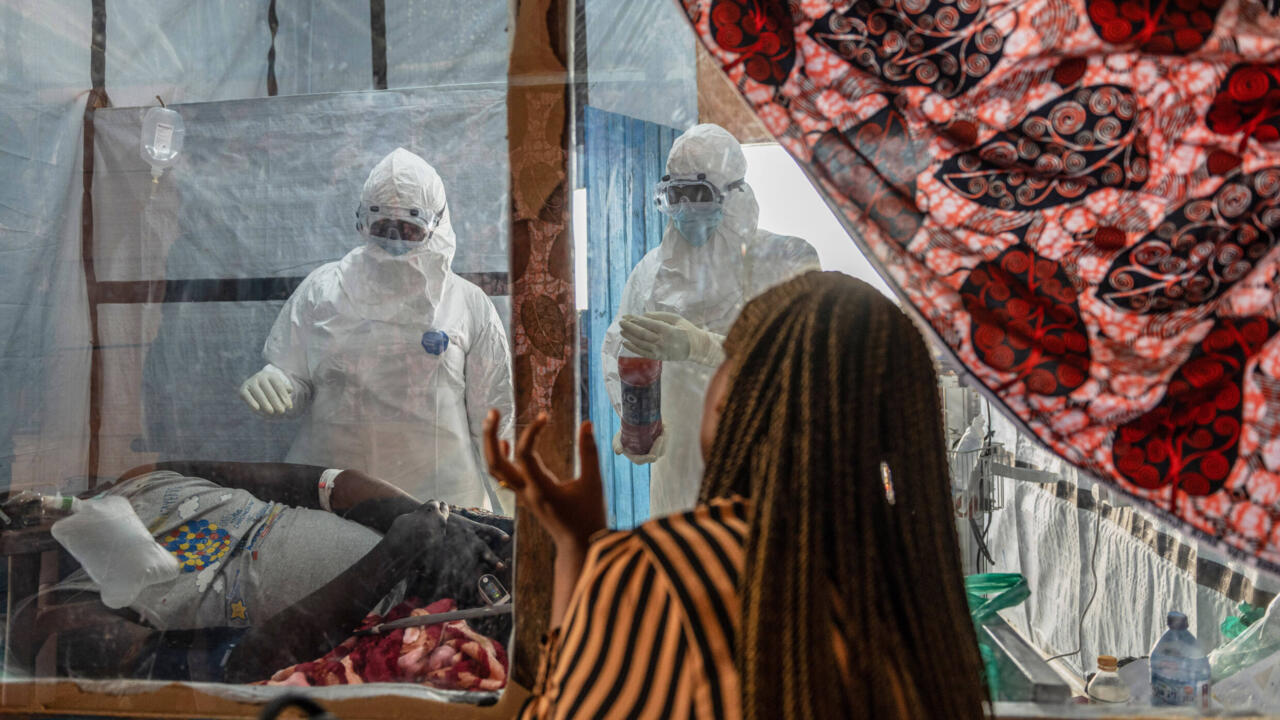
An Ebola treatment trial has officially begun in the Democratic Republic of Congo, marking a pivotal moment in the fight against a deadly outbreak that has already claimed hundreds of lives. The World Health Organization announced that the first patient has been enrolled, offering a glimmer of hope in a crisis that has, until now, been fought without any approved medicines specifically designed for the strain of virus responsible.
A Milestone in a Deadly Outbreak
WHO Director-General Tedros Adhanom Ghebreyesus revealed that the first participant had joined the study in DR Congo. The trial focuses on the Bundibugyo species of the Ebola virus, a highly infectious strain for which no approved vaccines or treatments currently exist.
That gap is precisely what makes this trial so significant. Because existing Ebola therapies were developed and certified for a different species of the virus, the Zaire ebolavirus, they aren’t validated for use against Bundibugyo. This has forced health workers to battle the outbreak largely without a proven pharmaceutical toolkit.
Speaking from WHO headquarters in Geneva, Tedros struck a cautiously optimistic tone. He noted that even without approved therapeutics, some patients are pulling through, but he stressed that safe and effective treatments could save far more lives.
Who’s Behind the Research
The trial is sponsored by the WHO and represents a genuinely international scientific effort. Coordination is being led by researchers from several respected institutions, including:
- The Institut National de Recherche Biomédicale in DR Congo
- The Institute of Tropical Medicine in Belgium
- The University of Oxford in the United Kingdom
Under the study, patients will be tested on two antiviral drugs, part of a broader push to identify the first effective treatments for Bundibugyo virus disease. DR Congo’s Health Minister described the launch as a meaningful step forward, one that brings renewed hope to patients, their families, and the communities bearing the brunt of the outbreak.
The Scale of the Emergency
The numbers paint a sobering picture. The WHO has confirmed well over 1,400 cases in DR Congo, with hundreds of deaths recorded. As of early July, figures indicated more than 1,400 confirmed cases alongside additional suspected ones, and the death toll had climbed past 430. On a more encouraging note, more than 200 people have recovered.
The crisis isn’t contained to a single country. Uganda has reported a cluster of confirmed cases resulting in two deaths, and a single case even surfaced in France, underscoring how quickly such an outbreak can reach beyond its epicenter.
The situation has been serious enough that the WHO declared it a public health emergency of international concern, a designation reserved for events requiring coordinated global attention.
How the Outbreak Unfolded
The current epidemic was officially confirmed in May 2026, but evidence suggests the virus had been circulating undetected for some time before that. That delay is a major concern for health authorities.
According to both Africa CDC and US public health officials, this outbreak has the potential to become one of the largest ever recorded, precisely because it spread quietly for weeks before being identified as Ebola. Early undetected transmission gives the virus a dangerous head start, complicating efforts to trace contacts and contain its reach.
Understanding the Virus
Ebola is caused by a virus that assaults the body’s immune system and vital organs. It typically circulates among animals, especially fruit bats, and human outbreaks often begin when people come into contact with infected wildlife. From there, it spreads through bodily fluids such as blood.
Importantly, people infected with Ebola usually only become contagious once symptoms appear, and the incubation period ranges from two to 21 days. When symptoms do emerge, they tend to strike suddenly and resemble flu or malaria at first, bringing fever, headache, and fatigue before progressing to more severe complications.
Spread Beyond the Initial Zone
Congolese health authorities have said the outbreak is largely concentrated in three eastern provinces: South Kivu, North Kivu, and Ituri, with Ituri emerging as the hardest-hit area. However, troubling signs suggest the virus may be creeping outward.
Reports indicate that the body of a pregnant woman tested positive for Ebola in neighboring Tshopo province. She reportedly died in Ituri before her body was transported by motorbike to Kisangani, Tshopo’s main city, home to roughly 1.5 million people, raising fears about potential exposure in a densely populated area.
In another worrying development, a person suspected of having Ebola reportedly fled an isolation unit in Ituri and later tested positive in nearby Haut-Uele province. In response, authorities launched contact-tracing efforts across both Tshopo and Haut-Uele.
Measures to Contain the Threat
To curb further spread, officials have taken decisive steps. Earlier in the week, public gatherings were banned in several areas, including Tshopo, Haut-Uele, neighboring Bas-Uele, and even the capital, Kinshasa.
Diagnostic capacity has also been ramped up. DR Congo’s health ministry reported that the number of laboratories testing for Ebola across the affected region has more than doubled, rising from four to ten. Faster, more widely available testing is critical for catching cases early and interrupting chains of transmission.
Conflict Complicates the Response
Perhaps one of the greatest obstacles to controlling this outbreak has nothing to do with the virus itself. International organizations warn that ongoing conflict in eastern DR Congo is making the response far more difficult.
The M23 rebel group controls large portions of both North and South Kivu, creating insecurity that hampers health workers’ ability to reach affected communities, conduct contact tracing, and deliver care. This dangerous mix of a fast-moving epidemic and armed conflict presents a formidable challenge for responders.
The Vaccine Challenge
A key reason this outbreak is so difficult to combat lies in the nature of Ebola itself. Vaccines must be developed individually for each species of the virus. There are six known species, though only three are known to trigger outbreaks. Because approved vaccines target a different strain, the Bundibugyo virus has left health authorities without a ready-made preventive shield.
Looking Ahead
The launch of this treatment trial represents a rare bright spot in an otherwise grim situation. If the antiviral drugs prove effective, they could dramatically improve survival odds and reshape how future Bundibugyo outbreaks are managed.
For now, though, the outbreak remains a serious and evolving threat. With cases still climbing, the virus edging into new territory, and armed conflict obstructing relief efforts, the road ahead is undeniably steep. Yet the enrollment of that first patient signals that science is now actively joining the fight, and for the patients, families, and communities affected, that progress offers something they desperately need: hope.
Because this article addresses a serious public health emergency, anyone in affected regions experiencing symptoms should seek medical attention immediately and follow guidance from local health authorities.
Author