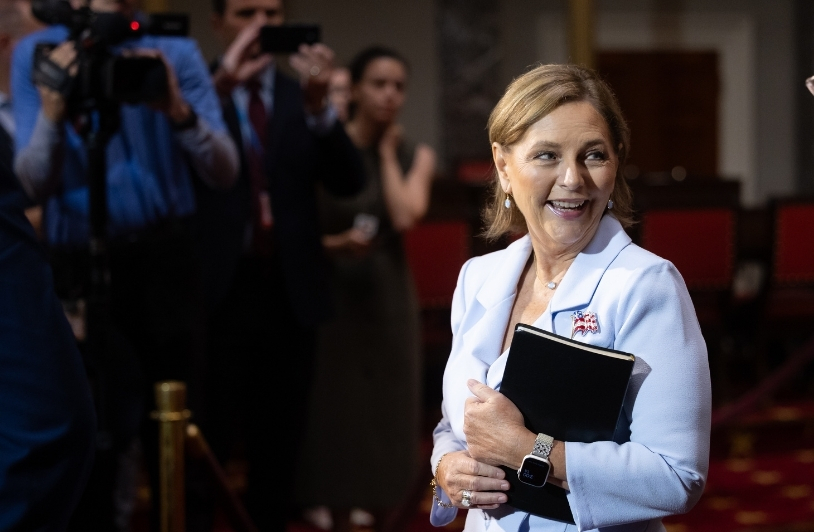
The Darline Graham Senate appointment placed a woman with no electoral history into one of the most visible jobs in American government this week. Her late brother Lindsey Graham spent 33 years in politics. She has spent hers in vocational rehabilitation — publicly funded programs designed to help people with disabilities find and keep work.
She will serve out the remainder of his term, which ends in January 2027.
An Unknown Quantity in Washington
Because Graham, 62, has never campaigned for anything, her legislative priorities are genuinely difficult to predict. There is no voting record to examine, no stump speech to parse.
What exists instead is a professional reputation, and among the people who have worked alongside her, it is a strong one. Colleagues and disability advocates describe a career civil servant with deep knowledge of disability issues and almost no appetite for public attention.
“She’s Not Her Brother”
Kimberly Tissot, president of Able South Carolina — the state’s federally funded Center for Independent Living — has known Graham for more than a decade. Tissot, herself a cancer survivor and amputee, has been making a specific point to people in disability advocacy circles.
Graham loved her brother, who helped raise her, and family defines her. But Tissot insists she should not be read as a continuation of him. She described Graham as a leader of a particular type: one who never advertises what she has accomplished.
Tissot was equally careful about the opposite assumption. She does not consider Graham a covert liberal or a disability rights activist. In her telling, Graham has never seemed especially political at all. Her commitments have been to family and to disability employment — an issue that has historically drawn support from both parties.
A Bipartisan Track Record in South Carolina
That bipartisanship is not theoretical in South Carolina.
In 2022, the state passed legislation ending subminimum wage for workers with disabilities. The bill cleared the state Senate unanimously and passed the House nearly unanimously, at a time when Republicans held majorities in both chambers.
Tissot and Graham both attended the signing. True to form, Tissot said, Graham positioned herself at the back of the room.
After passage, Graham worked on the practical task of dismantling what remained of the subminimum wage system, serving on key committees alongside Tissot, other civil servants, and advocates.
A Friendship on the Back Porch
Former Republican state Sen. Katrina Shealy, one of the bill’s original sponsors, has known Graham for years. The two live near each other, and Graham occasionally comes over to drink wine on Shealy’s back porch and talk to the donkeys Shealy keeps as pets.
They met through state Republican Party circles, though Shealy attributes that to loyalty rather than ideology. Her assessment: Graham has always been there for Lindsey, but is not really political herself.
Shealy has her own notable history. Elected in 2012 as the only woman in the South Carolina Senate, she later became known as one of the “sister senators” — a bloc of five lawmakers spanning three Republicans, one Democrat, and one independent who blocked a near-total abortion ban in the state. She and the other two Republican members of that group lost primary challenges in 2024.
She has since left politics, working as a community outreach coordinator for the Brain Health Center at the University of South Carolina, one of 33 U.S. centers focused on Alzheimer’s research. Her involvement began after her husband Jimmy’s diagnosis.
Arriving at a Fraught Moment
Graham enters the Senate at a genuinely difficult time for disability policy.
Two developments loom over the field:
- Large Medicaid reductions under the One Big Beautiful Bill Act, which Lindsey Graham supported, threaten disability services across many states
- The Trump administration’s move to dismantle the Department of Education and shift special education oversight to Health and Human Services, a change many experts believe endangers students with disabilities
Lindsey Graham did not publicly address those specific actions, though he was a consistent ally of the president.
His sister’s first public statement offered limited guidance. On Tuesday, she pledged to work hard over the coming months to support the president and to carry forward her brother’s efforts on behalf of South Carolinians and the country.
A Thin Political Paper Trail
Open Secrets, which has tracked political donations since 1990, shows a single contribution from Darline Graham in that entire span: $100 to Shealy’s state Senate reelection campaign during the 2020 cycle.
For someone whose brother spent three decades in national politics, that is a remarkably light footprint.
Leading the Commission for the Blind
Since 2019, Graham has headed South Carolina’s Commission for the Blind, an agency focused on employment and training for people who are blind or have low vision.
David Houck, executive director of the Federation Center of the Blind, has worked closely with that commission. His organization is peer-led and trains blind and low-vision people to use technology. Houck, who is blind, has met Graham on multiple occasions, though he interacts more regularly with her staff.
His view of her career is unreservedly positive. He believes her background gives her both expertise and relationships that will benefit his community in Washington, and he said blind South Carolinians support her.
He went further, expressing hope that she might run for office in her own right once the interim appointment ends.
What to Watch
Graham has roughly six months in the seat. That is not long enough to build a legislative legacy, but it is long enough to signal where she stands.
The tension in her position is visible already. Her professional life has been spent expanding employment access for people with disabilities. Her opening statement pledged support for an administration pursuing changes that disability advocates view as threatening.
Whether those two things can coexist — and which one wins when they conflict — is the question her brief tenure will answer.
Author