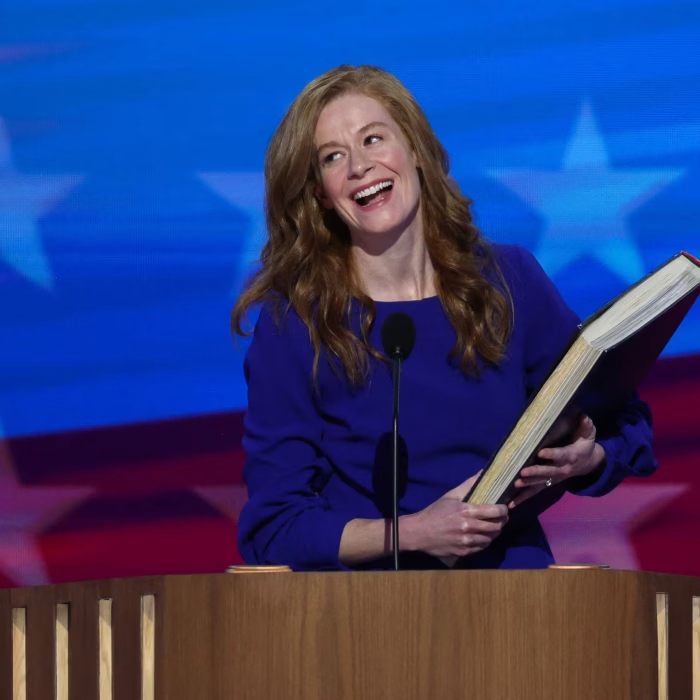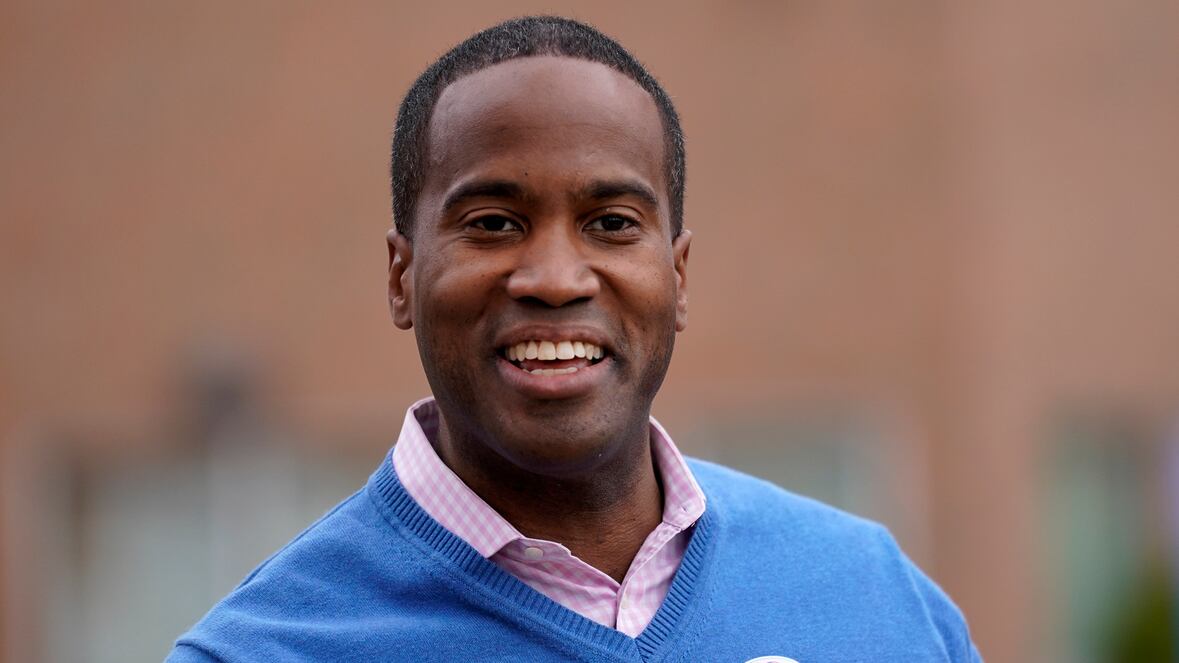
Michigan state Senate special election results delivered a critical victory for Democrats Tuesday night, as Chedrick Greene defeated Republican Jason Tunney in a closely watched contest. The win not only fills a vacancy in the chamber but also ensures that Democrats keep their narrow but meaningful control of the Michigan state Senate. The result is being interpreted as more than just a single race. It signals a continuing trend of Democratic strength in special elections across the country during President Donald Trump’s second term.
A High-Stakes Race in Michigan’s 35th District
The election in Michigan’s 35th Senate District was triggered by the resignation of Democratic U.S. Rep. Kristen McDonald Rivet, who left her state Senate seat after winning a congressional election in 2024. The vacant seat sat in a politically divided district where margins are routinely thin, making this special election a serious test for both parties.
Chedrick Greene, a Marine veteran and firefighter, ran on a platform centered around community service, public safety, and economic opportunity. His Republican opponent, former prosecutor Jason Tunney, focused on themes of law and order, fiscal responsibility, and aligning with the GOP’s broader national agenda.
By the time NBC News called the race, Greene held a commanding 22-point lead with 55 percent of the expected vote counted, an unusually wide gap in a district that Kamala Harris won by less than a single percentage point in the 2024 presidential election.
Why the Race Was So Important
This special election carried weight far beyond a single Senate seat because it determined which party would hold the majority of the chamber. With Greene’s win, Democrats now maintain a 20-18 advantage in the state Senate. The implications are significant:
- Democrats retain power to shape legislative priorities
- They keep procedural control over committees
- They can block or advance bills tied to the governor’s agenda
- They preserve a check on Republican efforts in the state House
- They reinforce their strength in a key battleground state
Michigan remains one of the most politically important states in the country, especially heading into the next major election cycle. With Republicans holding a 58-52 edge in the state House and Democrats controlling the governorship, the legislative environment in Lansing remains tightly contested.
A Continuing Pattern of Democratic Wins in Special Elections
Greene’s victory aligns with a broader trend playing out across the country. Since the start of Trump’s second term, Democrats have consistently performed better in special elections than Kamala Harris did during the 2024 presidential race. Several factors appear to be contributing to this:
- High Democratic turnout in low-attention races
- Voter frustration over economic concerns
- Strong fundraising in competitive districts
- Increased focus from national party leaders
- A surge in volunteer engagement
These patterns are giving Democrats hope that they may be entering a stronger political position than national polls suggest. Michigan’s 35th district, in particular, became a clear example of how Democrats are exceeding expectations even in places where the 2024 results were extremely close.
Greene’s Background Resonated With Voters
Chedrick Greene’s profile played a significant role in his win. As a Marine veteran and firefighter, he brought a unique blend of national service and local public-safety experience to his campaign. Voters in the Saginaw Bay area responded positively to his message, which focused on:
- Strengthening community-based public safety
- Supporting working-class families
- Investing in infrastructure
- Expanding access to healthcare
- Standing up for veterans
His credibility in two highly respected fields helped him connect with both Democratic and independent voters. Many residents have described him as a pragmatic, mission-driven candidate who avoids political extremes, an appealing combination in a district that often swings between parties.
Tunney’s Strong Background Wasn’t Enough
Republican Jason Tunney brought legal credentials and a record as a prosecutor to the race. His campaign focused on conservative messaging, including:
- Crime reduction
- Government efficiency
- Tax fairness
- Border security
- Aligning with the Trump administration’s policy direction
Despite his experience, Tunney was unable to match Greene’s grassroots momentum. While the GOP relied heavily on national party support, Greene benefited from strong local outreach and high-profile Democratic backing.
High-Profile Visits Drew National Attention
The race attracted considerable interest from major national figures.
For Democrats, the headliners included:
- Governor Gretchen Whitmer, who held a rally for Greene
- Former Transportation Secretary Pete Buttigieg, a Michigan resident
- Several local labor leaders and community organizers
Whitmer’s involvement was particularly important. As one of the most popular Democratic governors in the country, her presence helped energize the base. Buttigieg’s appearance reinforced the message that the race had national stakes, especially given his strong communication skills and Michigan ties.
For Republicans, the spotlight came from:
- GOP Representative John James, who is running for governor
- State-level Republican leaders
- Conservative organizations focused on legislative balance
James’s involvement was also notable, given his political ambitions. However, despite the high-energy support from prominent Republicans, Tunney’s campaign struggled to break through.
Why Michigan’s State Politics Matter Nationally
Michigan is one of the most strategically important states in the country. It plays a major role in:
- Shaping the outcome of presidential elections
- Influencing Senate races
- Determining the country’s policy direction in the Great Lakes region
- Driving manufacturing and labor-related debates
- Setting trends for the broader Midwest
A small political shift in Michigan can ripple across the country. The state’s mix of urban, rural, suburban, and union-heavy communities makes it one of the most politically diverse battlegrounds in America.
That’s why a victory like Greene’s, which exceeded the 2024 baseline by a wide margin, carries so much weight. It suggests that Democrats may be regaining ground after a difficult presidential cycle.
Comparing 2024 and 2026 Trends
In the 2024 election, Kamala Harris won Michigan’s 35th Senate District by roughly 1,000 votes, finishing with 50.4 percent compared to Trump’s 49.6 percent. That razor-thin margin suggested the district could go either way in 2026.
Yet Greene didn’t just hold the line, he expanded the Democratic margin significantly. Several reasons may explain this jump:
- Greater voter dissatisfaction with national Republican policies
- Local concerns about economic instability
- Strong personal appeal of Greene as a candidate
- A motivated Democratic base
- Lower Republican turnout in a special election environment
Special elections often produce different dynamics than presidential races. Smaller turnout means base voters become disproportionately influential, and the energy around an issue or candidate can drive strong shifts in either direction.
A Setback for the Michigan GOP
For Republicans, the loss is a significant setback. The party had hoped to flip the seat as part of a broader effort to gain ground in the Senate. With Tunney’s defeat, Republicans now face several challenges:
- Limited ability to influence state Senate decisions
- Increased pressure heading into 2026 statewide elections
- Greater scrutiny of national messaging strategies
- Need to rebuild momentum in key swing districts
- Tougher path to flipping the chamber in future cycles
Although the GOP has dominated several special elections in other states, Michigan continues to be a difficult environment, especially in districts that are demographically diverse.
Reactions From Democratic Leaders
Democratic leaders praised the result as a sign of strong voter engagement and clear support for the party’s priorities. Some highlights of the reactions included:
- Greene thanking volunteers and local communities
- Whitmer celebrating the maintained Democratic majority
- Buttigieg emphasizing the importance of grassroots energy
- State party leaders pointing to the result as a 2026 momentum builder
- National Democrats touting the win as another sign of political shifts
Greene’s win was widely seen not just as a local victory but as a confidence boost for Democrats across the country.
A Boost for Whitmer and the Michigan Democratic Agenda
For Governor Gretchen Whitmer, the result is especially valuable. With Democrats keeping the state Senate, she retains the legislative support she needs to:
- Push forward economic recovery initiatives
- Advance healthcare priorities
- Defend reproductive rights laws
- Support union-friendly legislation
- Strengthen public education funding
Without this Democratic majority, much of Whitmer’s agenda would be at risk. Greene’s win gives her clearer pathways to deliver on key state-level promises.
A Growing Sign That Voters Are Showing Up
Special elections often draw fewer voters than presidential or midterm elections, making them sensitive indicators of party engagement. The fact that turnout in Michigan’s 35th district trended in Democrats’ favor is part of a larger national pattern that has been visible throughout 2025 and 2026.
Democrats have shown improvements in:
- Suburban districts
- Working-class communities
- College towns
- Areas affected by economic uncertainty
- Regions impacted by federal policy changes
This consistent overperformance gives the party reason to be optimistic about future elections, even as Trump remains a dominant force in Republican politics.
A Test for Future Battles
Looking ahead, the Michigan state Senate special election may serve as a roadmap for both parties as they prepare for upcoming high-stakes contests. Both Democrats and Republicans will analyze what worked and what didn’t.
For Democrats, the key takeaways include:
- Strong candidate recruitment matters
- Local outreach can outperform national messaging
- Special elections can expand party momentum
- High-profile visits help energize voters
- A strong personal narrative resonates with constituents
For Republicans, the loss highlights several priorities:
- The need for stronger ground-game investment
- Improvement in messaging for swing districts
- Better adaptation to Michigan’s evolving electorate
- More effective candidate development pipelines
- Greater coordination between national and state strategists
Both parties will be watching for how this momentum plays out across the rest of 2026.
Final Thoughts
The Michigan state Senate special election delivered more than just a win for one candidate. It preserved Democratic control of a critical chamber, reinforced the political importance of one of the country’s biggest battleground states, and continued an emerging pattern of Democratic strength in lower-turnout elections during Trump’s second term.
For Chedrick Greene, the path from Marine veteran to firefighter to state senator represents a powerful personal story that connected deeply with voters. For the Democratic Party, his victory is yet another piece of evidence that the political landscape is shifting in ways that may favor them in 2026 and beyond. For Republicans, the result serves as a reminder that even closely divided districts can swing dramatically based on local conditions and candidate strength.
In a year shaped by economic anxiety, foreign policy tension, and intense political polarization, the people of Michigan’s 35th Senate District sent a clear message: leadership, service, and authenticity still matter. Greene’s victory offers a glimpse into how those values continue to shape American politics, even in places where every vote counts and every election truly matters.
Author