PALU, Indonesia — The Indonesia passenger boat sinking that claimed the KM Nurul Salsa earlier this week has produced another improbable rescue, with a mother and son found alive on Sunday as teams continued searching for 18 people still unaccounted for.
Found by Fishermen
The 46-year-old woman and her 24-year-old son were discovered stranded on Balaloho Island, one of the small inhabited islands in the Selayar chain.
It was fishermen, not official search vessels, who located them — a reminder that in Indonesian waters, local knowledge often reaches places organized search efforts cannot.
The Search Effort
More than 200 rescuers aboard vessels have been working the area, joined by Indonesian troops, police, fishermen and residents, according to Andi Sultan, head of emergency response in Makassar.
The conditions have made the work considerably harder. Sultan described rescue teams facing extremely harsh weather, including waves reaching two to three meters and strong winds.
Saturday’s Rescue
The mother and son were not the first survivors recovered.
On Saturday evening, search teams pulled five people from the water, among them a 7-year-old girl. They were found clinging to a fish trap.
At least one death has been confirmed.
What Happened to the Boat
The KM Nurul Salsa was carrying 78 passengers and crew when it suffered engine failure and sank on Wednesday.
The sinking occurred roughly 43 nautical miles — about 79 kilometers — from the port in the Selayar Islands, in South Sulawesi Province.
That distance matters enormously for survival prospects. Far enough offshore that swimming to land is not an option, and far enough that a vessel losing power is dependent entirely on whether a distress signal reaches anyone in time.
Surviving Days at Sea
The recovered survivors share a common thread: each found something to hold onto.
Five people clung to a fish trap. Two others reached an island and waited to be seen.
Neither outcome resembles rescue in the organized sense. Both are examples of people improvising their way through days of exposure until someone happened to look in the right place.
That is also why hope persists for the 18 still missing. In an archipelago dense with small islands and fishing activity, survivors can turn up in places no search grid would prioritize.
Why This Keeps Happening
Indonesia stretches across more than 17,000 islands, and passenger boats are ordinary transportation rather than a novelty.
For millions of people, ferries function the way buses do elsewhere — the practical means of getting between home, work, school and family.
That reliance collides with a persistent set of problems:
- Safety standards that are inconsistently enforced
- Overcrowding on vessels beyond rated capacity
- Aging boats with mechanical vulnerabilities
- Long routes across open water with limited immediate assistance
- Weather that can turn quickly and severely
Accidents recur with a regularity that has made them a structural feature of Indonesian transport rather than isolated tragedies.
The Mechanical Failure Problem
Engine failure sits at the center of this particular sinking, and it illustrates the underlying vulnerability.
A vessel that loses propulsion in open water cannot hold its bearing into the waves. It turns broadside, takes them on the beam, and begins shipping water. In heavy seas, the interval between losing power and losing the boat can be short.
Maintenance is the defense against that scenario, and maintenance is precisely what gets deferred when operating margins are thin.
What Comes Next
The search continues for 18 people, with weather conditions that have already tested the rescuers.
Every day that passes reduces the odds. But the recovery of a mother and son on a small island days after the sinking is the kind of outcome that keeps search operations running past the point where statistics would suggest stopping.
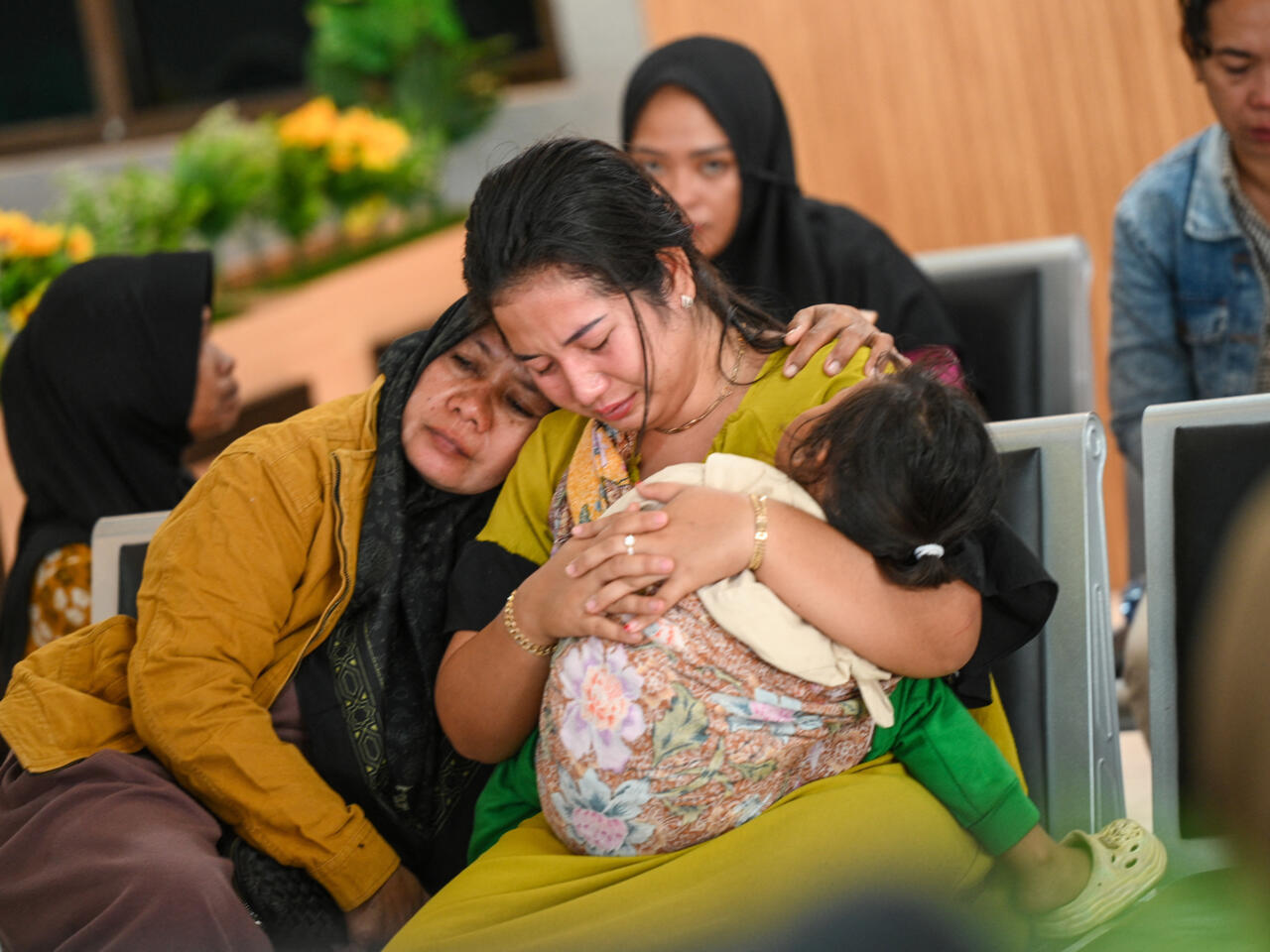
For the families still waiting in Selayar, that is the only number that matters right now.
Author