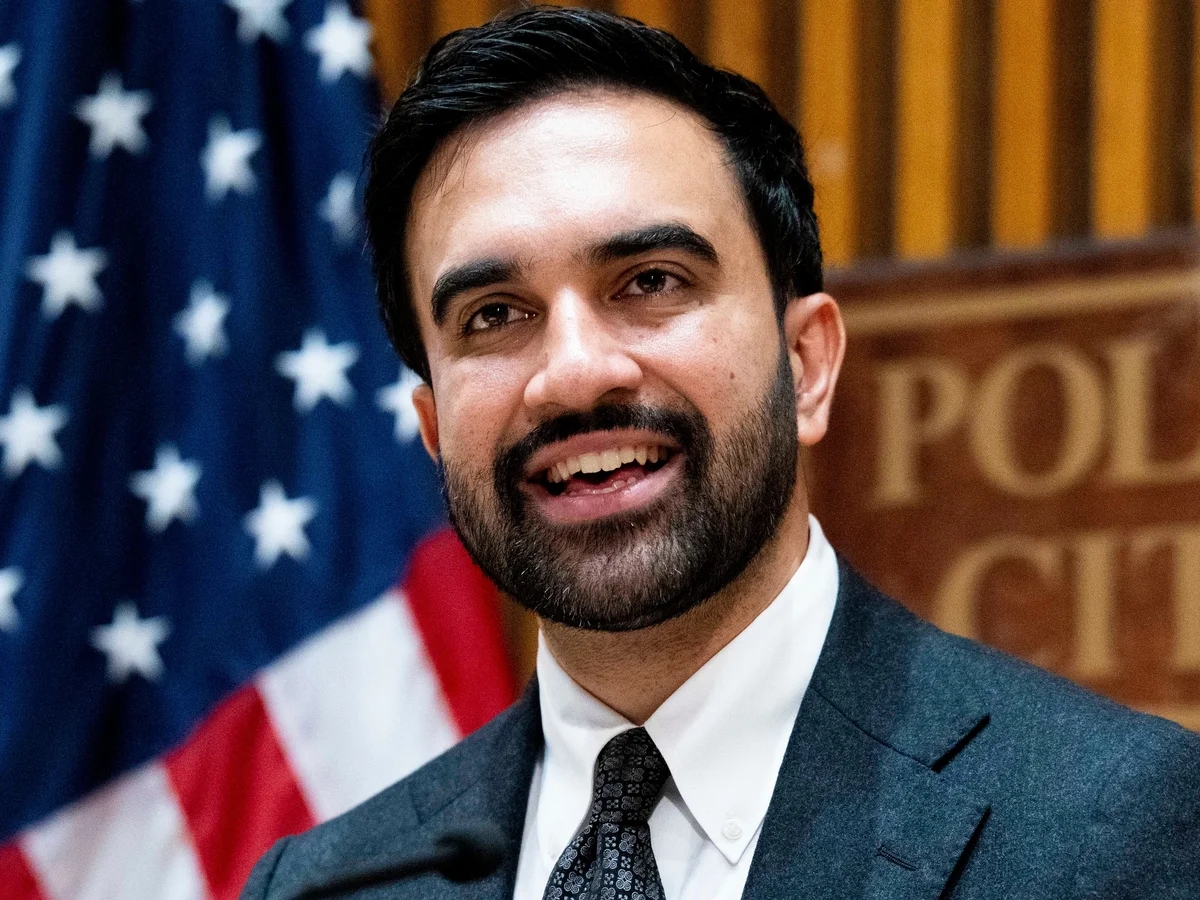
The Mamdani America 250th anniversary address arrived as one of the most talked-about moments of the semiquincentennial weekend, offering a vision of the nation rooted in its immigrant past and its ongoing struggle to live up to its own ideals. Speaking from City Hall, New York Mayor Zohran Mamdani used the milestone to reflect on what America has been, what it has failed to be, and what it might still become.
A Harbor Full of History
Mamdani opened by reaching back centuries, evoking the tides of New York Harbor and the many people who have crossed its waters. Long before the city had its modern name, he noted, the Lenape navigated these currents in dugout canoes. Later came explorers whose names now mark the region’s bridges and rivers, followed by countless ships carrying weary travelers through the Narrows.
He asked what those arriving passengers saw when they first glimpsed the shore. The answer he offered was deliberately layered. They saw lush land teeming with life, but also men waiting to force others into bondage. They saw crowded, squalid tenements alongside a city humming with industry. And rising above it all, they saw a monument to freedom holding her torch aloft. In short, they saw New York City. They saw America.
A Rare Moment of National Reflection
Framing the occasion, Mamdani reminded listeners that the country was marking 250 years since declaring independence. He described this as a grand experiment in self-governance, one so bold that skeptics in 1776 doubted it would survive even a few years.
To him, this anniversary offered something more meaningful than a typical holiday. With families gathering around grills and fireworks lighting the sky, he suggested the moment invited more than 340 million people to pause together and honestly assess who they are as a nation. The central question he kept returning to was simple: when Americans look at their country, what exactly do they see?
Independence Rescued in New York
Seated behind George Washington’s desk, Mamdani wove local history into his message. He recalled how, in July 1776, the city labored under harsh British colonial rule, just as a small group of editors, farmers, and soldiers nearby signed a document proclaiming truths that felt radical at the time.
The war that followed nearly ended the young democracy. During the largest battle of the Revolution, fought in Brooklyn, American forces were outgunned and defeated. Yet under cover of night, thousands of soldiers slipped away by boat to Manhattan, allowing the Continental Army to survive. Independence, he argued, may have been declared in Philadelphia, but it was rescued in New York City. Washington himself was the last to leave Brooklyn, gazing out at the water and seeing, like so many after him, a chance to begin anew.
Opportunities Won, Not Given
Mamdani stressed a recurring theme throughout his remarks: that opportunity in America has never been simply handed out. He pointed to James Weeks, a formerly enslaved Black man who in 1838 purchased land in Brooklyn, secured his right to vote, and sold lots to others who had recently gained their freedom.
The community Weeks helped build, Weeksville, still stands today. For Mamdani, it serves as living proof of a core belief: that America is a place each person has the power to shape and claim as their own.
Waves of Newcomers Who Built the City
The mayor then traced the great tides of immigration that shaped both the city and the country. He described Irish families fleeing famine, Chinese sailors settling in what became Chinatown, and millions more passing beneath the Statue of Liberty, including Jewish people escaping persecution, Italians fleeing poverty, and Syrians seeking opportunity.
These new arrivals, he acknowledged, could not yet see the hardships awaiting them, including the discrimination, the closed doors, and the brutal working conditions. Still, they saw a chance to start over. Despite exclusionary laws, deadly workplace disasters, and outright violence, immigrants made their homes in New York and, in doing so, helped make New York itself.
That same spirit, he noted, carried Black Americans north during the Great Migration, drew Puerto Ricans after World War II, and welcomed people from the West Indies, South Asia, West Africa, and beyond. It also brought his own family to the city when he was seven years old.
Rethinking American Exceptionalism
One of the speech’s central arguments challenged the conventional idea of American exceptionalism. The usual story, Mamdani observed, credits the nation’s greatness to its wealth, strength, and power.
But he flipped that narrative. The true story of America, he insisted, has often been written by people who were told they were anything but exceptional. It was shaped by those dismissed as outsiders, the persecuted, the poor, and the powerless. In his telling, America’s real distinction is that here, nothing is permanently fixed in place. The work of fulfilling the ideals of the Declaration of Independence continues, and it belongs to everyone, including the newly naturalized citizens standing beside him.
He reminded these new Americans of the special power they now hold: the power to help define what America itself means.
Two Competing Visions of the Country
Mamdani drew a sharp contrast between two ways of seeing the nation. The powerful, he argued, have long viewed America as an arena of supremacy, where freedom is reserved for a select few and belonging depends on the right accent or the right skin color. He dismissed that worldview as small, weak, and unoriginal.
Division, he said, is the oldest and cheapest trick in politics. Yet time and again, including 250 years ago, forces of division have been overcome by forces of progress. Quoting Thomas Paine’s description of the new world as an asylum for the persecuted, he lamented that too many leaders today would rather persecute those seeking asylum than offer them refuge.
A Nation of Contradictions
Turning to the present, Mamdani painted a portrait of a country full of contradictions. He described the wealthiest nation in history, where children still go hungry while extreme fortunes keep growing. He spoke of monopolies, oligarchs buying elections, and masked agents seizing undocumented neighbors from the streets.
Yet he balanced each grim image with a hopeful one. Alongside an exploitative health system, he saw the nurse checking on an ailing neighbor after a double shift. Against negligent corporate landlords, he placed the father who still believes his country can do better for his family. For every failure, he found an American quietly embodying the nation’s better instincts.
Patriotism as Righteous Dissent
Responding to those who tell critics to “love it or leave it,” Mamdani offered a different definition of patriotism. True love of country, he argued, does not require pretending it is flawless. Instead, patriotism lives in righteous dissent, in every march, protest, and act of principled resistance.
It is precisely because people love the nation, he said, that they refuse to abandon it. After all, who could love America more than those who have sacrificed so much to make it free?
The Enduring Work of America
Closing his address, Mamdani returned to history one final time, recalling how Washington ordered the Declaration read aloud in what is now City Hall Park as British forces prepared to attack. Those early New Yorkers, grounded in newly named ideals, marched together toward a shared purpose.
Those founding ideals, he concluded, are strong enough to withstand any authoritarian threat, but only if people actively reach for them. America, in his vision, is a nation perpetually striving toward the perfection in which it was conceived. That ongoing effort of striving, bettering, and reaching is the true work of America, and it is a privilege and responsibility that belongs to every person fortunate enough to call it home.
Author