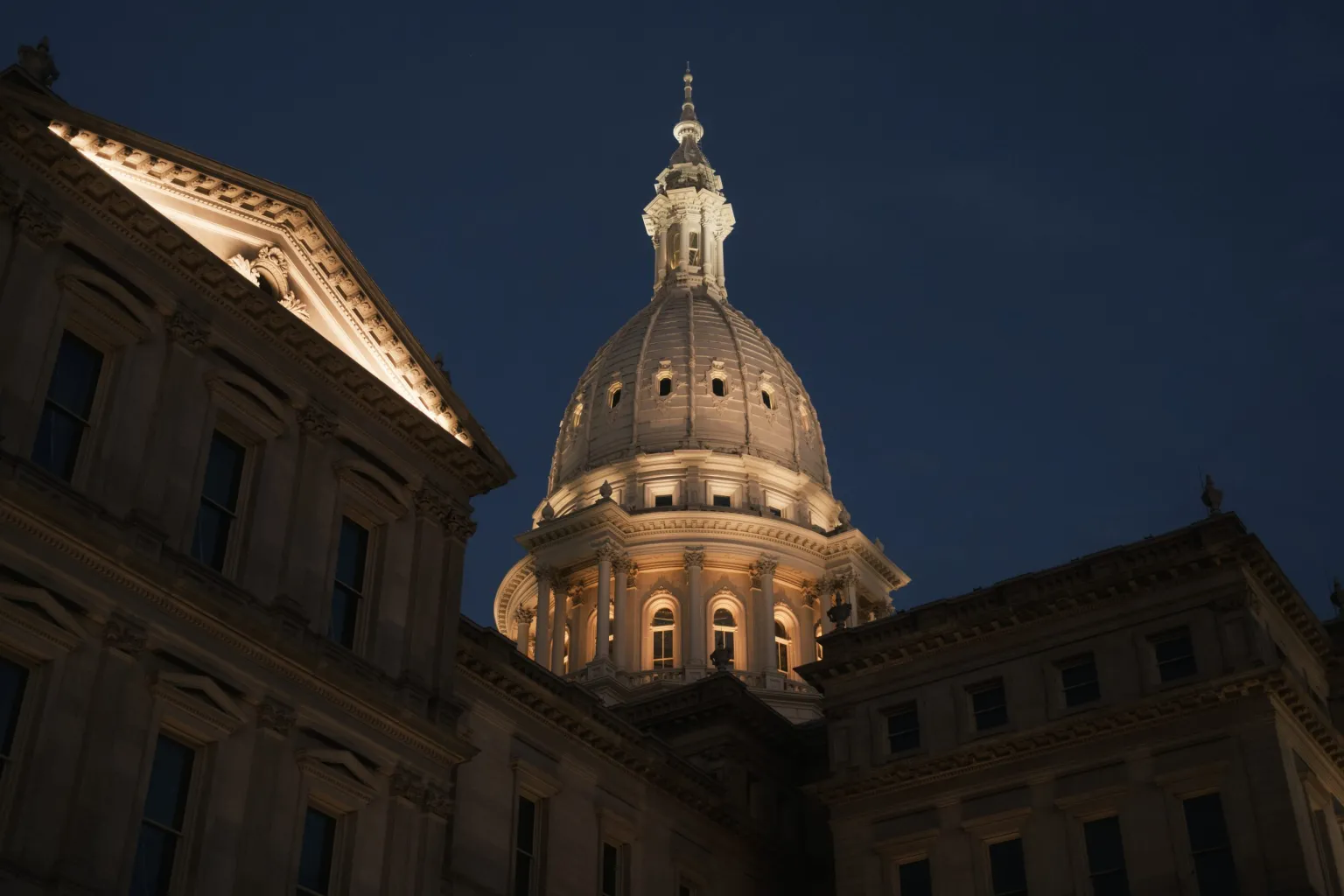
The Michigan compromise budget finally cleared the finish line early Friday morning after an exhausting overnight marathon at the state Capitol. Lawmakers pushed through roughly 23 straight hours of work to approve a new spending plan that leans on a mix of cuts and financial maneuvers to close a daunting $1 billion gap in tax revenue.
An Overnight Scramble to the Finish
The path to passage was anything but smooth. Legislators remained in session from Thursday through around 9 a.m. Friday, a stretch that would normally have seen the Capitol closed for the Fourth of July weekend.
Under state law, Michigan’s Republican-led House and Democratic-led Senate are expected to finalize a budget by July 1 each year. This time, they missed that mark. The first funding bill did not even surface until roughly 3:13 a.m. Friday, two days past the deadline, leaving lawmakers just a few short hours to review the legislation before casting their votes.
Despite the crunch, the numbers held. The Senate passed the main budget bill 27-9, while the House approved the plan by a wide 99-7 margin. In total, the package authorized about $84 billion in spending.
Frustration Over a Rushed Process
Not everyone was pleased with how the sausage was made. Several Republican senators voiced sharp criticism about the lack of time and transparency.
Sen. John Damoose of Harbor Springs said his caucus had no real information about what the budget blueprint contained, bluntly calling the process “nonsense.” Sen. Jim Runestad of White Lake Township echoed that frustration, noting lawmakers had only 30 to 40 minutes between their briefing and the final vote. He admitted they had little idea what was actually inside the bills.
That concern feels understandable given the sheer scale of the document. The main bill stretched to a staggering 1,001 pages.
A Budget “Full of Compromises”
Senate Appropriations Chairwoman Sarah Anthony, a Lansing Democrat, described the plan honestly as being full of compromises. She acknowledged the negotiation was especially difficult because of the $1 billion deficit that had to be addressed.
Still, she pointed to one achievement she considered a source of pride: closing that gap without slashing benefits for residents who rely on Medicaid or food assistance. For Anthony, protecting those programs stood out as the most meaningful outcome of a tough process.
This budget also carries added significance as the final spending plan of Democratic Gov. Gretchen Whitmer’s eight years in office. In a statement, Whitmer framed it as building on her administration’s progress, highlighting priorities like student literacy, expanded housing opportunities, protected health care, road repairs, and lower costs for residents.
How the State Got Here
The financial squeeze had been building for months. Back in February, Whitmer’s budget director, Jen Flood, warned the state faced a gap of roughly $1.8 billion.
Several factors drove the shortfall, including rising health care costs, additional tax dollars committed to road funding, and federal decisions under President Donald Trump that pushed states to shoulder a larger share of food assistance costs for low-income families.
Whitmer had initially proposed a larger $88.1 billion budget for the fiscal year beginning Oct. 1, funded partly through new taxes on smokers, gamblers, and digital advertising. However, House Speaker Matt Hall, a Richland Township Republican, refused to sign off on those tax increases. The final agreement landed much closer to the current budget’s total of around $84 billion.
Deals Tied to the Budget
Reaching agreement required more than just the spending plan itself. Hall and Senate Majority Leader Winnie Brinks worked for weeks before announcing a final deal on Thursday, and the package came bundled with dozens of related bills.
Among the notable additions:
- A measure doubling the cap on the state’s transformational brownfield program from $1.6 billion to $3.2 billion, expected to help spur redevelopment of Detroit’s riverfront Renaissance Center. The House backed it 82-26 early Friday.
- A proposal banning former lawmakers from being paid to lobby for two years after leaving office, which passed the Senate 29-7.
The Fight Over School Funding
Perhaps the most contentious element involved how schools would be funded. Sen. Darrin Camilleri, a Trenton Democrat, acknowledged that lawmakers were redirecting a larger share of School Aid Fund money, typically reserved for K-12 schools, toward higher education and community colleges.
That figure appeared to climb from about $1.3 billion this year to roughly $2 billion in the coming fiscal year, setting a new record. The shift effectively freed up General Fund dollars for other pressing needs, though Camilleri admitted it was “too much,” blaming the divided Legislature and competing priorities.
Critics were far less diplomatic. Robert McCann of the K-12 Alliance of Michigan blasted the plan, arguing it did little to support schools while pulling nearly $2 billion from the School Aid Fund to cover data centers and corporate incentives. When asked whether lawmakers had raided the fund, Anthony pushed back, preferring to call it “shifting” dollars.
On paper, the K-12 budget dropped from $21.3 billion to $19.8 billion. Yet the plan appears to allow certain federal funds excluded from that tally to still be spent, leaving the true total spending somewhat unclear.
Investments in the Classroom
Despite the disputes, the budget did include several education investments:
- Raising the base per-pupil foundation allowance by about 2.5%, from $10,050 to $10,300
- Dedicating $50 million to high-impact tutoring
- Launching a long-term weighted funding formula to direct extra support toward economically disadvantaged students and English learners
House Appropriations Chairwoman Ann Bollin praised the weighted formula, which will phase in over 15 years, calling the plan a transformational school budget with record investments. Whitmer’s office also touted $502 million aimed at improving literacy, including expanded funding for early literacy coaches, boosting their ranks from 336 to 420. Public universities saw overall funding rise 12%, from $2.3 billion to $2.6 billion.
Where the Cuts Landed
Balancing the budget meant tightening the belt in numerous areas. Ten state departments received less than the prior year, and several popular initiatives took hits.
Notable reductions included:
- An $8 million cut to the Pure Michigan tourism campaign
- $500,000 less for the Office of Global Michigan
- A $685,200 reduction to the arts and culture program
The Department of Environment, Great Lakes and Energy absorbed the steepest percentage drop at 31%, falling from $967 million to $671 million, largely due to reduced funding for a federal sewage and stormwater program.
Special Projects Across the State
Even amid cuts, lawmakers set aside $125 million for local projects statewide. These included road and bridge work, water main replacements, public safety facilities, and cultural institutions.
Among the allocations were funds for the Schoenherr Road Bridge reconstruction, security upgrades for the Jewish Federation of Detroit, pedestrian safety in Clarkston, and support for museums including the Arab American National Museum, the Charles H. Wright Museum of African American History, and the Zekelman Holocaust Center.
A Hard-Won Conclusion
In the end, the Michigan compromise budget reflects exactly what its name suggests: a series of difficult trade-offs made under pressure. Lawmakers managed to close a massive deficit and protect key safety-net programs, but only by making choices that left plenty of critics unhappy. As Whitmer’s final budget takes effect this fall, its mix of investments and cuts will shape the state’s priorities well beyond this exhausting overnight session.
Author