The far-right AfD once again finds itself at the centre of Germany’s political storm, as thousands of demonstrators flooded the streets of Erfurt to voice their opposition during the party’s annual gathering. What unfolded on Saturday was more than a simple protest; it was a vivid clash between two competing visions for the nation’s future. As the party celebrated its growing momentum, its critics warned of the dangers they believe it poses to German democracy itself.
A City Brought to a Standstill
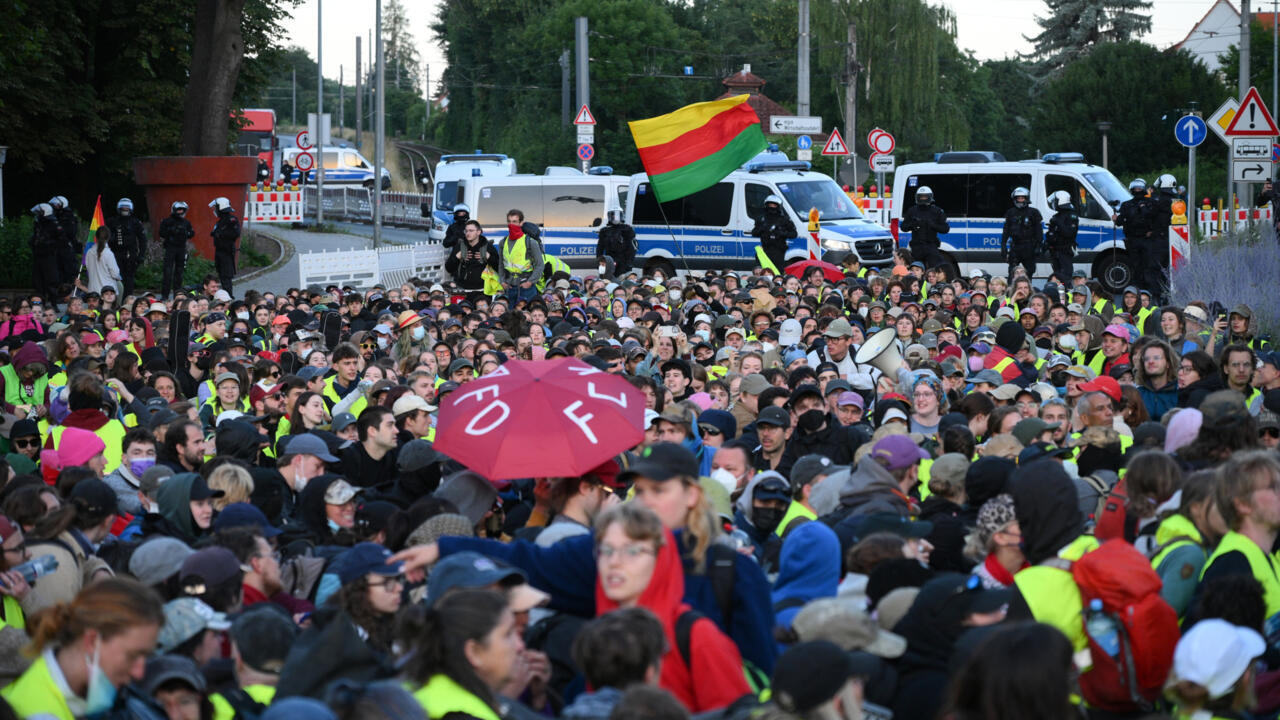
The eastern city of Erfurt became a battleground of ideas and activism as opponents of the party mobilised in large numbers. Demonstrators drawn from trade unions, civil society groups, and left-leaning political movements gathered with a shared purpose: to disrupt and denounce the far-right conference.
Their tactics were both peaceful and defiant. Protesters sat in orderly rows across highways and roads, physically blocking access to the convention centre hosting the two-day event.
Authorities responded with a heavy security presence, deploying officers in riot gear and calling in reinforcements from across the country. According to police estimates, roughly 15,000 people took part in the demonstrations throughout the city and its surroundings, underscoring the depth of public feeling against the party.
Leadership Reaffirmed at the Top
Despite the chaos outside, the conference proceeded with a clear agenda. The party used the occasion to re-elect its two familiar figureheads, the duo credited with steering the movement to unprecedented heights in national polling.
Both leaders secured their positions without opposition, signalling a desire to project unity. However, one notable detail emerged: one of the co-leaders received a considerably weaker endorsement than in previous years, hinting at possible undercurrents of discontent within the ranks.
Under their guidance, the party has climbed to the top of national opinion surveys, even surpassing the conservative bloc led by the current chancellor. This remarkable rise has transformed the group from a fringe outfit into a genuine contender for power.
Fiery Rhetoric and Defiant Speeches
The tone inside the convention hall was combative from the outset. Party speakers mocked the demonstrators outside, dismissing them as enemies of democracy while celebrating their own surging popularity.
One co-leader framed the moment as a pivotal struggle for the nation’s survival. She spoke passionately about defending the country from what she described as decline, appealing to notions of identity and homeland that resonate deeply with the party’s base.
The messaging left little doubt about the party’s priorities. A song with an anti-immigration theme reportedly played on the party’s social media stream just before proceedings began, while provocative merchandise bearing deportation slogans was available for purchase inside the venue.
A Hard Line on Immigration
Immigration remained the central pillar of the party’s platform throughout the event. Leaders repeatedly emphasised their intention to pursue aggressive deportation policies, framing them as necessary for the country’s wellbeing.
One co-leader declared that criminals and those in the country illegally no longer had any place in Germany, vowing rigorous removals. Such statements reflect the uncompromising stance that has come to define the movement.
Among the more controversial voices was a regional figure widely regarded as one of the party’s most radical members. He blended nostalgia with sharp criticism, painting a picture of a nation in decay. He evoked an idealised vision of safety and trust, lamenting the loss of a Germany where people could walk through parks at night or leave their keys hanging in their doors without fear.
Setting the Stage for Regional Battles
The timing of the conference was no accident. It arrived just ahead of crucial elections in two eastern states scheduled for September, contests the party hopes will serve as a springboard toward national influence.
Confidence radiated from the party’s leadership regarding these upcoming votes. One co-leader boldly predicted a path to governance, insisting the party would first take power at the regional level before eventually doing so nationally.
The party’s strength is particularly concentrated in the former communist east. Here is where the movement finds its most fervent support:
- Regions with the highest levels of frustration toward traditional political parties.
- Areas marked by lingering economic disillusionment.
- Communities receptive to nationalist messaging and calls for change.
A Push for Different Foreign Policy
Beyond domestic concerns, the party has also staked out distinctive positions on international affairs. One of its leaders has openly advocated for halting military support to Ukraine, a stance that sets the party sharply apart from the mainstream consensus.
This same figure has called for a fundamental reset in relations between Berlin and Moscow. Given the currently hostile atmosphere surrounding the conflict in Ukraine, such proposals have proven deeply divisive and further fuel criticism from the party’s opponents.
The Roots of the Party’s Rise
The movement’s ascent did not happen overnight. Formed over a decade ago, it has skilfully combined several elements to broaden its appeal and capture public attention.
Its strategy has relied on a potent mix of nationalist rhetoric, demands for stricter immigration controls, and direct appeals to voters weary of years of economic stagnation and successive governments they view as ineffective. This blend has allowed the party to tap into widespread frustration and channel it into political support.
Fierce Opposition and a Democratic Firewall
Not everyone views the party’s rise with enthusiasm. Critics accuse it of promoting racist policies and attitudes they consider fundamentally at odds with Germany’s democratic principles.
Opponents go further, warning that the party could pose a genuine threat to the nation’s constitutional order. In response, mainstream parties have adopted a firm strategy to contain its influence.
This so-called firewall approach involves refusing any form of cooperation with the party, effectively isolating it and shutting it out of coalition governments. The goal is to prevent the movement from translating its polling success into actual governing power.
For its part, the party rejects claims that it opposes democratic values. Earlier this year, it even secured a legal victory, obtaining a court injunction that ordered the domestic intelligence service to suspend a prior classification labelling the party as extremist.
A Nation at a Crossroads
As the dust settles from the Erfurt conference, Germany finds itself grappling with profound questions about its political direction. Recent polling places support for the party at strikingly high levels, well above that of the governing conservatives.
This surge reflects a broader unease rippling through parts of the country, particularly in regions where trust in the established order has eroded. Whether this momentum will translate into real power remains to be seen, especially with the mainstream firewall firmly in place.
What is undeniable, however, is that the battle lines have been clearly drawn. On one side stands a movement convinced it represents the nation’s last hope for renewal. On the other stand thousands of citizens determined to defend what they see as the core values of German democracy.
The coming months, with pivotal regional elections on the horizon, will prove decisive. As both sides prepare for the fight ahead, Germany stands at a genuine crossroads, one that could shape the character of the nation for years to come.
Author