Japan Locks In Male-Only Succession, Raising Fears for the Imperial Family’s Future
Japan has taken a decisive and controversial step to preserve male-only succession within its imperial family, enacting a historic revision to a 19th-century law that firmly bars women from the throne. Passed by parliament on Friday, the changes have sparked protests, feminist criticism, and deep anxiety that the very measures meant to protect the monarchy could ultimately hasten its decline.
At the center of the storm sits a beloved princess who, despite widespread public support, remains legally shut out of the role many believe she deserves.
What the New Law Actually Does
The revision to the Imperial House Law doubles down on a single principle: only men of paternal royal lineage may become emperor. To reinforce that bloodline in the face of a shrinking family, the new measures introduce some unusual provisions.
The key changes include:
- Permitting the adoption of distant male relatives so they can father future heirs
- Allowing princesses to retain their royal status and continue official duties even after marrying commoners
- Reaffirming that only boys born to men with royal blood can inherit the throne
Notably, while an emperor’s mother can be a commoner — as is the case today — the throne itself remains closed to women and to anyone lacking that paternal royal descent.
The Princess Left on the Sidelines
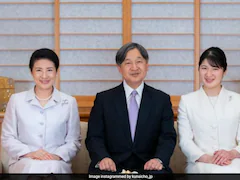
The human face of this debate is Princess Aiko, the 24-year-old daughter of Emperor Naruhito. Known for her warm smile, enthusiasm, and quick wit, she is enormously popular, and many Japanese want her to succeed her father.
Yet under the male-only rule, Aiko is ineligible simply because she is a woman. Instead, the line of succession bypasses her entirely, moving first to the emperor’s younger brother, Crown Prince Akishino, then to his 19-year-old son, Prince Hisahito, and after him to the emperor’s 90-year-old uncle, Prince Hitachi.
The fragility of that arrangement is hard to ignore. Hisahito is the first boy born into the imperial family in four decades, and of the 16 adults in the family, only five are men. There are no children at all beyond the current generation — a stark illustration of the succession crisis the law is meant to address.
A Government Determined to Defend the Bloodline
The driving force behind the changes is Prime Minister Sanae Takaichi and her fellow conservatives, who argue that the male bloodline is the sole source of the emperor’s authority and legitimacy.
After the law passed, Takaichi told reporters she was deeply moved. But critics see something far less noble at work. Hideya Kawanishi, a monarchy expert at Nagoya University, described the revision bluntly as a declaration meant to prevent female monarchs and defend the male lineage at all costs. Because the government cannot openly call it male chauvinism, he argued, it instead frames the policy as tradition.
For its part, the Imperial Household Agency struck a careful tone. Its chief, Buichiro Kuroda, said the agency would do everything appropriate to support the smooth activity of imperial family members under the new rules while fully considering their feelings.
The Weight of History
Supporters lean heavily on tradition, but history complicates their case. Japan has actually had eight female monarchs in the past, the last being Empress Gosakuramachi, who ruled from 1762 to 1770.
The strict paternal-line rule is more recent than it might appear. It was first written into law in the 1890 Imperial House Law, during an era when Japan actively promoted patriarchal systems, and that framework was largely carried over into the current 1947 version.
There’s also an uncomfortable truth about how the male line survived for so long. Historians note that the system only functioned in the past because concubines produced roughly half of all emperors — a practice that ended about a century ago under Naruhito’s great-grandfather, Emperor Taisho. Without it, the modern monarchy faces a mathematical problem that mirrors Japan’s broader struggle with a fast-aging, dwindling population.
Protests and Fierce Criticism
The revisions have provoked real backlash. Many Japanese view the effort as a deliberate attempt to eliminate Princess Aiko from consideration and to justify discrimination against women.
The criticism has been especially pointed given who is leading the charge. Prominent feminist scholar Chizuko Ueno called it deeply ironic that Japan’s first female prime minister would champion an obsession with male succession. She argued the new measures effectively treat male royals as stallions while pressuring female royals as childbearing machines expected to produce male offspring.
That pressure has a painful precedent. After Aiko’s birth, her mother, Empress Masako — a Harvard-educated former diplomat and a commoner — reportedly developed a stress-induced mental condition, apparently linked to criticism over not producing a male heir.
An Unworkable System?
Beyond the ethical objections, experts question whether the plan can even succeed on its own terms. Former Imperial Household Agency chief Shingo Haketa described the monarchy after Hisahito as extremely unstable, given the reliance on male-only succession and the loss of princesses who marry commoners.
The proposed solution — adopting distant male relatives — faces steep practical hurdles. Consider the numbers: in 1947, 51 members from 11 branch families renounced their royal status, largely to ease the postwar financial burden on the monarchy. Those families are now at least 36 generations removed from Naruhito, having split from a common male ancestor some 600 years ago.
The idea of pulling their descendants back into royal life strikes many as unrealistic. Critics have been scathing:
- Cartoonist Yoshinori Kobayashi, who campaigns for Aiko’s succession, asked who would want the son of an unknown adoptee as emperor instead of Aiko.
- Asahiro Kuni, whose family renounced its royal status when he was three, called it cruel to ask people to upend their lives, doubting anyone would volunteer.
Kuni, who went on to work as an engineer, said he would advise his own family to decline any such request, describing royal life as a sacrifice of one’s own life for the happiness of others. He has instead voiced support for female monarchs.
The Princesses Caught in the Middle
The second major change — letting princesses keep their royal status after marrying commoners — affects five single princesses, including Aiko and her popular 31-year-old cousin Kako. Under the revision, they could continue serving official duties, though their spouses and children would not be recognized as royals.
The imperial family’s restrictive nature looms over this provision. Aiko’s elder cousin Mako renounced her royal status and moved to New York after marrying her college boyfriend, a move widely seen as an escape from the constraints of imperial life. Ueno, calling the system inhumane, has urged the remaining princesses to follow Mako’s example and leave when they can.
A Public That Wants Change
Public sentiment often runs against the government’s position. Many ordinary Japanese see no reason women cannot serve.
A sushi chain founder argued that since the emperor is a symbolic figure, there’s no reason a woman couldn’t fill the role. Another citizen pointed to history, noting that female emperors existed before and that Aiko, as the emperor’s daughter, is the legitimate successor.
There is even concern within royal circles. Former Emperor Akihito, who abdicated in 2019 and worked to bring the once-aloof monarchy closer to the people, reportedly supports Aiko’s succession. While he avoided directly answering a 2005 government question on the matter, he emphasized the major role female royals play and the monarchy’s duty to serve the people’s happiness — remarks widely read as support for female monarchs. Emperor Naruhito himself expressed hope that discussions would reach a conclusion gaining the people’s understanding, a comment palace watchers interpreted as subtle displeasure.
The Bigger Picture
This debate reaches far beyond palace walls. It touches on how a modern democracy balances tradition against equality, and whether an ancient institution can survive rules that seem increasingly out of step with both public opinion and demographic reality.
Several tensions now hang over Japan’s monarchy:
- A wildly popular princess remains barred from a role many want her to hold
- The male line depends on a single teenage heir and improbable adoptions
- A first female prime minister has become the face of male-only succession
- Public and even royal sentiment appears to favor reform the government resists
On the same day, Japan also enacted a controversial law prohibiting desecration of the national flag, a right-wing priority pushed by Takaichi that opponents view as an effort to silence criticism — underscoring the broader conservative agenda shaping the moment.
Looking Ahead
By enshrining male-only succession, Japan’s government has staked the monarchy’s future on a narrow and fragile path. The measures may satisfy conservatives determined to defend tradition, but they leave the 1,500-year-old institution resting on the shoulders of one young prince and a set of adoption schemes few find credible.
Whether this gamble preserves the imperial family or quietly seals its decline remains an open question. What’s clear is that a large share of the public, along with respected experts and even voices inside the palace, believe the answer was standing in plain sight all along — in the popular young princess the law has chosen to leave behind.
Author