US Ebola Screening Atlanta 2026: CDC Expands Airport Checks Amid Rising Bundibugyo Outbreak
The US Ebola Screening Atlanta 2026 expansion marks a major step in America’s growing public health response to the rising Bundibugyo strain Ebola outbreak in Central Africa. As cases continue to climb in the Democratic Republic of the Congo, Uganda, and South Sudan, U.S. health authorities are tightening monitoring at major points of entry to ensure that the deadly virus does not spread to American communities.
In a significant policy update, the U.S. Centers for Disease Control and Prevention has officially added Hartsfield-Jackson Atlanta International Airport as a designated airport for enhanced Ebola screening for travelers arriving from affected regions.
A New Entry Point for Returning Americans
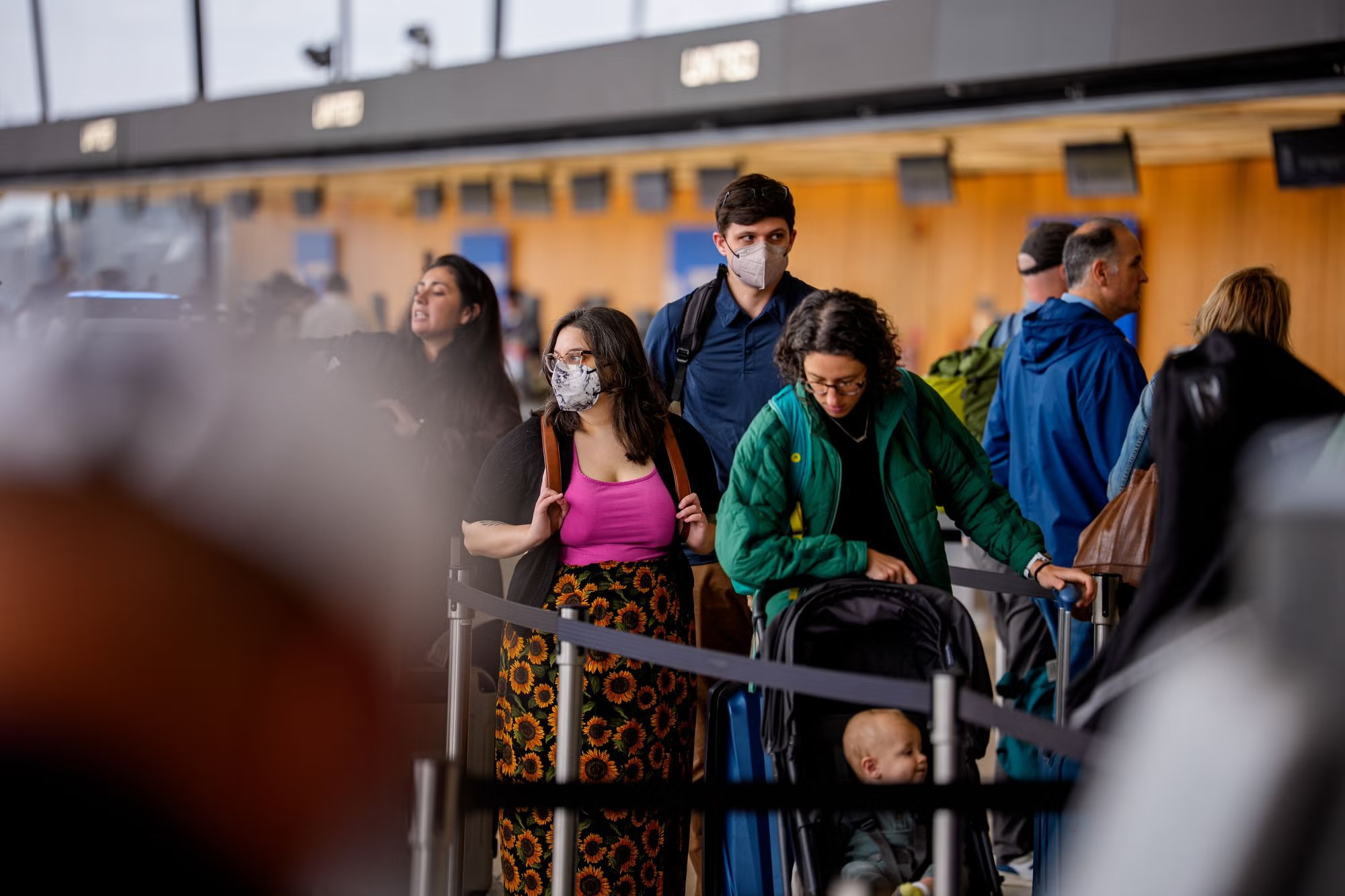
Until now, returning U.S. citizens from Ebola-impacted countries were directed to a single entry point — Washington’s Dulles International Airport — which was officially designated earlier this week. With the expansion, Atlanta will now serve as a second authorized airport for travelers needing to undergo strict health checks.
The CDC confirmed that Hartsfield-Jackson Airport already has extensive experience handling public health screenings due to its long-standing role in international travel monitoring. This makes it well-suited to serve as part of the broader U.S. defense against the Ebola threat.
The decision was made to:
- Reduce overcrowding at the Dulles airport facility
- Provide a faster, smoother screening process
- Make returning home easier for U.S. citizens in southeastern states
- Strengthen surveillance through multiple checkpoints
- Ensure consistent health screenings nationwide
The expanded approach signals just how seriously U.S. authorities are taking the outbreak.
Why Atlanta Was Chosen
Hartsfield-Jackson Atlanta International Airport has long been one of the busiest airports in the world. Its strategic location, large medical infrastructure, and established airport operations make it a natural fit for hosting Ebola-related screenings.
Some of the reasons Atlanta was chosen include:
- It serves as a major international hub
- It is home to the CDC’s headquarters
- It is widely connected to flights from Africa
- It has established health-screening procedures
- It has trained personnel to manage public health emergencies
The CDC stated that the airport already has the operational infrastructure needed to begin screening immediately, which is particularly important during a fast-developing public health situation.
How the Screening Process Works
When travelers arrive at one of the designated airports, they go through a structured public health screening process aimed at identifying any early signs of illness related to the virus. This includes both medical assessments and information collection to maintain monitoring after arrival.
Some of the key components of the screening include:
- Temperature checks and visual health assessments
- Detailed travel history questionnaires
- Symptom reporting and self-monitoring instructions
- Contact information collection for follow-up monitoring
- Coordination with state and local health departments
These procedures help ensure that any potential cases can be identified, isolated, and addressed quickly. While most travelers will not be carriers of the virus, the screening provides an early warning system that supports public health safety.
Why the Outbreak Demands Attention
The current outbreak is being closely watched because of the seriousness of the Bundibugyo strain of Ebola, which can be especially deadly. The World Health Organization reports troubling numbers in the affected region:
- 82 confirmed cases in the DRC
- 7 confirmed deaths
- Nearly 750 suspected cases
- 177 suspected deaths
- Multiple districts affected across the DRC and beyond
This makes the current outbreak one of the most concerning in years, especially with the virus spreading across multiple countries. The cross-border nature of the situation is particularly worrying, since populations frequently move between DRC, Uganda, and South Sudan for trade, work, and family connections.
Broader Travel Restrictions From the U.S.
Earlier this week, the Trump administration announced that non-citizens who had traveled to the DRC, Uganda, or South Sudan in recent weeks would not be allowed to enter the United States. The travel restriction is part of a broader effort to contain the virus and ensure that international travelers do not unintentionally bring it onto American soil.
These restrictions reflect:
- Concerns about the speed of the outbreak
- A desire to reduce the chance of cross-border transmission
- Cooperation between federal agencies during health emergencies
- A precautionary approach typical for highly infectious diseases
- The government’s broader strategy of layered health security
By combining travel restrictions with airport screenings, U.S. authorities are taking a comprehensive approach to risk reduction.
CDC’s Multi-Layered Defense Strategy
Enhanced airport screening is just one part of the CDC’s broader strategy to defend against the Ebola threat. The agency uses a layered approach designed to address risks at multiple points along the travel journey.
Some of the main components of this approach include:
- Overseas exit screening before passengers board flights
- Airline reporting protocols for sick passengers
- Enhanced airport-based screening upon arrival
- Public health monitoring after arrival in the U.S.
- Coordination with state and local health departments
Each layer is designed to catch potential cases early. Even if one stage misses a sign of illness, the next stage is expected to identify it. This multi-step strategy has been refined over many years and proved especially effective during the 2014–2016 Ebola outbreak.
Public Health Lessons From Past Outbreaks
The U.S. has dealt with Ebola scares before, most notably during the 2014 outbreak in West Africa. That earlier crisis taught the country valuable lessons about early detection, rapid response, and international cooperation.
Some of the lessons learned that continue to shape current policies include:
- The importance of fast information sharing between countries
- The need for well-equipped airport screening systems
- The value of training healthcare staff for infectious disease emergencies
- The role of public education in preventing panic
- The importance of monitoring travelers after arrival
These lessons are now being applied as the U.S. responds to the latest Ebola outbreak in Central Africa.
A Growing Global Concern
While the U.S. is acting quickly to safeguard against potential outbreaks, the broader international community has been raising alarms about the spread of the virus. Health agencies worldwide are watching the situation closely, especially with cases continuing to grow in remote regions of the DRC and surrounding countries.
The challenge is significant for several reasons:
- Many affected areas have limited healthcare infrastructure
- Conflict zones make response operations more difficult
- Distrust of authorities can complicate vaccination efforts
- Mobile populations can spread the virus rapidly
- Limited resources slow medical responses
Containing Ebola in such environments often requires a coordinated international response. Organizations like the WHO, UNICEF, and Doctors Without Borders are actively working in the affected regions to slow the outbreak.
What Travelers Should Know
For Americans returning from the affected countries, the CDC recommends staying informed and prepared. Travelers should:
- Arrive only through Atlanta or Dulles airports
- Be ready for thorough health screenings
- Cooperate with public health officials during arrival
- Provide accurate travel history details
- Monitor their own health for at least 21 days
These steps help authorities track potential cases and respond quickly, even after travelers return home. While the chance of becoming infected is low, the layered system ensures that any concern can be addressed immediately.
Why Airport Screenings Matter
Although Ebola is not airborne and spreads only through close contact with infected bodily fluids, airport screenings serve as a critical line of defense. Their goal is to:
- Detect symptoms early
- Reduce the risk of unintentional transmission
- Allow medical authorities to act before symptoms worsen
- Reassure the public during global outbreaks
- Strengthen national preparedness against future viruses
By making sure travelers from affected regions are monitored, the U.S. dramatically reduces the chance that a single overlooked case could lead to a wider outbreak.
A Closer Look at the Bundibugyo Strain
The Bundibugyo strain of Ebola is a less-common but still highly dangerous variant of the virus. It was first identified in Uganda in 2007 and has since appeared in several outbreaks across Central Africa. While it tends to be slightly less lethal than the Zaire strain, it remains deadly and can spread rapidly without proper containment.
Symptoms typically include:
- Fever and fatigue
- Severe headaches
- Muscle pain
- Vomiting and diarrhea
- Internal and external bleeding in severe cases
Medical experts emphasize the importance of early detection and isolation to prevent further transmission.
Final Thoughts
The US Ebola Screening Atlanta 2026 expansion is a critical move that strengthens America’s defenses against one of the world’s most dangerous viral threats. By adding Hartsfield-Jackson Atlanta International Airport as a second entry point, the CDC is widening its safety net and ensuring that returning travelers can be screened more efficiently.
As the outbreak in the DRC, Uganda, and South Sudan continues to grow, the U.S. is preparing for any possible scenarios. Combining travel restrictions, airport screening, and post-arrival monitoring, federal authorities are using a layered strategy designed to identify potential cases early.
The world is watching as global health agencies work to control the outbreak at its source. Until the situation stabilizes, the United States is taking every necessary step to protect public health while supporting international containment efforts. The expanded screening at Atlanta is a clear sign that vigilance, preparedness, and coordination remain critical in the fight against emerging infectious diseases.
Author