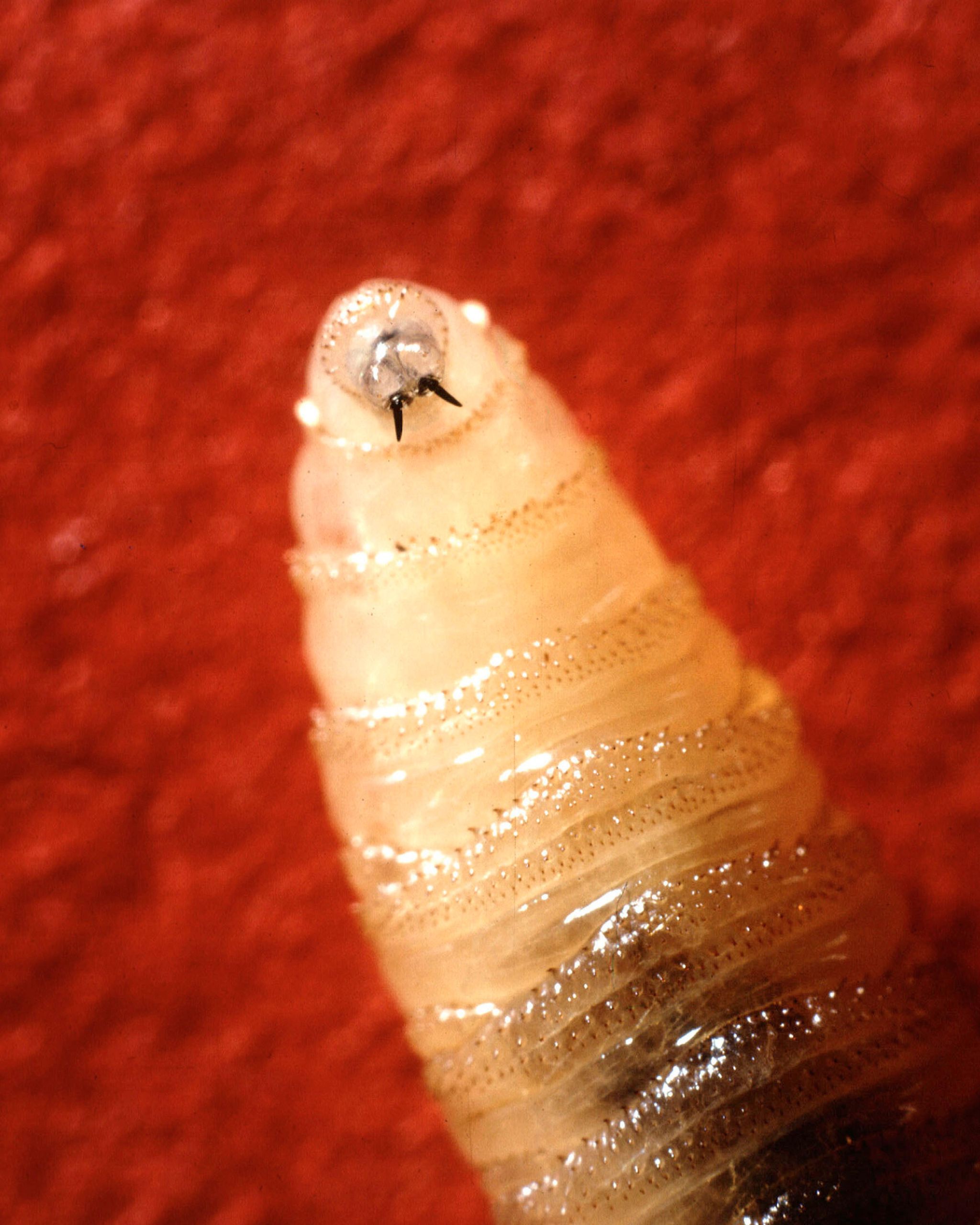
The screwworm outbreak now spreading across the American southwest has become a costly lesson in what happens when budget cuts collide with biology. What began as an effort to trim a modest $15 million program has ballooned into a crisis carrying a price tag of at least $1 billion, and critics are pointing fingers squarely at the cost-cutting initiative that may have left the country exposed in the first place.
The Math That Doesn’t Add Up
The contradiction at the center of this story is hard to ignore. Rep. Pramila Jayapal summed it up bluntly, noting that the cost-cutting effort championed by Trump and Elon Musk “saved” $15 million by eliminating a program meant to keep screwworm at bay, only for the country to now face an outbreak in its beef supply while the administration spends roughly a billion dollars to respond.
In other words, a small upfront saving has turned into a massive downstream expense, the kind of outcome that undercuts the entire premise of efficiency.
How the Cuts Set the Stage
When Elon Musk’s so-called Department of Government Efficiency, widely known as DOGE, began aggressively slashing federal programs last year, it created bottlenecks that may have weakened the nation’s defenses against these flesh-eating insects, and made the eventual fight far more expensive.
The numbers tell the story. The US Department of Agriculture had been spending only about $15 million per year to combat screwworm. That funding, bundled with roughly $382 million aimed at fighting animal-borne diseases worldwide, was terminated in March 2025 as part of DOGE’s campaign to eliminate what it labeled government “waste.”
At the time, those cuts may have looked like easy wins on a spreadsheet. In hindsight, they appear to have removed a critical safeguard.
The Outbreak Arrives
Fast forward to today, and the consequences are becoming painfully clear. The pests are now pressing into Texas and New Mexico, with at least 12 infections identified in the United States as of Tuesday. In response, the Trump administration is now committing at least $1 billion to contain the spread.
During a recent Senate hearing, Agriculture Secretary Brooke Rollins tried to redirect blame toward the Biden administration, while presenting herself and the president as decisive actors. She pointed to reports from the previous spring warning that the insects were rapidly advancing through Central America.
Rollins recounted asking Trump for a billion dollars to build a major facility in Texas dedicated to breeding hundreds of millions of sterilized male screwworm flies, a containment technique that had successfully held the pests in check across South America for decades. According to her, the president approved it almost immediately, with little hesitation.
A Solution That Won’t Arrive Soon
The planned Texas facility is ambitious. Once running, it is expected to release roughly 300 million sterile flies every week. The catch is timing: the operation isn’t expected to be fully functional until the end of 2027.
That delay matters enormously, because the threat is here now, not two years from now.
The Mexico Facility That Stalled
The screwworm story has another layer that critics find especially damning. Beyond the $15 million cut to monitoring the bugs’ movement from Panama, reporting from the Houston Chronicle revealed that DOGE paused plans for a facility in Mexico.
That facility had been authorized by the Biden administration in 2024 as part of a $165 million emergency package to fight screwworm, and was designed to produce between 60 and 100 million sterile flies per week. But amid sweeping layoffs at the USDA, funding for the project wasn’t announced until May 2025.
Even now, the picture is murky. While the USDA’s Animal and Plant Health Inspection Service, known as APHIS, maintains that fly production at the facility could begin as early as summer 2026, the site is still listed as under construction.
Voices From Inside the Agency
Those who once worked at the heart of these efforts paint a troubling picture of disruption.
Kevin Shea, who led APHIS during the Obama administration and retired from the agency in January 2025, told the Chronicle that containment efforts were effectively put on hold at the start of Trump’s second term. He described an administration deeply distrustful of career staff and unwilling to listen to their expertise. In his view, the delayed funding for the Mexican sterile fly facility likely got tangled up in the broader DOGE push, possibly because it resembled foreign aid.
The staffing toll appears significant as well. Journalist Christopher Collins reported in the Texas Observer that deep cuts to APHIS, which lost nearly 1,900 employees during Trump’s first year back in office, eliminated what amounted to the first line of defense against incoming parasites. Those workers were responsible for inspecting cattle awaiting import from Mexico to make sure no screwworms slipped through.
The Ripple Effect on Beef Prices
This isn’t just a bureaucratic dispute. As screwworm spreads through cattle country, it threatens to push beef prices even higher. Those prices have already climbed more than 20% since Trump returned to office, and an animal-killing parasite moving through the herd could worsen the strain on consumers.
The broader irony is hard to miss. Critics argue the entire “efficiency” initiative failed on its own terms. Despite the bold cost-cutting claims, a April 2026 report from the nonpartisan Partnership for Public Service estimated that the effort ultimately cost taxpayers around $165 billion.
A Question of Accountability
The episode has sparked pointed criticism. Jayapal called the screwworm saga a textbook example of DOGE’s “peak incompetence,” highlighting the absurdity of saving $15 million only to spend a billion later.
Others took aim directly at Musk himself. Drop Site News co-founder Ryan Grim suggested, only half-jokingly, that Musk should foot the bill, framing it as a simple matter of responsibility. “You broke it,” he wrote, tagging the billionaire, and questioning why ordinary taxpayers should have to pay for the consequences. The jab carried extra weight given that Musk recently became the world’s first trillionaire.
The Bigger Lesson
At its core, the screwworm crisis is a cautionary tale about the difference between cutting costs and creating value. Trimming a $15 million program looked efficient in isolation, but it ignored the enormous protective value that small investment provided.
Now, with infections climbing, a billion-dollar facility years from completion, and beef prices under pressure, the country is left grappling with a problem that prevention might have avoided entirely. Whether or not Musk ever pays a cent, the bill has already landed, and it’s the public that’s covering it.
Author