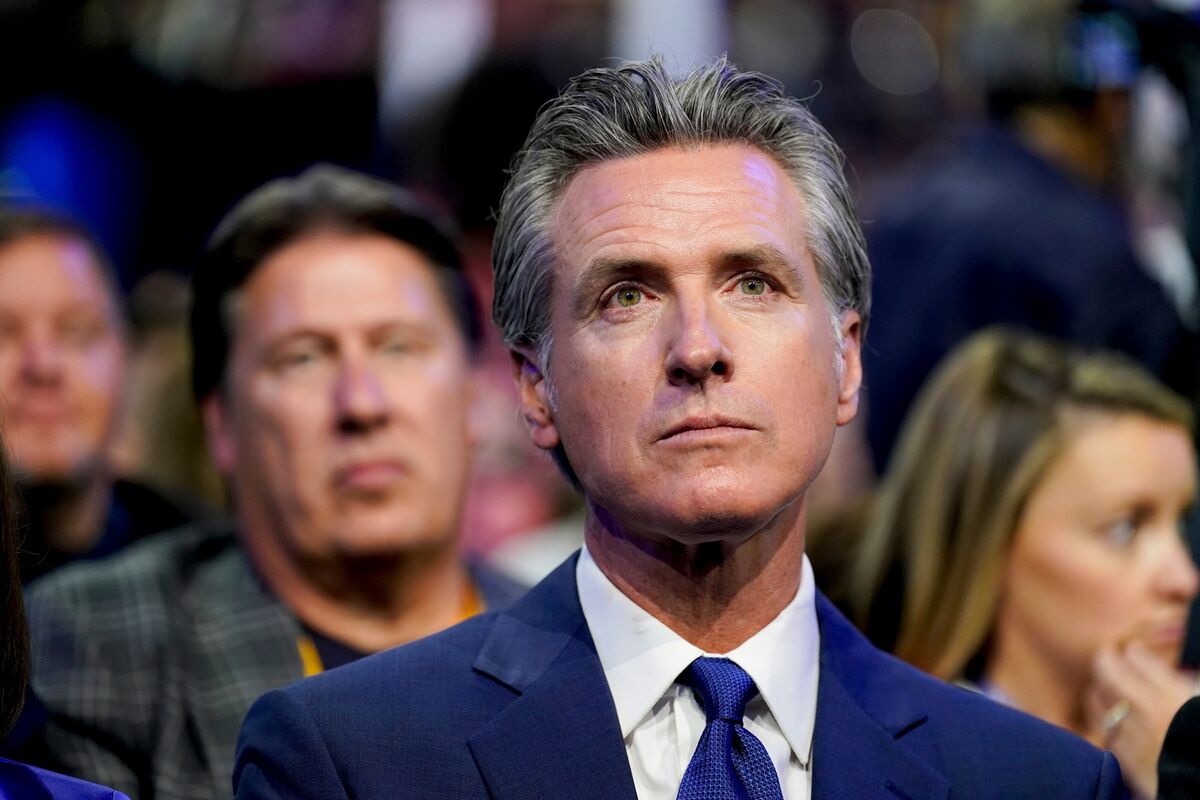
The debate over Newsom trans athletes policies has erupted once again, thrusting California’s governor back into the centre of one of the nation’s most heated cultural battles. Following a historic Supreme Court decision this week, Gavin Newsom finds himself facing renewed and intense criticism as his state doubles down on allowing transgender athletes to compete in girls’ sports. The move has reignited passions on both sides, sparking fierce reactions from activists, politicians, and everyday Americans alike.
A Supreme Court Decision That Changed the Landscape
The controversy stems from a major ruling handed down by the nation’s highest court this week. In a decisive outcome, the justices voted 6-3 to uphold state laws that prohibit males from competing in women’s sports.
For many advocates of women’s athletics, the decision represented a long-awaited victory. It appeared to settle, at least legally, a question that has divided communities and dominated headlines for years.
Yet the ruling did not bring the uniform change some expected. In California, the response was swift and unequivocal, setting the stage for a fresh wave of conflict.
California Refuses to Change Course
Almost immediately after the decision, Newsom’s office made clear that the state had no intention of altering its approach. Officials emphasised that the Supreme Court’s ruling would not impact California’s existing laws.
A spokesperson explained that the state remained dedicated to treating every resident with dignity and respect, specifically including members of the LGBTQ community. The message was firm: California would continue permitting transgender athletes to compete alongside girls, regardless of the court’s decision.
This stance quickly became a lightning rod for criticism, positioning the governor once again at the heart of a national firestorm.
Highlighting a Record on Transgender Rights
In defending its position, Newsom’s office pointed to what it described as an unmatched commitment to transgender rights. A source within his administration shared a list boasting that the governor holds the strongest record in the country on protecting and expanding those rights.
Among the accomplishments highlighted were several notable actions, including:
- Making it simpler for individuals to update gender markers on official documents.
- Appointing multiple transgender judges to positions within the state.
These points were clearly intended to reinforce the governor’s dedication to the transgender community. However, they also fuelled further backlash from critics who felt the state was ignoring concerns about fairness in women’s sports.
Activists Respond with Outrage
The reaction on social media was immediate and intense. Prominent voices in the women’s sports movement wasted no time condemning the governor’s position.
Well-known advocates, including figures who have become leading faces of the movement to protect female athletics, spoke out sharply against the decision. Their criticism reflected a broader frustration among those who believe biological males competing against girls undermines fairness and safety in competition.
For these activists, California’s defiance felt like a direct dismissal of the very concerns the Supreme Court had just validated.
The Athlete at the Centre of the Storm
Much of the ongoing debate has been shaped by the performance of one particular high school athlete. This competitor claimed two track and field state titles for the second consecutive year, drawing significant attention to the issue.
The athlete’s success on the field became a focal point for both supporters and opponents. Ahead of the first round of the state tournament earlier in May, protesters rallied under the banner of protecting girls’ sports.
Led by a former collegiate women’s soccer player, demonstrators organised a news conference near the competition grounds. Their goal was to draw public attention to what they saw as an unfair playing field for female athletes.
A Contentious Statement Sparks Local Anger
In the days leading up to that news conference, Newsom’s office weighed in with a statement that only intensified the controversy. The remarks drew criticism from many locals who felt the governor was dismissing legitimate concerns.
The statement argued that discussions on the topic should be rooted in fairness, dignity, and respect. It went further, accusing the political right of cynically weaponising the debate to demonise individual children.
According to the statement, the governor’s position was straightforward: he intended to stand with all children while standing up to those he described as bullies. For critics, however, the framing sidestepped the core issue of competitive fairness.
A Complicated Personal History on the Issue
Perhaps what makes Newsom’s position so striking is his own previous commentary on the matter. The governor has not always appeared so firmly aligned with his state’s current policy.
During an episode of his podcast in March 2025, he openly acknowledged that allowing males to compete in girls’ sports struck him as deeply unfair. That admission, made alongside a prominent conservative figure, surprised many observers at the time.
This apparent contradiction between his personal views and his administration’s official stance has only added to the criticism, leaving some questioning where the governor truly stands.
Legal Battles Loom Large
The controversy extends well beyond public statements and social media outrage. California now finds itself entangled in serious legal challenges over its policies.
The federal Department of Justice, under President Donald Trump’s administration, has launched Title IX lawsuits targeting education agencies in the state. These legal actions specifically challenge California’s practice of allowing transgender athletes in girls’ high school sports.
The lawsuit was formally initiated after the aforementioned athlete captured multiple state finals, winning titles in triple jump and high jump while also placing second in long jump at the previous year’s championships. These victories became a catalyst for the mounting legal and political pressure now facing the state.
A Debate Far from Over
As the dust settles from the Supreme Court’s decision, it’s clear that California’s defiance guarantees the conversation will continue. The state’s refusal to adjust its policies ensures that the tension between differing visions of fairness and inclusion remains unresolved.
For supporters of transgender rights, California stands as a bold defender of dignity and acceptance. For advocates of women’s sports, the state represents a troubling refusal to acknowledge legitimate concerns about competitive equity.
Caught in the middle are the young athletes themselves, whose experiences have become symbols in a much larger national struggle. As lawsuits proceed and public pressure mounts, all eyes remain on California and its governor to see how this deeply divisive chapter will ultimately unfold.
Whatever the outcome, one thing is certain: the debate over fairness, identity, and opportunity in sports shows no signs of fading. It remains one of the most emotionally charged issues of our time, touching on questions of rights, fairness, and the very meaning of equality in modern America.
Author