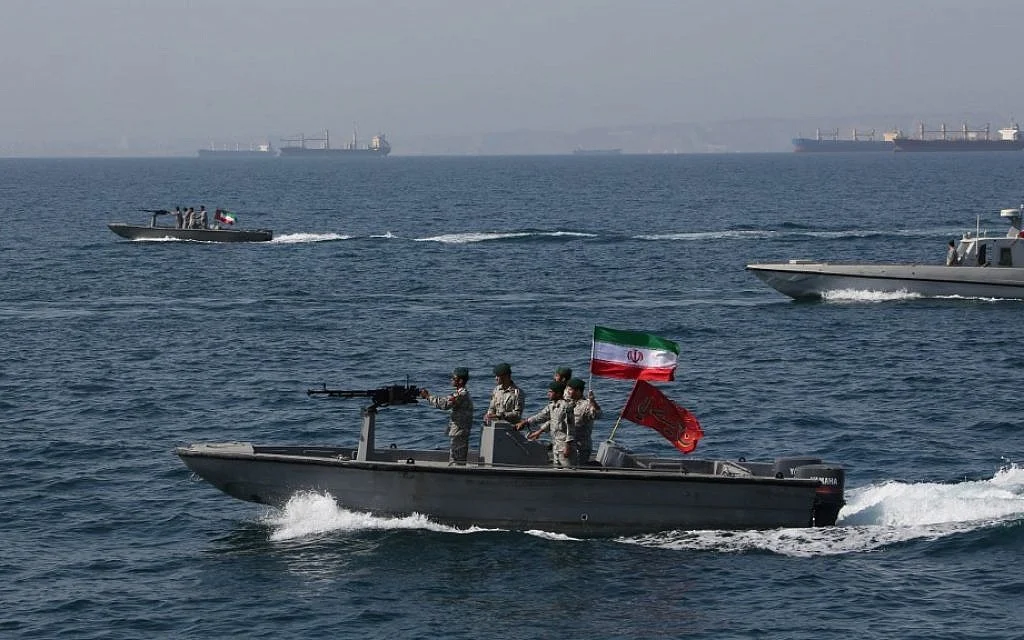
The Strait of Hormuz has become the central point of dispute between Washington and Tehran, with each side publicly asserting a version of events that the other flatly rejects. The disagreement is not merely rhetorical. It concerns one of the most consequential maritime passages in the world, and the answer affects energy markets, shipping insurance, and the broader trajectory of the conflict.
President Donald Trump has repeated his assertion that the United States holds total control over the waterway. That statement was made against a backdrop of reporting that transit volumes through the strait had fallen to a one-week low.
Tehran has offered a directly opposing account. Iranian officials say their resistance will continue and that the strait will stay closed until the country’s demands are satisfied.
Two Narratives, One Waterway
The gap between these positions is unusually stark even by the standards of wartime messaging.
A claim of control implies that commercial traffic can move under protection. A claim of closure implies the opposite. Shipping data sits somewhere in between, showing reduced movement rather than a complete halt, which allows both sides to point to figures that appear to support their framing.
For shipowners and insurers, the ambiguity itself is the problem. Vessels do not require an official closure to stop sailing. Rising war-risk premiums, crew safety concerns, and charterer reluctance are often enough to suppress traffic well before any physical blockade takes effect.
Why the Strait Matters So Much
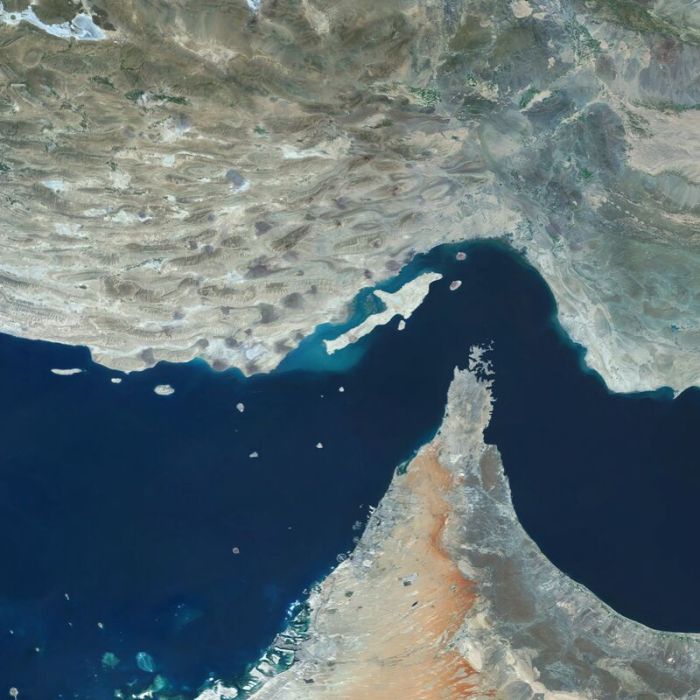
The Strait of Hormuz connects the Gulf to the Gulf of Oman and, from there, to the Arabian Sea. At its narrowest, the navigable shipping lanes are only a few kilometres wide.
A substantial share of the world’s seaborne crude oil and a significant volume of liquefied natural gas pass through it. There are limited alternative routes, and the pipelines that bypass the strait cannot absorb anything close to the full volume.
That combination of high throughput and geographic narrowness is what has made the strait a recurring pressure point in regional confrontations for decades. Even the credible threat of disruption tends to move global energy prices.
Iran’s Stated Conditions
Mohsen Rezaei, recently appointed as secretary of Iran’s Supreme National Security Council, set out the linkage explicitly this week. He called for a ceasefire across the region, specifically including Lebanon and Gaza, and said the strait would remain closed until those conditions were met.
That framing ties maritime access directly to outcomes in conflicts hundreds of kilometres away, effectively presenting the waterway as leverage rather than as a separate theatre.
Whether that approach strengthens Iran’s negotiating position or hardens opposition to it is a matter of considerable disagreement among analysts. Gulf states dependent on the same shipping lanes have their own interests, which do not necessarily align with either Washington or Tehran.
Hamas Endorses the Ceasefire Call
The Palestinian group Hamas publicly welcomed Rezaei’s remarks.
In a statement issued through its Arab and Islamic Relations Office, the group said ending the wars would serve the interests of the region, its populations, and their future. It argued that continued fighting benefits only what it described as Israeli plans aimed at fragmenting the region, destabilising it, and draining its resources.
Israel and its allies reject that characterisation entirely, framing military operations as responses to attacks and to threats posed by armed groups. Readers weighing these statements should treat them as positions advanced by parties to the conflict rather than neutral descriptions.
Raids Reported Across the Northern West Bank
Separately, the Palestinian news agency Wafa reported a series of early morning Israeli military operations in the Nablus governorate.
According to that reporting, military vehicles entered three locations during dawn hours:
Burqa, northwest of Nablus, where troops were said to have entered multiple homes and detained several Palestinians.
Qusra, to the south, where heavy vehicles were reportedly deployed alongside an armoured bulldozer.
Salem, to the east, where patrols were described as searching neighbourhoods and main roads.
Wafa additionally reported that five Palestinians were detained at dawn on Thursday from Allar, Seida and Qaffin, north of Tulkarem.
Israeli authorities typically describe such operations as counterterrorism activity targeting suspects and weapons. Palestinian officials and rights organisations characterise them as collective measures affecting civilians. Independent verification of individual incidents is often difficult in real time.
Iraq Reports Drone Seizure
Iraq’s Interior Ministry announced the seizure of 20 locally manufactured drones and the arrest of four individuals, according to the Iraqi News Agency.
The ministry said those detained admitted under questioning that they held the drones for trafficking purposes.
Baghdad has emphasised an effort to tighten internal security and has stated that it will not permit its territory or airspace to be used for launching attacks against neighbouring countries.
That position reflects a difficult balancing act. Iraq maintains relationships with both Iran and the United States, hosts armed groups with varying loyalties, and has strong incentives to avoid becoming a corridor or a battlefield in someone else’s confrontation.
Reading the Situation Carefully
Several things are worth keeping in mind when following developments of this kind.
Claims from all governments involved are strategic communications as much as factual reporting. Assertions of control or closure serve purposes beyond description.
Shipping data, insurance rates, and port activity often provide a more reliable picture of actual conditions than official statements from any side.
Reports from news agencies affiliated with parties to a conflict may be accurate, but they are not independent, and details frequently shift as more information emerges.
Escalation in one theatre increasingly connects to others, as the explicit linkage between the strait and ceasefires elsewhere demonstrates.
What to Watch
The immediate indicators will be transit volumes through the strait over the coming days, movement in energy prices, and whether the ceasefire framing gains traction with any additional regional actors.
Beyond that, the key question is whether the competing claims over Hormuz remain a war of statements or translate into direct confrontation at sea. The difference between those outcomes is enormous, and at present neither side’s public position offers much clarity about which way it will go.
Author
-
Lucienne Albrecht is Luxe Chronicle’s wealth and lifestyle editor, celebrated for her elegant perspective on finance, legacy, and global luxury culture. With a flair for blending sophistication with insight, she brings a distinctly feminine voice to the world of high society and wealth.