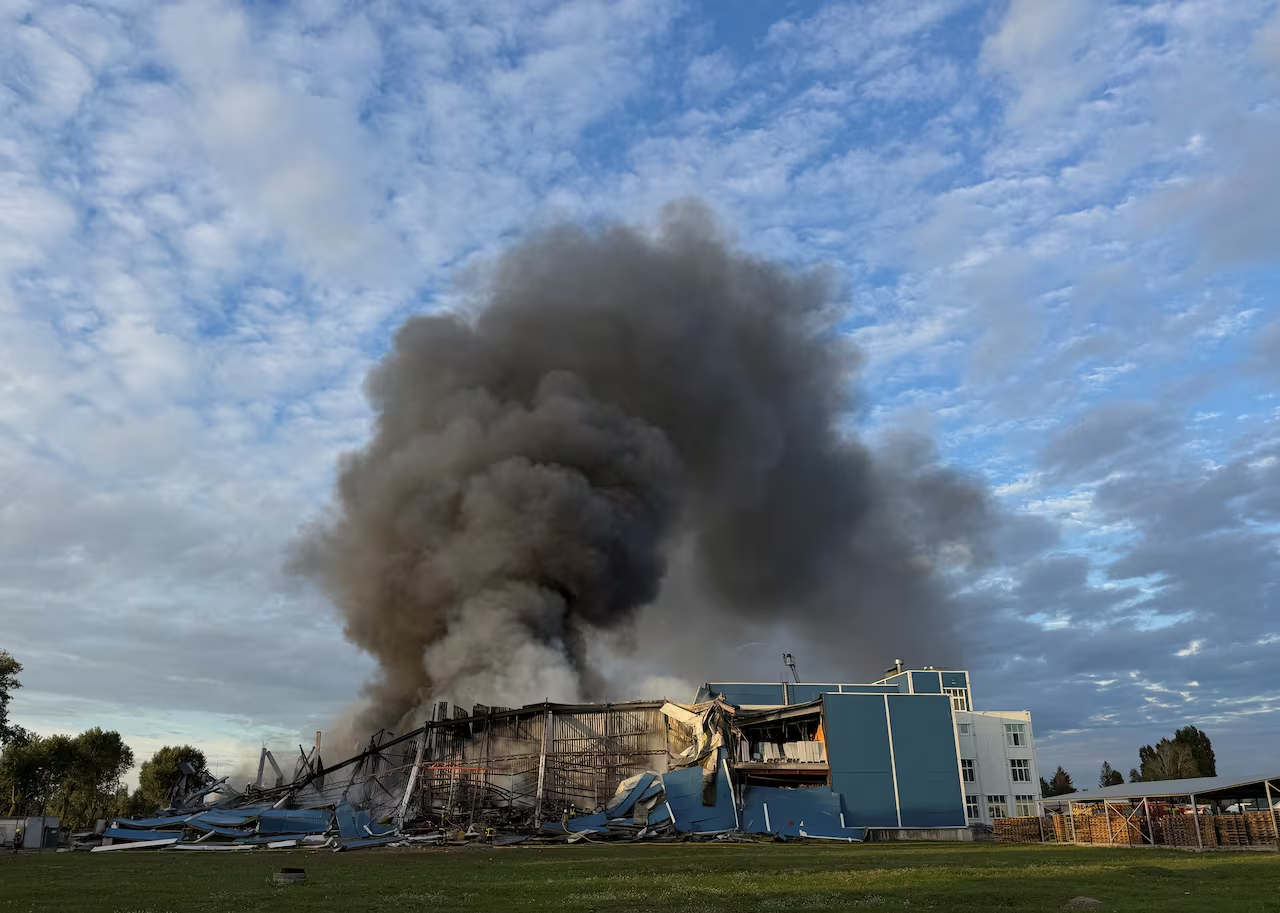
Ukraine steel plant closure news landed hard on Friday, as ArcelorMittal, the world’s second largest steelmaker, confirmed it had shut down its massive facility in Kryvyi Rih, central Ukraine. The company told the Ukrainian government plainly that continuing operations safely and sustainably simply wasn’t possible anymore, not after enduring four separate strikes within just five weeks, attacks that caused severe structural damage and claimed the lives of five workers at the site.
A Symbol of Russia’s Economic Targeting Strategy
This isn’t just an isolated business decision, it represents a much bigger blow to Ukraine’s entire steel industry, a sector that once made up roughly 15% of the country’s total exports before the war reshaped everything. Between relentless Russian bombardment and mounting trade restrictions imposed by the European Union, Ukrainian steel producers have been squeezed from multiple directions simultaneously, and this closure signals just how unsustainable things have become for even the largest players in the industry.
The broader pattern here is unmistakable. Russia has ramped up its aerial assault campaign in recent months, deploying ballistic missiles alongside jet-powered drones to strike a wide range of targets, businesses, transportation and logistics hubs, critical Black Sea port infrastructure, and civilian buildings that have nothing to do with military operations. It’s a strategy that seems less about hitting specific strategic assets and more about grinding down the everyday functioning of Ukrainian society and its economy.
Zelenskyy Says Ordinary Life Itself Has Become the Target
Ukrainian President Volodymyr Zelenskyy didn’t mince words when describing this shift. Speaking out on Friday, he pointed to Russia’s expanding target list, one that now includes datacenters, warehouses, and even facilities tied to everyday consumer goods. He specifically mentioned a drone strike that hit a warehouse used by McDonald’s, framing it as an attack on something as mundane as ordinary food products.
According to Zelenskyy, this pattern extends well beyond fast food logistics. American businesses operating in Ukraine, internet service providers, and data infrastructure have all found themselves in the crosshairs. His message was blunt: for Russia, normal daily life itself has essentially become fair game as a military target. He warned that this approach is steadily chipping away at ordinary Ukrainians’ ability to stay connected with loved ones, pursue education, and hold down jobs, the basic infrastructure of a functioning society is being systematically dismantled.
Ukraine’s Urgent Financial and Military Needs
Beyond the immediate damage, Zelenskyy used this moment to underscore just how much Ukraine still needs from its international partners. He noted that both the European Union and the International Monetary Fund seem to genuinely understand the stakes involved in helping Kyiv cover its widening budget deficit alongside its defense spending needs. Ukraine is currently pushing for an additional 27 billion dollars from allied nations this year alone, arguing that the overall financial burden of the war has climbed significantly since earlier estimates.
Part of this financial strategy involves asking the EU to accelerate the disbursement of an existing loan, essentially moving up the timeline so Kyiv can access funds sooner rather than later. Timing matters enormously here too, Zelenskyy stressed that Ukraine needs to place orders for drones during October and November specifically, warning that missing this window could create serious operational challenges heading into early next year. During a briefing conducted over WhatsApp with reporters, he reiterated that Ukraine simply cannot manage this fight in isolation, emphasizing that continued investment in domestically produced drones and missiles remains essential for the country’s defense capabilities going forward.
The China Factor and Diplomatic Maneuvering
Zelenskyy has also been actively lobbying for diplomatic intervention from an unexpected angle, he’s asked former President Donald Trump to personally pressure Chinese leader Xi Jinping into using Beijing’s considerable influence over Moscow to help bring the war to an end. As of Friday, Zelenskyy indicated he hadn’t yet received any update from the White House regarding how Trump’s conversations with Xi had actually gone, though he said he expected to hear the outcome soon.
This diplomatic push came during Zelenskyy’s trip to the United States this week, timed to coincide with the UN General Assembly, during which he also held a direct meeting with Trump on Tuesday. It’s worth noting that Nato member countries have previously and publicly labeled China a decisive enabler of Putin’s invasion, a characterization that adds considerable weight to Zelenskyy’s request for Beijing to use its leverage constructively.
Putin Denies Plans for Conflict With Europe
On the Russian side, Vladimir Putin has pushed back against growing anxiety among European nations, insisting that Russia isn’t preparing for any kind of confrontation with the continent. His remarks came directly in response to warnings issued by several European Nato members, including Denmark’s defense intelligence service, which cautioned this week about a low but growing risk that Russia might attempt long-range strikes against Nato infrastructure supporting Ukraine’s war effort.
Putin dismissed these concerns outright, stating that Russia has no real motive to escalate tensions further, and he criticized European nations for suggesting otherwise. He was emphatic in his denial, stressing repeatedly that Russia isn’t preparing for hostilities with Europe under any circumstances.
European Unity Amid Shifting Political Winds
Despite rising concern over potential election victories by Ukraine-skeptic political parties in both France and Germany, senior European officials have worked to downplay fears that such outcomes could weaken overall support for Kyiv. Speaking on the sidelines of the UN General Assembly, officials acknowledged that electoral shifts genuinely factor into calculations about future assistance, but they maintained confidence that broader support would hold steady regardless.
Lithuania’s Foreign Minister Kestutis Budrys captured this sentiment well, noting that even if certain nations become less enthusiastic supporters over time, others would step up to fill that gap, since supporting Ukraine remains firmly in the collective interest of the broader European community. Estonia’s Foreign Minister Margus Tsahkna echoed similar reasoning, arguing that election-related anxieties shouldn’t distract from what really matters, addressing Ukraine’s immediate and pressing needs on the ground.
Bipartisan Pushback Against Putin’s G20 Invitation
Meanwhile, back in Washington, a bipartisan coalition of 14 senators has formally urged Trump to withdraw the invitation extended to Putin for the upcoming G20 summit scheduled to take place in Florida this December. The senators’ letter didn’t hold back, arguing that Putin bears sole responsibility for launching Russia’s full-scale war of aggression against Ukraine, and that allowing him to attend a summit on American soil risks legitimizing and normalizing a regime that continues attacking Ukrainian civilian targets on a near-daily basis.
Notable signatories on this letter include Jeanne Shaheen, Mitch McConnell, Roger Wicker, and Chris Coons, representing a rare moment of cross-party alignment on an issue that continues to generate intense debate within American foreign policy circles.
Author