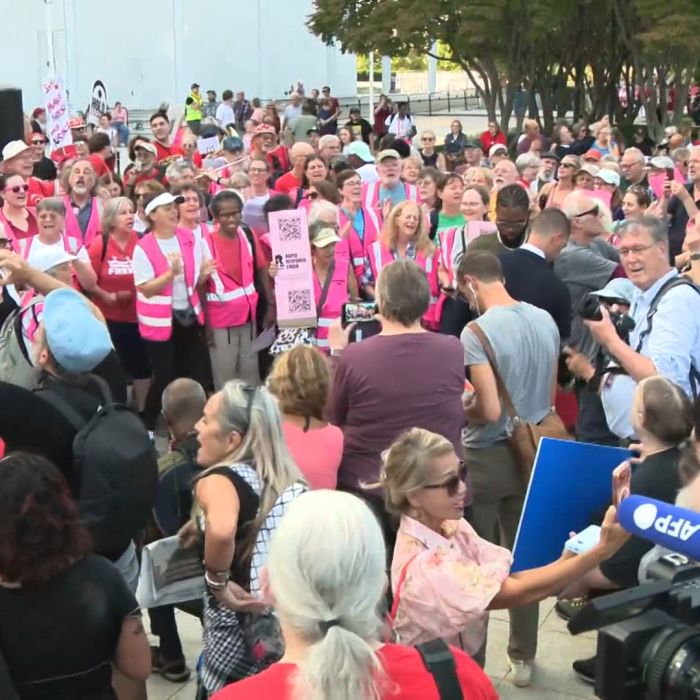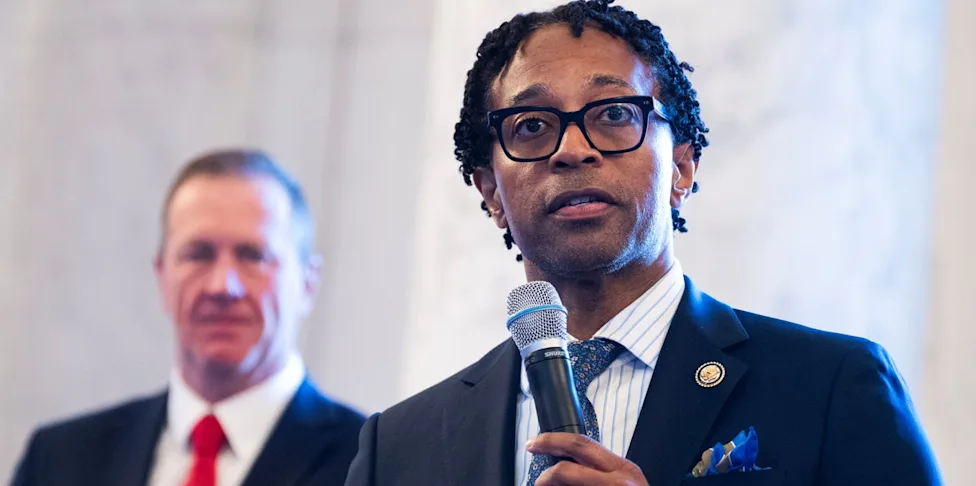
The Wesley Bell Cori Bush primary rematch ended decisively Tuesday night, with the incumbent congressman holding Missouri’s 1st District by a margin that left little room for interpretation. Bell finished with 59% of the vote to Bush’s 37%, closing out the most expensive candidate primary anywhere in Missouri this cycle.
Bell now advances to a November general election against Republican Paul Berry III and Libertarian Tom Schmitz. In a district this heavily Democratic, that contest is widely regarded as a formality.
Two Careers Born From the Same Moment
There is a particular irony in how bitterly this rivalry has developed, because both candidates emerged from the same event.
The 2014 Ferguson protests, which began after the police killing of Michael Brown and expanded into a national argument over race and policing, shaped both of their political trajectories. Bush became a nationally recognized activist and later a member of the House. Bell built a career in local prosecution before winning the seat from her in 2024.
For years they occupied overlapping political space. What separated them, ultimately, was foreign policy.
The Divide That Defined the Race
Bell supports a strong U.S.-Israel relationship and has accepted extensive backing from pro-Israel political committees. Bush has been among the most outspoken advocates in Congress for Palestinian liberation and a persistent critic of U.S. military aid to Israel.
That single fault line reorganized everything else about the contest, including its finances.
Asked about criticism of AIPAC in a June interview with The Independent, Bell pushed back on how the organization is characterized. He said its focus is the bilateral relationship itself rather than any particular government, and volunteered that he is no admirer of Israeli Prime Minister Benjamin Netanyahu. His point was that the group’s support persists regardless of who holds power in Jerusalem.
Progressive Democrats and some Middle East scholars have argued the opposite, contending that AIPAC has functioned as a reliable backer of military escalation and prolonged occupation. Bell rejects that framing.
A Staggering Spending Imbalance
The money in this race tells much of the story on its own.
Combined spending by candidates and outside groups reached $8.4 million. Of that, roughly $7.2 million went toward Bell.
The gap widens further on the airwaves. Bell’s campaign spent close to $3 million over two years, including $864,000 on broadcast advertising heading into the primary. Bush spent about $1.2 million overall and could afford only $66,400 in broadcast ads.
That is a difference of more than thirteen to one on television, in a media market where visibility is expensive.
Outside groups accounted for much of the imbalance. AIPAC put $3.1 million behind Bell, including $1.5 million in St. Louis television advertising routed through its affiliated United Democracy Project. A separate organization, New Democrat Majority, contributed roughly $1.1 million more.
This was not the first round. In 2024, AIPAC and allied committees spent more than $8 million supporting Bell as part of a national effort to defeat Israel’s harshest critics in Congress, including members of the Squad, of which Bush was one. Bell ranked among the largest beneficiaries of that spending nationwide.
What Voters Said at the Polls
Interviews outside polling locations suggested the race turned on more than foreign policy for many voters.
Patrick Brown, 58, of Normandy, said he backed Bell because he believes the congressman has performed well. He also faulted Bush’s record on delivering federal resources, saying she had fumbled opportunities and had not brought enough money back to Missouri.
Steve Oluokun, 70, cast his ballot in north St. Louis County and pointed to Bell’s posture toward the current administration. He said Bell does not conceal his feelings about Donald Trump, and noted that repeated television ads casting Bell as a fighter had resonated with him.
That second comment is telling. It illustrates how the advertising advantage translated into an actual impression on voters, reinforcing a specific image over months of repetition.
Bell’s Message After the Win
Bell framed his victory around confrontation with the White House rather than any celebration of the primary itself.
Writing on social media after results came in, he described St. Louis as facing a president targeting healthcare access, due process protections, and the earnings of working families. He referenced neighbors losing coverage, families absorbing rising grocery costs, and people being removed from the streets without basic fairness. He pledged to keep opposing what he called a reckless and cruel administration.
Where He Goes From Here
Bell holds seats on two committees with significant reach. He serves on the House Armed Services Committee, which oversees the Defense Department, and was recently added to the House Foreign Affairs Committee, which handles national security matters tied to foreign policy.
Those assignments give him substantial influence over precisely the issues that divided him from Bush.
Even so, he insists his focus stays closer to home. He has emphasized regional growth and development in the St. Louis area, describing the region as a sleeping giant with untapped potential.
For Bush, the loss marks a second consecutive defeat in a district she once represented, and raises real questions about whether a path back exists. For the broader progressive movement, it stands as a counterweight to victories elsewhere this cycle, and a reminder that heavy outside spending remains an enormously difficult obstacle to overcome.
Author
-
Lucienne Albrecht is Luxe Chronicle’s wealth and lifestyle editor, celebrated for her elegant perspective on finance, legacy, and global luxury culture. With a flair for blending sophistication with insight, she brings a distinctly feminine voice to the world of high society and wealth.