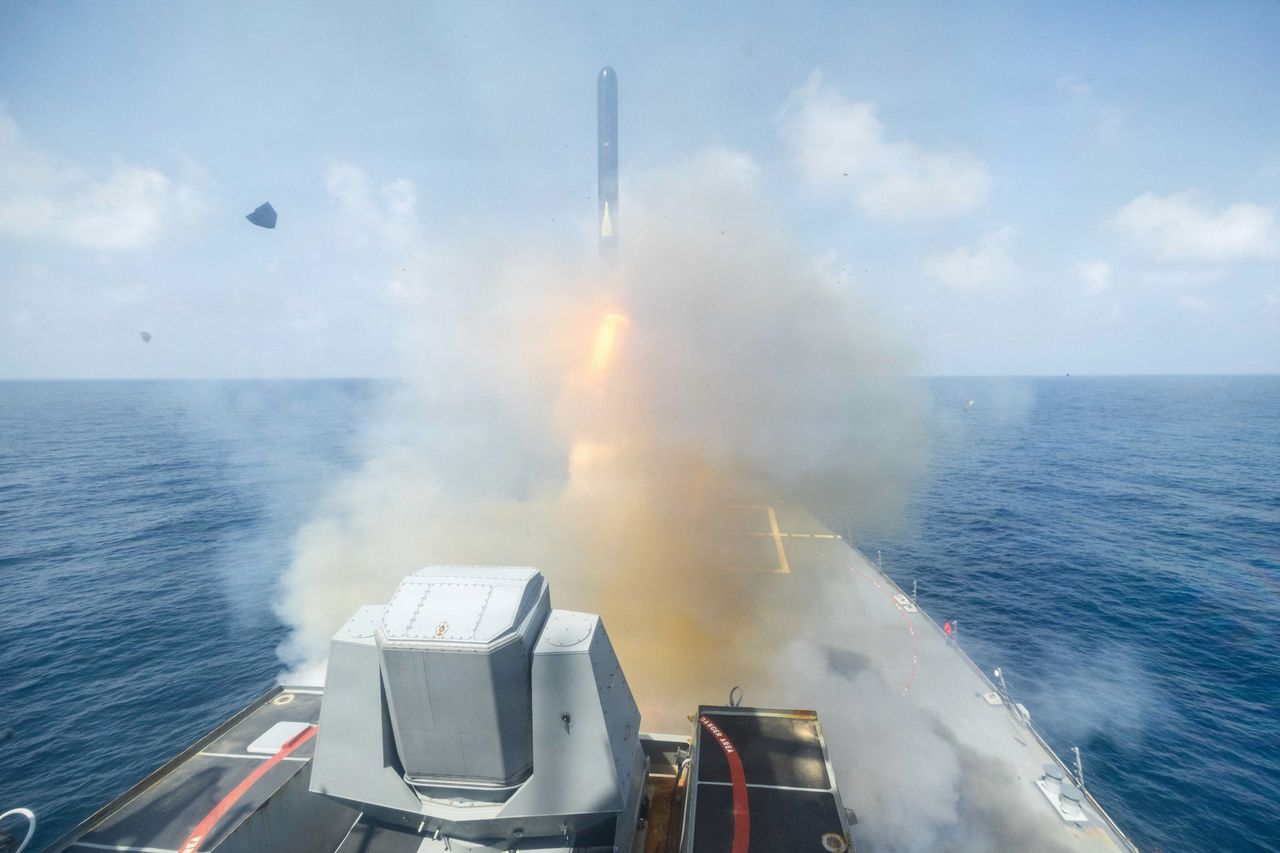
Questions about the US missile stockpile Iran war depletion have triggered a sharp response from the White House, after a report indicated the Army has burned through nearly all of two of its most capable long-range precision weapons during five months of fighting.
Reuters reported Tuesday, citing people familiar with internal military data, that inventories of the Army Tactical Missile System and the newer Precision Strike Missile have been almost entirely consumed. Officials quoted in the report expressed concern that such depletion could hamper America’s ability to respond if a crisis emerged involving China or Russia.
The administration is not accepting that framing.
Trump’s Response
In a statement provided to Fox News Digital, President Donald Trump insisted the United States holds a larger munitions arsenal than any other country and more than it requires. He attributed any strain to what he described as unprecedented giveaways to Ukraine and Europe under the previous administration, calling those transfers among the dumber decisions his predecessor made.
He also pointed forward, saying American defense manufacturers are currently producing munitions at record volumes while expanding plants and equipment at an unprecedented pace. Once that buildup matures, he said, the U.S. will resume distributing more to allies abroad.
The Pentagon echoed the pushback. Chief spokesman Sean Parnell said the American military remains the most powerful in the world and possesses everything necessary to act wherever and whenever the president directs. He cited multiple successful operations conducted across combatant commands while maintaining a deep reserve of capabilities.
What the Numbers Suggest
Actual stockpile figures are classified, which makes independent assessment difficult. Even so, outside analysts have reached conclusions broadly consistent with the reporting.
The Center for Strategic and International Studies published an estimate last week indicating the United States has expended roughly 65% of its Patriot interceptor supply. It also assessed that THAAD interceptor holdings have declined by at least 38% since the Iran conflict began. Those figures were derived from open-source analysis combined with budget documentation.
Reuters reported that its sources indicated the CSIS estimates align reasonably well with internal data.
Beyond interceptors, the reporting described meaningful reductions in Tomahawk cruise missile inventories as well.
Why These Particular Weapons Matter
Not all of the systems in question serve the same purpose, and the distinction matters when assessing risk.
ATACMS and the Precision Strike Missile are offensive weapons. They allow the Army to hit targets hundreds of miles away without sending aircraft or pilots into contested airspace. Planners value them specifically because they can reach command posts, air defense installations, and logistics hubs from outside the range of many enemy defensive systems.
Patriot and THAAD do the opposite job. They protect American forces and allied populations by intercepting incoming ballistic missiles.
Tomahawks give the Navy a long-range strike option launched from ships and submarines, extending reach without exposing crews.
Losing depth in any of these categories creates a different kind of vulnerability. Running low on interceptors reduces protection. Running low on ATACMS reduces the ability to project force against a well-defended opponent.
The Replacement Problem
The underlying issue is one Pentagon officials have flagged for years, and it has little to do with any particular conflict.
Advanced precision munitions can be fired off in a matter of months. Rebuilding them takes years. The supply chains are specialized, the components are complex, and production capacity was sized for peacetime replacement rates rather than sustained combat.
That arithmetic is what makes prolonged high-intensity warfare against a major power such a difficult prospect. The concern is not whether the United States can fight, but whether it can fight long while simultaneously restocking.
The Drone Strategy and Its Limits
One response has been to pair expensive precision weapons with far cheaper expendable systems, often described as attritable drones and autonomous platforms that can be manufactured quickly and deployed in volume.
The logic is straightforward. Commanders would reserve million-dollar missiles for the targets that genuinely require them, using low-cost systems for surveillance, electronic warfare, and a portion of strike missions.
Military leaders have been careful, however, not to oversell this as a solution. Inexpensive drones cannot substitute for weapons like ATACMS and PrSM when the target is a hardened command bunker or an active air-defense battery. Many low-cost systems lack the range to reach such targets, and those that can often cannot survive the journey.
Pressure on Industry and the Budget
Trump has held repeated meetings with executives from major defense contractors, pushing them to expand capacity and accelerate output as demands from both Iran and Ukraine draw down reserves.
After a March session at the White House, he said companies had committed to quadrupling production of what he termed “Exquisite Class Weaponry,” a category covering the military’s most sophisticated missile systems. He returned to the theme at a June meeting and again at a defense summit in July, telling industry leaders that American quality is unmatched but the pace needs to increase.
Budget priorities reflect the same emphasis. The administration’s proposed $1.5 trillion defense budget would more than triple funding for drones and autonomous systems while increasing investment in munitions manufacturing, missile defense, and Tomahawk procurement.
Whether that spending arrives quickly enough to matter depends less on appropriations than on how fast factories can actually scale, a constraint that money alone does not solve.
Author
-
Lucienne Albrecht is Luxe Chronicle’s wealth and lifestyle editor, celebrated for her elegant perspective on finance, legacy, and global luxury culture. With a flair for blending sophistication with insight, she brings a distinctly feminine voice to the world of high society and wealth.