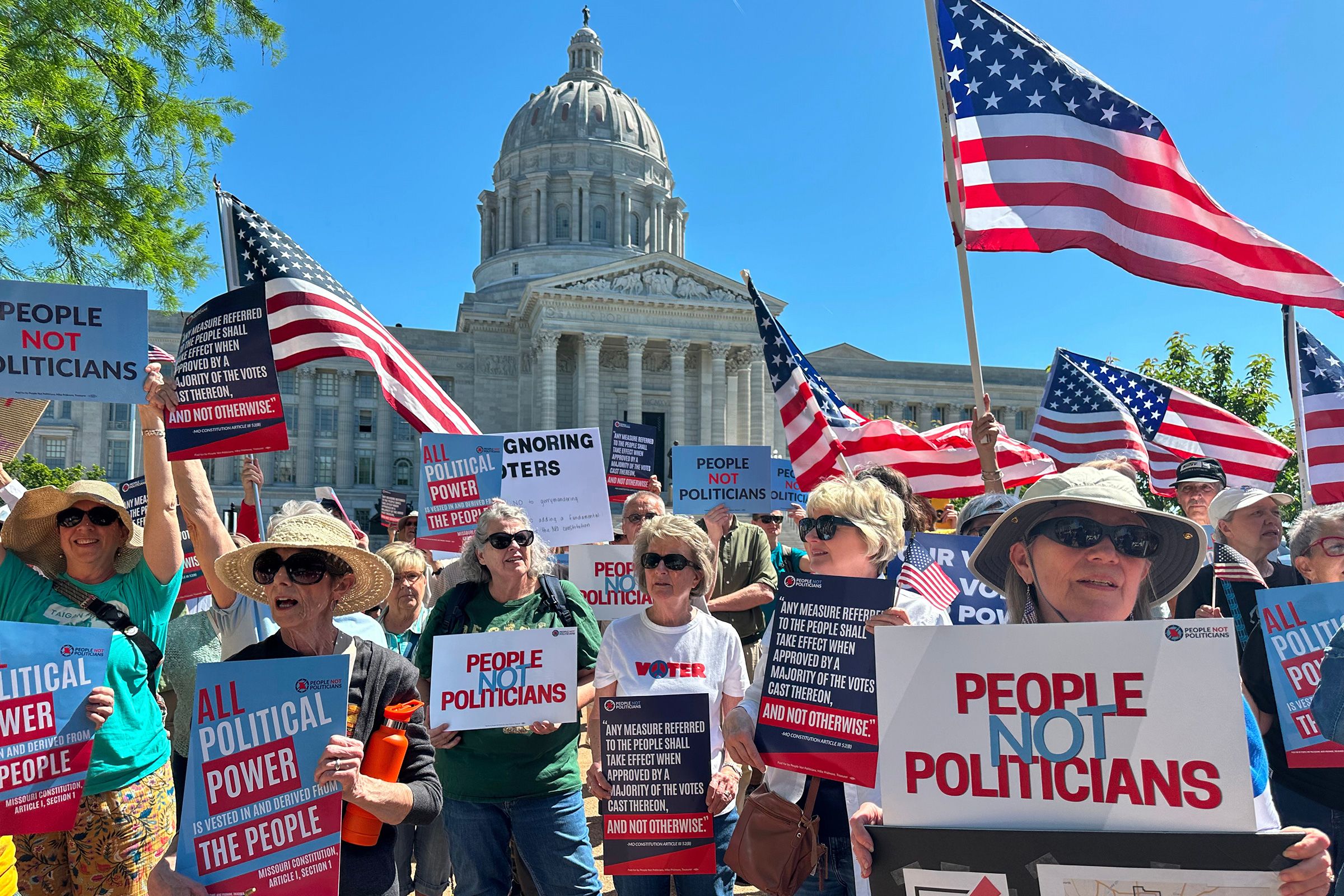
The Missouri redistricting referendum that organizers spent months building has been shut down by the state’s chief election officer, who declared the petition invalid regardless of how many signatures it collected.
Republican Secretary of State Denny Hoskins announced the decision Tuesday, stating that congressional maps simply cannot be placed before voters in a referendum. In his framing, the signature count was beside the point because challenging a congressional map through that mechanism is unconstitutional under Missouri law.
The organizers behind the effort intend to fight it in court.
A Rejection Long Anticipated
Hoskins did not arrive at this position suddenly. He signaled it well in advance, and even attempted to prevent the petition from being filed at all.
Last fall he asked a federal court to block submission, arguing that neither the U.S. nor Missouri constitution permits redistricting to be settled by referendum. A judge dismissed that lawsuit as premature in December, observing that Hoskins already held the authority to reject the petition himself if he considered it unconstitutional.
When candidate filing opened in February, he told the Associated Press that the referendum process was never intended for redistricting, and confirmed candidates were filing under the new boundaries.
The Timing That Mattered Most
One procedural detail carries substantial practical weight. Hoskins waited until the final day state law permitted before issuing his decision.
That delay allowed the new districts to remain in effect throughout the intervening months, including for Tuesday’s primary elections. Whatever a court eventually decides, the maps have already been used to select nominees.
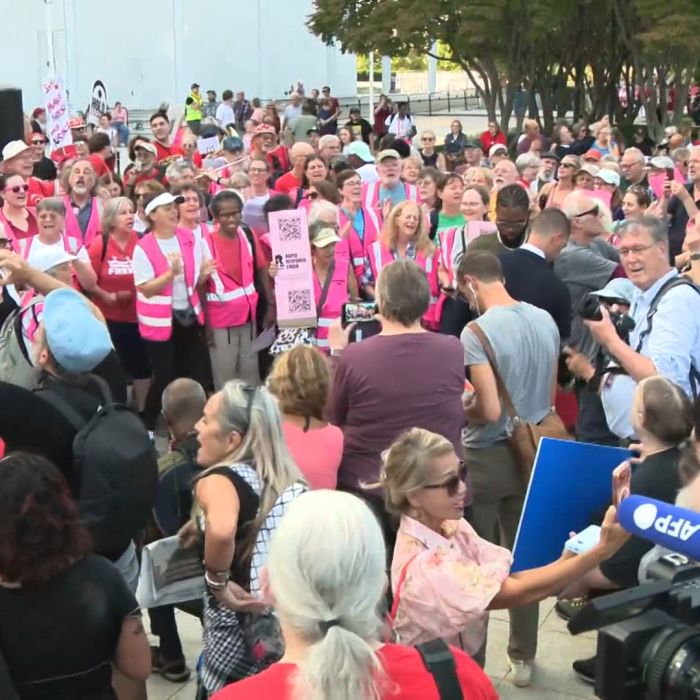
Organizers are not treating that as coincidence. Richard von Glahn, executive director of People Not Politicians Missouri, described the ruling as a desperate final effort to silence Missouri voters, insisting the campaign gathered far more signatures than required.
The numbers support that claim on its face. The group submitted over 300,000 signatures in December. Local election officials spent months verifying them and validated considerably more than the roughly 111,000 threshold needed for ballot qualification.
What the New Map Does
The redrawn map reshapes Missouri’s political landscape in one particularly visible way.
The Kansas City-centered fifth district, long represented by Democrat Emanuel Cleaver, has been stretched outward into rural central Missouri. That extension dilutes the urban Democratic base and gives the district a Republican lean.
Republicans currently hold six of the state’s eight congressional seats and expect the new configuration to deliver a seventh.
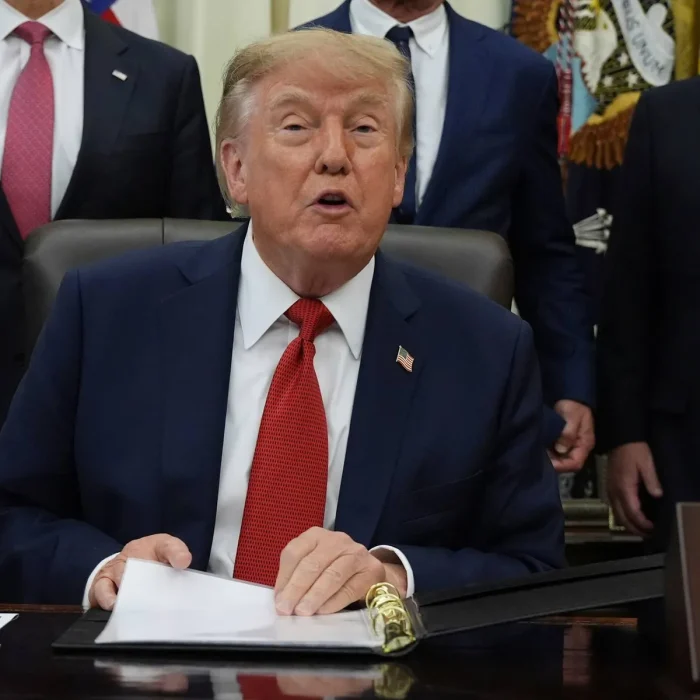
Missouri became the second Republican-led state, following Texas, to act on Trump’s request last year that GOP legislatures redraw districts to protect the party’s narrow House majority through the midterms.
A Second Petition Also Rejected
The redistricting referendum was not the only casualty Tuesday. Hoskins also blocked a separate proposed constitutional amendment aimed at strengthening the citizen initiative process itself.
That measure would have prevented lawmakers from raising the bar for qualifying or passing initiatives. It also would have required an 80% vote in both legislative chambers to overturn or modify a voter-approved initiative, replacing the current simple majority.
Supporters submitted thousands of signatures. Hoskins ruled the petition unconstitutional on different grounds, arguing it improperly bundled multiple subjects and constitutional sections into a single amendment.
The Respect Missouri Voters coalition announced plans to sue. Bob Johnson, a coalition member and former Republican state senator, said the disregard for public will demonstrated exactly why residents organized in the first place, expressing frustration with what he called ongoing games in Jefferson City.
For both rulings, Hoskins released supporting legal opinions from Republican Attorney General Catherine Hanaway.
The Messy Questions Ahead
If courts overrule Hoskins and order the referendum onto the ballot, the practical consequences become genuinely tangled.
Would primary winners continue campaigning under the new districts in November while voters simultaneously decide whether those districts are permissible going forward? Would candidates find themselves running in different districts in the general than in the primary? Could courts require an entirely new congressional primary using the previous map?
None of those scenarios has an obvious answer, and each carries significant disruption.
Missouri’s mid-decade redistricting has already generated roughly a dozen lawsuits over the past year, ranking among the most litigated in the country.
The National Picture
Legislative maps are normally redrawn once per decade following the census. Trump’s push triggered an unusual wave of mid-decade mapmaking instead.
That effort accelerated after the U.S. Supreme Court struck down a majority Black congressional district in Louisiana in late April, which encouraged Republicans across several southern states to redraw districts with large minority populations.
Republicans now believe new maps in eight states could yield as many as 16 additional seats, covering Texas, Missouri, North Carolina, Ohio, Florida, Tennessee, Louisiana, and Alabama. Democrats, whose own countereffort hit repeated obstacles, estimate up to six additional seats from redrawn maps in California and Utah.
Nearly 145 million Americans, about two in every five residents, will vote in newly drawn congressional districts this cycle. More states are weighing changes before 2028, and Maryland lawmakers voted Tuesday to put an amendment on November’s ballot that could open the door to mid-decade redistricting there.
Whether any of it works as designed remains uncertain. Presidents’ parties historically lose ground in midterms, and Trump’s weak approval numbers add another obstacle that no map can redraw away.
Author
-
Lucienne Albrecht is Luxe Chronicle’s wealth and lifestyle editor, celebrated for her elegant perspective on finance, legacy, and global luxury culture. With a flair for blending sophistication with insight, she brings a distinctly feminine voice to the world of high society and wealth.