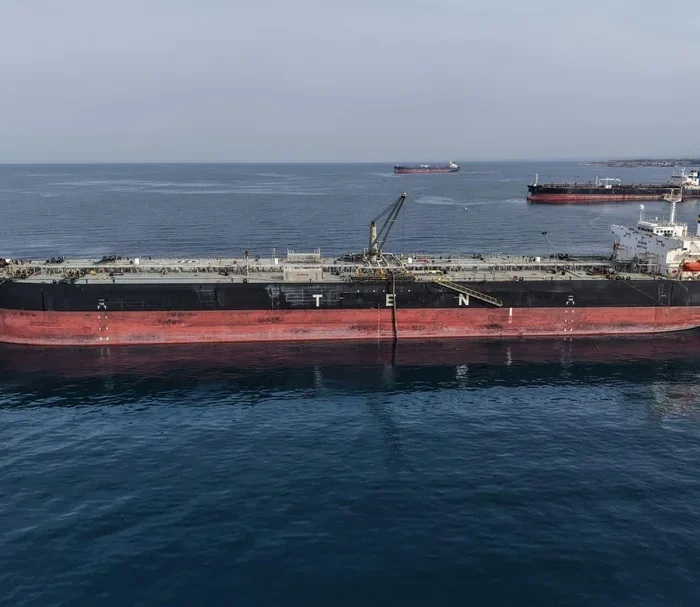
A Strait of Hormuz attack has struck a tanker belonging to Abu Dhabi’s state-owned oil and gas company ADNOC, according to the Emirati state news agency WAM — the third such incident involving ADNOC-operated vessels in the waterway within a single week.
The attack occurred yesterday evening. No injuries were reported.
The UAE has previously blamed Iran for strikes on its shipping, though Abu Dhabi did not immediately comment on this latest case.
A Second Vessel Hit
Separately, the United Kingdom Maritime Trade Operations Center reported that a bulk carrier was struck by an unidentified projectile that impacted the hull.
Two vessels hit in overlapping windows, in one of the most closely watched stretches of water on earth, points to a pattern rather than isolated incidents.
The Waterway Is Already Barely Functioning
Commercial traffic through the strait has been severely disrupted since the conflict with Iran began on February 28. In practical terms, the passage has been close to shut for months.
The scale of what that interrupts is difficult to overstate. Before the war — which opened with American and Israeli strikes on Iran — roughly one-fifth of all globally traded oil and natural gas moved through this channel at the mouth of the Persian Gulf.
There is no straightforward alternative. Pipelines bypassing the strait exist but carry a fraction of the volume. For most cargo, the route is the route.
Why Attacks Continue Even With Traffic Reduced
It might seem that a near-empty waterway would produce fewer incidents. The opposite logic applies.
With transits reduced to a trickle, each vessel that does attempt the passage becomes highly visible and easier to track. The ships still moving tend to belong to operators with strong commercial or state incentives to keep going — which makes them precisely the targets that carry the most signalling value.
Repeated strikes also serve a purpose beyond damage. Each one reinforces the message that the passage cannot be treated as safe, sustaining the disruption without requiring a formal blockade.
Why ADNOC Vessels
Three attacks on ships from a single Emirati state company in a week is not random distribution.
The UAE occupies an awkward position. It sits directly on the strait, depends heavily on maritime export, and maintains security relationships with Western powers currently in conflict with Iran. Targeting its state-owned shipping pressures a government with both exposure and influence.
Abu Dhabi’s decision not to comment immediately on this incident may reflect that delicacy. Public attribution carries escalatory weight, and the UAE has historically been careful about when it makes such claims explicit.
What Operators Face
For shipping companies still weighing transits, the calculation involves:
- War risk insurance premiums that rise sharply with each confirmed incident
- Crew willingness, which cannot be assumed indefinitely
- Charter obligations and contractual penalties for non-delivery
- The absence of any escort arrangement guaranteeing safe passage
- Uncertainty about whether attacks target specific flags or shipping generally
Many operators have already concluded the risk is unmanageable, which is why the strait is described as virtually closed rather than merely dangerous.
The Wider Energy Picture
Prolonged closure of this passage reshapes global energy flows rather than simply reducing supply. Cargoes that would have moved west are redirected, buyers compete for alternative sources, and freight rates climb across routes that have nothing directly to do with the Gulf.
Countries with limited storage capacity or heavy dependence on Gulf supply feel it first. Consumers eventually feel it everywhere, through fuel costs and the downstream effect on transport, manufacturing and food prices.
That transmission is slow enough that public attention often lags the underlying disruption by months.
Where This Sits in the Broader Conflict
The attacks come amid escalating rhetoric over control of the passage itself. Iranian officials have asserted that the strait will open and close only at Tehran’s direction, while the US president has spoken about declaring the waterway American territory.
Neither position resolves the immediate practical question, which is narrower: whether any arrangement can be reached that allows commercial vessels to transit without being fired on.
Talks touching on that question have reportedly been taking place through third-party channels, though Iran has characterised them as message-passing rather than negotiation.
What to Watch
The frequency of incidents is the most useful indicator. Three attacks on one company’s vessels in seven days suggests intensification rather than a tapering off.
Any resumption of meaningful traffic would require either a security guarantee no party currently appears able to provide, or a diplomatic arrangement that has not yet materialised.
Until then, the strait stays closed in everything but name.
Author