California Governor Race Leaves Democrats Uncertain in the Final Stretch
The California governor race has turned into an unusual political puzzle, leaving many Democratic voters unsure of who deserves their support as the primary draws near. With voting already underway ahead of the June 2 contest, a striking number of Democrats are hesitating, holding onto their ballots as they search for a candidate worth backing.
This wave of indecision marks a sharp departure from past elections. Unlike previous races that featured a commanding front-runner or a household name, this contest lacks an obvious standout, leaving voters to sort through a crowded and unfamiliar field on their own.
A Race Without a Clear Leader
In recent gubernatorial cycles, California voters could often rally behind a political heavyweight. Figures like Republican Arnold Schwarzenegger or Democrat Jerry Brown brought star power and momentum that made choices feel straightforward. This time, no such figure has emerged.
The result has been a campaign defined by surprises and uncertainty. For 21-year-old San Diego resident Colin Culver, the experience felt more like an obligation than a celebration. He described voting this time around as pinching his nose rather than feeling genuinely excited, ultimately casting his ballot for billionaire climate activist and former hedge fund manager Tom Steyer.
Understanding the Top-Two Primary System
Part of the confusion stems from California’s distinctive election structure. Under the state’s top-two primary system, every candidate appears on a single ballot regardless of party affiliation, and the two highest vote-getters advance to the general election.
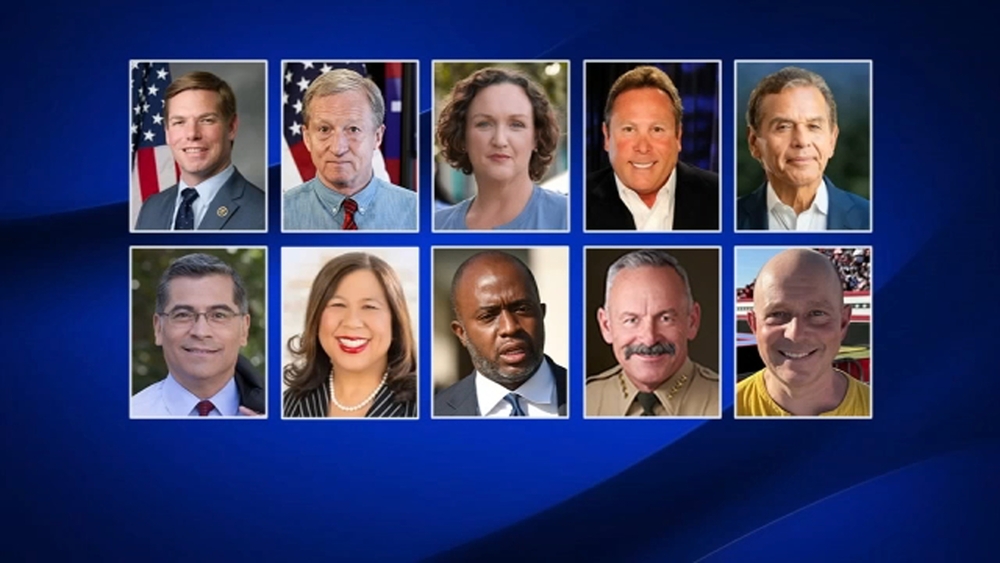
This year, roughly 60 candidates are competing to succeed termed-out Democratic Governor Gavin Newsom. Among them are six major Democrats and only two prominent Republicans, a lopsided distribution that has created real anxiety within the Democratic ranks.
Democratic Fears of Being Locked Out
Months ago, party leaders worried that the crowded Democratic field could backfire. With so many Democrats splitting the vote, there was a genuine concern that the two leading Republicans, Riverside County Sheriff Chad Bianco and conservative commentator Steve Hilton, might both advance and shut Democrats out entirely.
Several developments have reshaped that scenario:
- Former Representative Eric Swalwell exited the race after being accused of sexual assault, a scandal that further unsettled an already nervous Democratic base.
- President Donald Trump endorsed Hilton in April, a move that may have consolidated Republican support behind a single candidate.
- That GOP consolidation likely reduced the odds of a Republican upset in a state that has not elected a Republican governor since 2011.
Even so, lingering fear continues to shape how Democrats approach their ballots. Some are deliberately waiting to see whether a candidate gains momentum in the closing days, while others remain genuinely torn.
Why Ballots Are Coming in Late
The hesitation is showing up in the numbers. According to Democratic strategist Paul Mitchell, who tracks ballot returns, even reliable Democratic voters have been slow to participate. These dependable participants, often older white voters with strong primary turnout, are holding back this cycle.
Mitchell joked that people should call their Democratic parents and remind them to turn in their ballots. He explained that many are clinging to their ballots precisely because the race has felt so unpredictable, wanting to be certain they are making the right call.
The data reflects this caution. As of one recent count, only about 11% of California’s roughly 23 million voters had cast ballots. The breakdown included:
- Around 15% of Republicans
- About 11% of Democrats
- Roughly 8% of voters registered with no party or another party
That pattern is notable because Democrats have typically voted early in recent years, while Republicans often waited until Election Day. This cycle has flipped that familiar rhythm.
Where the Candidates Stand
Among the leading Democrats, former state attorney general and federal Health Secretary Xavier Becerra and Tom Steyer have emerged as top contenders that voters keep weighing.
A mid-May poll from the Public Policy Institute of California offered a snapshot of the field:
- Becerra and Hilton each drew support from about 2 in 10 likely primary voters.
- Steyer, Bianco, and former U.S. Representative Katie Porter each landed between 10% and 15%.
- No other candidate reached double digits.
Becerra’s standing has climbed considerably, rising from just 5% in an earlier PPIC poll conducted while Swalwell was still in the race.
Voters Wrestle With Imperfect Choices
Not everyone is leaning on polls to decide. San Francisco native Mary O’Neal chose former Los Angeles Mayor Antonio Villaraigosa, drawn to his record leading the city from 2005 to 2013, even though he has struggled to gain traction despite appearing in debates.
Others remain conflicted. Fresno native Alexa Duran, a 22-year-old UC Berkeley graduate, said she leans toward Becerra but harbors reservations, particularly about his refusal as attorney general to investigate the 2020 killing of a Latino man by an officer in the Bay Area. She acknowledged his experience while questioning whether he is truly the right fit.
Los Angeles attorney David Murayama, 29, initially found Steyer appealing but ultimately could not trust a billionaire to keep his promises. He settled on Becerra, calling him the lesser evil.
Chico resident Amber Larson, a 41-year-old judicial analyst, captured the dilemma facing many. She favors socialist candidate Ramsey Robinson but considers a vote for him wasted given his slim odds. She is wary of longtime politicians like Becerra and skeptical of billionaires like Steyer, yet she planned to back Steyer anyway, drawn to his energy affordability proposals and his position among the front-runners. As she put it, she did not want to throw her vote away.
A Reluctant Decision for Many
As the primary approaches, the California governor race continues to leave Democrats torn between caution and necessity. Without a clear champion to rally behind, many voters are settling for the candidate they find least objectionable rather than the one who inspires them.
Whether this hesitation reshapes the outcome remains to be seen. What is clear is that this election has tested the patience and enthusiasm of a typically engaged electorate, turning what is usually a confident choice into a difficult and reluctant one.
Author