Ebola Outbreak Pushes Congo Healthcare System to the Brink
The Ebola outbreak tearing through eastern Democratic Republic of Congo has reached a frightening pace, according to doctors and public health workers stationed at its epicenter. Speaking from the front lines, they describe a deadly virus spreading faster than authorities can contain it, with one physician bluntly declaring the situation completely out of control.
The crisis is concentrated in Ituri province, the hardest-hit region, where overwhelmed medical staff face new suspected cases daily. Their accounts paint a picture of a healthcare system stretched far beyond its limits, battling not only the disease itself but also fear, mistrust, and a critical shortage of resources.
Doctors Describe an Exponential Spread
Dr. Richard Kojan, president of the Alliance for International Medical Action, spoke from the city of Bunia with grave concern. A veteran of previous Ebola responses across central and western Africa, he said deep mistrust within certain local communities is severely undermining efforts to stop the virus.
In the town of Mongbwalu, the epicenter of the outbreak, the picture is equally alarming. Dr. Richard Lokudi, director of the main hospital there, told reporters the disease is spreading at exponential speed. He described a particularly troubling development: seven symptomatic patients suspected of carrying Ebola had recently escaped from his hospital.
According to Lokudi, those escapes have triggered chains upon chains of contamination, making the virus far harder to fight. Each patient who leaves isolation prematurely risks seeding new clusters of infection across the region.
A Rare and Difficult Strain
The current outbreak involves an unusual variant of the virus known as the Bundibugyo strain. The numbers reported by the World Health Organization are sobering:
- More than 1,000 suspected cases identified across eastern DRC
- Over 230 suspected deaths recorded so far
- Seven confirmed cases detected in neighboring Uganda
Compounding the danger, there is currently no vaccine available for this particular strain. The situation prompted the WHO to declare the outbreak a public health emergency of international concern.
Experts warn the official figures likely understate the true scale. Jeremy Konyndyk, a former senior USAID official under Presidents Obama and Biden and now president of Refugees International, described transmission as having reached an explosive level. He called the response about as urgent as any Ebola crisis ever faced and suggested the reported 1,000 cases were almost certainly just the tip of the iceberg, possibly an undercount by a factor of two or three.
Why the Virus Went Undetected for Months
Health officials believe the Bundibugyo strain circulated quietly in Ituri province for as long as three months before it was formally identified. The strain proved unusually difficult to detect through standard testing, allowing it to spread before anyone recognized the threat.
That delayed detection set the stage for the rapid escalation now underway. By the time the outbreak was confirmed, the virus had already established a significant foothold in the region.
Mistrust and Limited Testing Hamper the Response
One of the greatest obstacles facing healthcare workers is not medical but social. Many people in affected communities distrust containment measures, and some doubt that the virus even exists at all.
Kojan pointed to a severe shortage of laboratory testing capacity as a major problem. Without adequate labs, accurate diagnosis and effective contact tracing become nearly impossible. Patients suspected of infection can wait days for test results, and that delay often pushes them to leave isolation early, accelerating the spread.
Working on the front line without access to a laboratory, Kojan said he struggles to build the trust needed to keep patients in care. When people do not believe Ebola is real, persuading them to accept isolation and treatment becomes an uphill battle.
Anger Erupts Over Health Procedures
The mistrust has, in some cases, turned into open hostility. Both Lokudi and Kojan confirmed reports that angry crowds had set fire to isolation tents and healthcare facilities in recent days.
By Tuesday, police and military forces were guarding Lokudi’s hospital, though groups of agitated young people continued to gather nearby. The tension has real consequences for containment efforts. In some areas, officials cannot safely reach remote parts of Ituri province to investigate suspected Ebola deaths.
Lokudi called this deeply concerning. When response teams cannot access these communities, grieving families are often left to bury their loved ones themselves, dramatically raising their risk of infection.
Where Burial Customs Collide With Safety
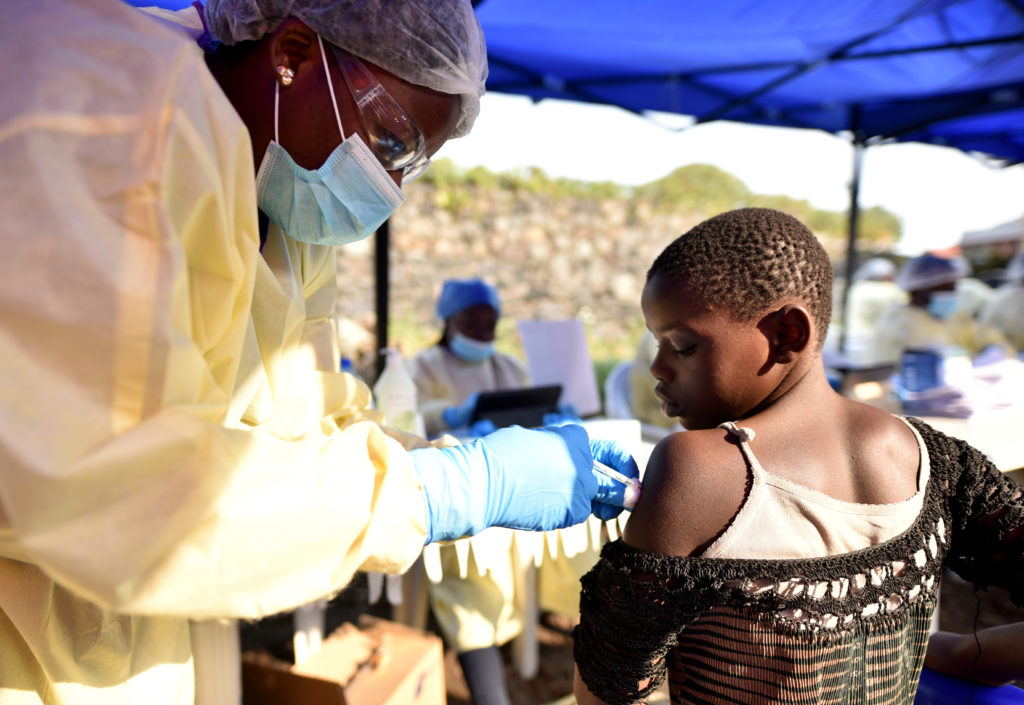
Ebola spreads through bodily fluids, which means caring for the sick and handling the dead requires healthcare teams in protective suits. Ideally, a victim’s home should also be disinfected.
In remote rural communities, however, these protective steps often clash with traditional burial practices. That conflict has fueled much of the anger directed at health workers. Families who wish to honor their dead according to custom may resist procedures that feel intrusive or disrespectful, even when those measures are essential to stopping the virus.
Kojan also flagged a shortage of masks and protective clothing as another serious problem. Both doctors stressed the urgent need for more trained healthcare professionals on the ground to raise awareness and build the barriers necessary to halt transmission.
Did U.S. Aid Cuts Make Things Worse?
A significant point of debate centers on the impact of reduced American humanitarian support. Konyndyk argued that deep cuts to U.S. aid in the DRC had badly weakened the response, saying responders were fighting the outbreak with several hands tied behind their backs.
He explained that past Ebola battles relied on a coordinated effort involving the Ministry of Health, WHO, USAID, and the CDC. Now, he said, USAID is fully gone, the CDC is badly weakened, and the WHO has been undermined further by the U.S. withdrawal and funding cuts.
Konyndyk said he was almost certain the outbreak would have been caught earlier had USAID still been operating. He recalled that team members forced out of government had previously been in weekly contact with regional health leaders, providing visibility that has since vanished. That lost insight, he argued, contributed to both the United States and the wider world being slow to recognize the danger.
The White House Pushes Back
A White House official rejected the claim that aid cuts had affected the response, calling it ridiculous. The official argued it would be just as fair to blame other countries for not contributing more.
The Trump administration has defended its “America First Foreign Assistance programs” as tied to broader foreign policy goals and national interest. The official maintained that the United States has saved more lives than any other country and would continue to do so, while insisting it would no longer fund programs deemed ineffective or corrupt.
A Plea to the World
Back in the affected region, the doctors on the ground had clear messages for the international community. Lokudi called for urgent support on all levels, emphasizing that the situation demands immediate global attention.
Kojan framed his appeal in deeply human terms. He spoke of frightened people in desperate need of help, urging the world not to look away. For him, the response is ultimately a matter of shared humanity, and his message was simple: this crisis needs the world’s attention now.
This article covers a serious public health emergency. If you are seeking reliable guidance or ways to help, official organizations such as the World Health Organization provide up-to-date information and resources.
Author