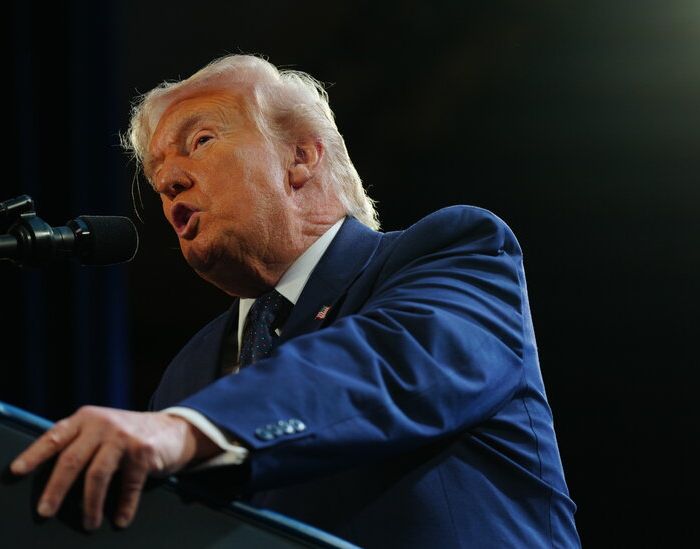
Trump emergency framing is once again throwing congressional Republicans into disarray, this time over a popular bipartisan housing bill that the president abruptly held hostage to his elections agenda. The episode captures a governing style that has become increasingly defined by urgency, where ordinary policy fights are recast as national crises demanding immediate action.
A Last-Minute Scramble at the White House
The latest turmoil prompted House Speaker Mike Johnson to schedule a hurried visit to the White House on Thursday afternoon. His goal was to untangle the mess created when President Trump suddenly canceled a signing ceremony for a bipartisan affordable housing bill.
Trump’s reasoning caught many off guard. He declared that senators should first turn their attention to passing the Save America Act, a voting measure he portrayed as essential to confronting what he framed as a national emergency.
For Republican lawmakers, the moment felt all too familiar. Time and again, they have watched Trump use the presidential bully pulpit to upend carefully laid plans, often by invoking the language of crisis. Even as these lawmakers work to advance his agenda, they must also guard their own political interests, leaving them caught in a recurring bind.
Two Competing Priorities
At the heart of the standoff is a clash of motivations. As one Republican strategist put it, Congress is fixated on the looming midterms while Trump is focused on his legacy. The strategist noted that Trump, who maintains the 2020 election was stolen and appears to be building a case that the 2026 midterms could be too, views the Save America Act as the single most important piece of legislation Congress could pass.
That framing helps explain why Trump dug in. Speaking from the Oval Office on Wednesday, he described election fraud in alarmist terms, repeating unfounded claims about rigged elections that he called corrosive to American democracy. He refused to move on the housing bill until there was progress on his voting measure, insisting there would be no compromise on demands like voter ID, proof of citizenship, and restrictions on mail-in ballots.
A Pattern of Crisis Language
The housing standoff is far from an isolated case. Throughout his second term, Trump has steadily expanded his use of emergency framing, stretching it from traditional areas of presidential crisis management into routine policy disputes.
Some of these emergencies arrive through formal declarations, while others function purely as rhetorical tools. Both, however, serve the same political purpose: blurring the line between a policy preference and a genuine national crisis. Since 2025, Trump has invoked emergencies over a sweeping range of issues, including:
- The southern border, cartels, and fentanyl
- Energy production and global trade deficits
- Crime in Washington, D.C.
He has also previously labeled both issues now at the center of the dispute, housing and elections, as national emergencies. One strategist observed that this kind of language has become normalized as part of Trump’s rhetorical style over the past decade.
The Political Risk to Republicans
Trump’s move carries real danger for his own party. By stalling the housing bill, he threatened to undercut Republicans already facing stiff midterm headwinds, many of them stemming from the economic fallout of his own agenda.
A year of high and frequently shifting tariffs has rattled the global economy and pushed prices higher. On top of that, his decision to strike Iran on February 28 destabilized the Strait of Hormuz, a chokepoint for roughly 20 percent of the world’s oil supply, adding further strain to energy markets.
The housing bill was supposed to be the antidote. It offered Republicans a clear, campaign-ready example of action on affordability at a moment when voters remain deeply frustrated by rising costs. That is why Trump’s decision to stall, and possibly kill, the measure left some in his party bewildered.
Senator Susan Collins of Maine called the move senseless, pointing out that the bill enjoys strong bipartisan support in both chambers, was primarily written by a Republican senator, and addresses a burden weighing on countless American families.
What the Housing Bill Would Do
The legislation aims to tackle the nation’s housing affordability crisis through several measures. It would cut red tape for home construction, modernize federal housing programs, expand financing options, and limit the ability of large institutional investors to snap up single-family homes.
Lawmakers from both parties have described it as the most significant federal housing legislation in decades. Politically, it strengthens incumbents heading back to their districts to talk with voters about prices.
According to one strategist, affordability is poised to be the top issue of the election, with both parties expected to run ads touting their housing efforts. The bill passed precisely because lawmakers on both sides wanted something concrete to point to. Should Trump veto it, Democrats would likely seize the opportunity to run attack ads highlighting that decision.
Not the First Reversal
This abrupt about-face was the second from the White House in as many weeks. Just last week, Trump reversed course on his nominee for director of national intelligence, Jay Clayton. With the Senate Intelligence Committee hours away from questioning Clayton, Trump announced on social media that the hearing would be delayed unless senators first confirmed a different nominee for a U.S. attorney post.
The maneuver left Senate Republicans squeezed between accommodating Trump’s eleventh-hour demand and defending a confirmation process already in motion. Trump also threatened to withhold reauthorization of a surveillance tool that national security officials consider a critical anti-terrorism measure unless the Senate passed the Save America Act.
A Broader Standoff on Capitol Hill
The housing dispute is unfolding amid a wider stalemate. With the midterms just four months away, Trump’s agenda remains largely stuck in Congress, where Republicans risk losing control of one or both chambers.
Several flashpoints are compounding the gridlock:
- Democrats have refused to reauthorize the expired surveillance law as long as Bill Pulte remains acting director of national intelligence, citing his lack of national security experience and accusing him of abusing his role at the Federal Housing Finance Agency.
- Trump asked Congress for an additional $88 billion for the Pentagon to help fund the Iran war, a request that needs at least seven Democratic votes in the Senate but faces firm Democratic opposition.
The top Democrat on the Appropriations defense subcommittee, Senator Chris Coons, said Trump had failed to justify the Iran war and criticized the bill for omitting aid for Ukraine. He also faulted the Pentagon for pursuing what he called vanity projects without clear plans to spend the money it already has, vowing that he and his colleagues would oppose the measure.
Looking Ahead
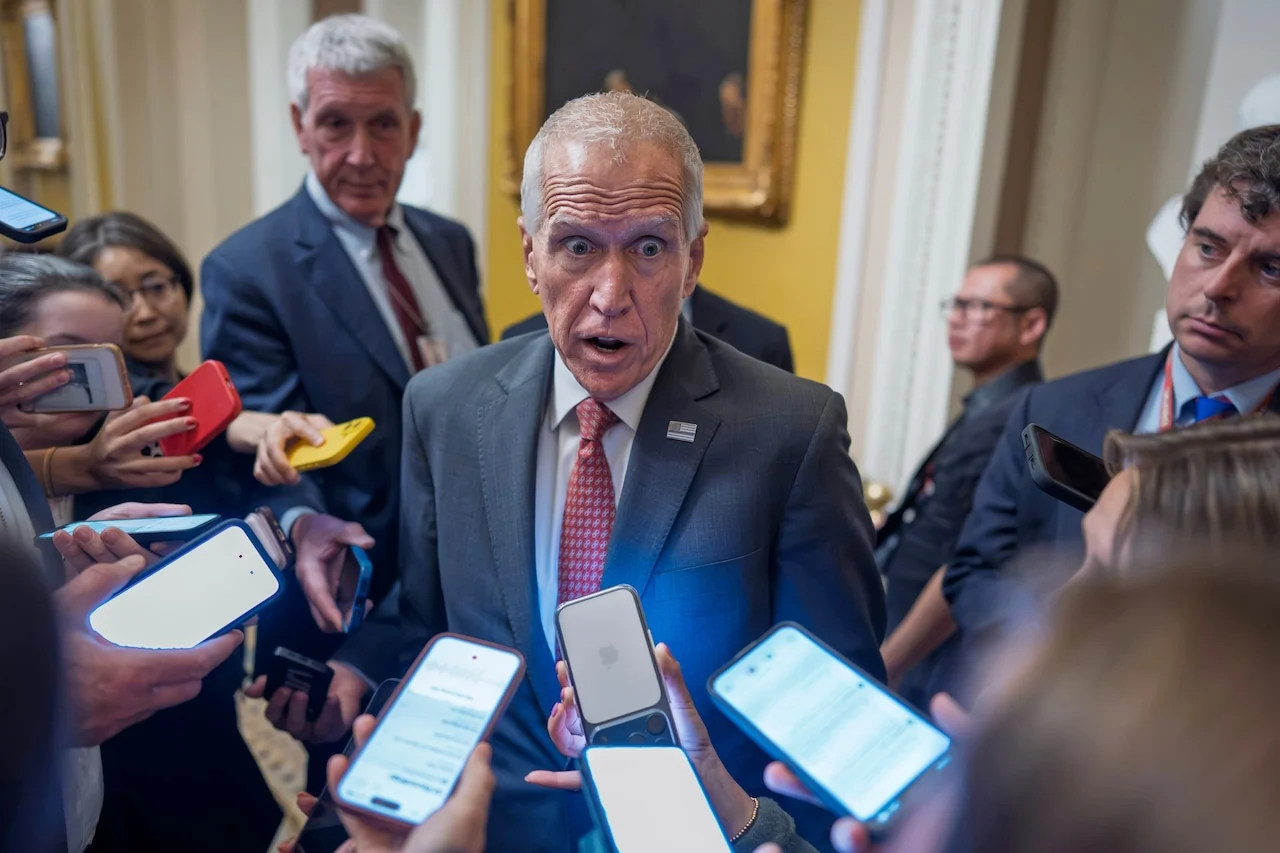
Senate Majority Leader John Thune signaled that the chamber would try to make progress on its unfinished business when senators return from a two-week recess on July 13. Beyond the immediate disputes, lawmakers could also take up a farm bill, cryptocurrency legislation, and a measure to regulate college sports.
Still, Thune was clear that everything hinges on math. As he put it, the path forward will be a function of what can attract 60 votes, with key decisions to be made in the coming weeks.
For now, the housing standoff stands as the latest reminder that under Trump, almost any priority can be reframed as an emergency, and Republican allies are left scrambling to keep up.
Author