Republican midterm fears have moved from private grumbling to open commentary, with party figures increasingly worried that President Donald Trump’s accumulating political liabilities could produce a heavy defeat in November.
The comparison being made most often is 2006, the year Democrats took both chambers of Congress. That spectre is now surfacing in conversations across the country, according to reporting by Politico politics bureau chief Jonathan Martin, who has been travelling ahead of the elections.
The Midwest Problem
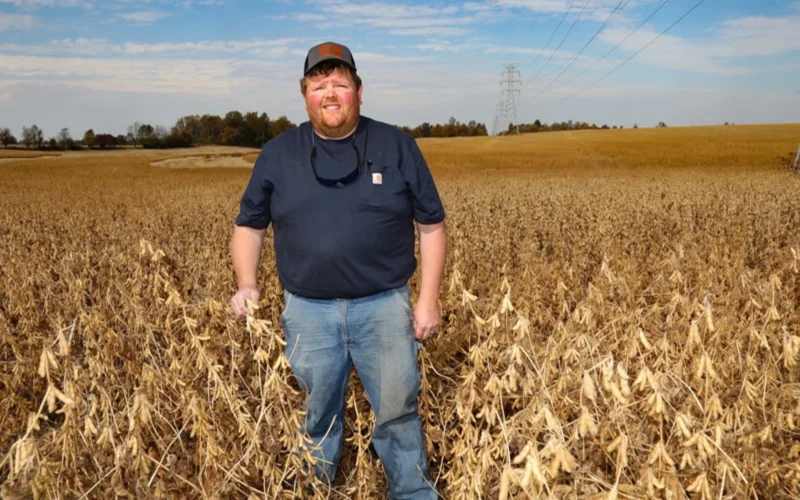
The sharpest anxiety centres on farm country, where support that once looked unshakeable has visibly eroded.
Senator Kevin Cramer of North Dakota put it bluntly, saying Trump is in serious trouble in agricultural regions. He then made the political stakes explicit, noting that Trump and the party are effectively the same thing in voters’ minds. He described himself as not very optimistic.
That is unusually candid language from a sitting Republican senator about a president of his own party.
Why Farmers Are Unhappy
Several policies have stacked up in ways that hit agricultural producers directly.
- Trade wars that disrupted export markets and pricing
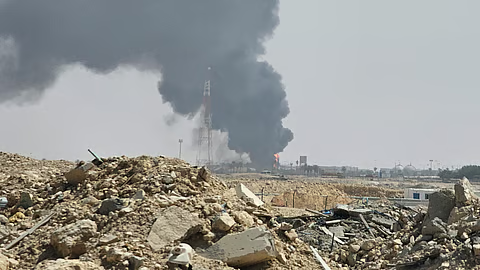
- The war with Iran, which has driven up diesel and fertiliser costs sharply
- A decision to import foreign beef in an effort to bring down grocery prices
The last item drew particular scorn from Cramer, who questioned the logic of targeting the one agricultural sector currently turning a profit and cutting into its revenue.
The frustration is not abstract. Diesel and fertiliser are two of the largest input costs in row crop farming, and both rising at once compresses margins with no offsetting benefit. Adding cheaper imported beef into that environment reads, to producers, as the government undercutting the one bright spot on the balance sheet.
The Spread Beyond the Heartland
Party officials worry the discontent is not contained. Martin reports concern about what Republicans describe as contagion, driven by:
- Persistent cost-of-living pressure
- Trump’s weakness with political centrists
- A substantial Democratic advantage in voter engagement
States flagged as potential trouble include Maine, Texas, North Carolina and Alaska. That is a geographically scattered list, which is precisely what alarms strategists. Problems confined to one region can be managed. Problems appearing in New England, the South, the Southwest and Alaska simultaneously suggest something national.
A Hardening Mood
The deeper concern voiced by GOP officials is not the current polling but the durability of the sentiment behind it.
Voter dissatisfaction, in their reading, is settling into something resistant to correction. Persuasion works on soft opinions. Once frustration becomes an established judgment about whether a party has delivered, campaign messaging rarely dislodges it.
Compounding that, officials say Trump has continued pursuing what interests him rather than what would help vulnerable candidates.
The Distraction List
Martin’s reporting catalogues where the 80-year-old president’s attention has gone: assorted vanity projects in Washington, high-profile sporting events including a UFC fight and an IndyCar race, and personal grievance campaigns.
The most recent of those involves Canada, culminating in his push to rename Lake Ontario as Lake America.
Senator Susan Collins, fighting to keep her seat in Maine, pushed back on that particular fight directly. She said she would remind the president that Canada is a friend, the closest US ally and its largest trading partner. She added that the two economies are so intertwined that damaging one ends up damaging Maine and other border states.
For a senator in a border state facing a competitive race, a symbolic quarrel with Canada is not a harmless distraction. It is a liability with local consequences.
Money and Message
Strategists have two separate complaints, and both matter.
The first is financial. Trump has a substantial war chest and, according to party operatives, has been reluctant to deploy much of it on behalf of Republican candidates this autumn.
The second is more fundamental. They say he has given candidates little in the way of an affirmative case to run on. Campaigns need a story about what has been accomplished and what comes next. Grievance politics can energise a base, but it does not easily convert into a pitch for undecided voters worried about grocery bills.
The Dallas Convention
The party is planning a midterm convention in Dallas next month, intended to redirect attention onto Democrats.
Whether that works is an open question. One Trump adviser offered a strikingly resigned assessment to Martin, acknowledging that the actual message would end up being determined by whatever unpredictable statements the president makes.
That admission captures the structural bind. A convention can be scripted. A president cannot be, and in a media environment where his remarks dominate coverage, planned messaging tends to lose to spontaneous commentary.
The White House did not immediately respond to a request for comment.
The Bigger Picture
Midterm elections have historically punished the president’s party, so some level of loss would surprise no one. What distinguishes the current mood is the combination of factors landing at once: economic pain in a core constituency, cost-of-living pressure nationally, an engagement gap favouring the opposition, and a party leader whose priorities are diverging from his candidates’ needs.
Two months remain before voters decide, which is enough time for conditions to shift. But the concern voiced by Republicans like Cramer and Collins is that the window for repair may already be narrowing, and that the party’s fortunes now rest less on strategy than on the unpredictable choices of one man.
Author