The US Canada trade war has now run for roughly 18 months with no settlement in view, and the effects have moved well past headlines into factory floors, shopping receipts and provincial employment figures on both sides of the border.
Canada was among the first countries targeted when Donald Trump returned to the White House and launched his broad tariff programme. It is also one of only two nations to answer with reciprocal measures of its own.
Where Things Stand
American tariffs currently cover several Canadian sectors, including steel, aluminium, lumber and automobiles. Last week Washington added a further 50 percent levy on roughly C$28bn worth of Canadian goods, equivalent to about $20bn or £15bn.
Ottawa responded on Tuesday with what it describes as dollar-for-dollar and strategic retaliation, matching the American measures.
Ontario Is Bearing the Brunt
The damage inside Canada has been uneven. Provinces exposed to sectoral tariffs on steel, steel derivatives, aluminium and non-USMCA-compliant vehicles and parts have absorbed most of it.
Ontario, the most populous province and the centre of Canadian manufacturing, sits at the front of that line. Several auto parts and assembly plants have announced layoffs and cut production, and the province has shed tens of thousands of manufacturing jobs since early 2025.
Quebec has taken a different but severe hit. Metal exports fell 36 percent between February 2025 and February 2026, accompanied by a 3.6 percent decline in sector employment, according to figures released in July.
The Royal Bank of Canada assesses Ontario and Quebec as the most affected by sectoral tariffs, with Newfoundland and Labrador, New Brunswick, Alberta, Saskatchewan and Prince Edward Island facing the least exposure.
The additional tariffs on $20bn of goods, effective 22 August, are expected to touch every province, though British Columbia, Quebec and Ontario will feel the most.
Canada Aims Its Retaliation at Swing States
Given the size difference between the two economies, Canadian counter-tariffs will not land with equal force. But the targeting appears deliberate.
From 8 September, Canadian levies apply to C$28bn of American goods spanning steel, furniture, cosmetics and toilet paper.
Statistics Canada data indicates Ohio will absorb the largest share, with C$3.2bn or 12 percent of its exports facing tariffs, followed by Illinois and Pennsylvania.
- Ohio is exposed through steel and laundry machines
- Illinois feels it through farm and construction equipment, with John Deere headquartered there
Scotiabank economist Derek Holt observed that the retaliation looks very deliberately oriented toward swing states that could determine the balance of power in the upcoming US midterms.
Canada’s Tariff Advantage Is Eroding
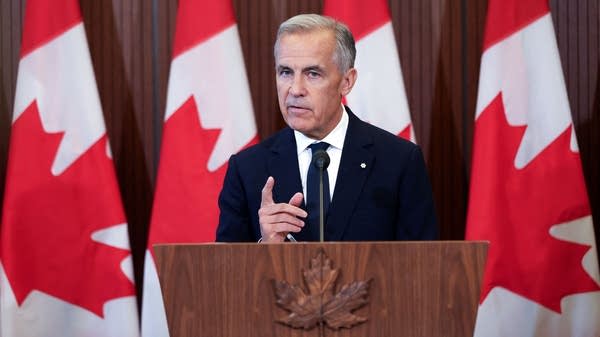
Prime Minister Mark Carney has reassured Canadians that they still face relatively low US tariff rates compared with other trading partners. That remains true, but the gap is closing fast.
According to Royal Bank of Canada figures, the average effective US tariff rate on Canada stood at 2.9 percent in June, the lowest among major partners. It has since nearly doubled to 5.7 percent.
For context:
- Canada: 5.7 percent
- United Kingdom: 6.2 percent
- China: roughly 20.5 percent, still the highest
Canada’s rate now exceeds Mexico’s and is approaching those faced by the UK and Vietnam.
Exports Are Finding New Homes
Canada’s dependence on the American market is structural. The United States buys more than 70 percent of Canadian exports, a relationship built over decades of proximity and free trade agreements dating to the 1980s.
Carney has pledged to double non-US exports over the coming decade, and Bank of Canada statistics suggest firms have already begun shifting.
Matteo Sgaramella, who runs Toronto menswear label Outclass, told the BBC he now attends trunk shows in Paris rather than New York, reaching more European buyers. He described the reception as excellent and said some European retailers are particularly keen to back Canadian goods because of the dispute with Washington. Canada, he suggested, is viewed as the country standing up to the Americans.
Not everyone can pivot. A Canadian Chamber of Commerce report identified three Ontario regions as especially vulnerable: Oshawa, London, and Kitchener-Cambridge-Waterloo. The report found these cities remain heavily tied to the American market while export growth elsewhere has been too limited to compensate.
Some Numbers Are Better Than Expected
The picture is not uniformly bleak.
- Foreign direct investment into Canada reached C$96.8bn in 2025, the strongest inflow since 2007
- GDP grew 3.3 percent in the second quarter of 2026, driven by exports and domestic investment
- Employment has risen in sectors insulated from US tariffs
Those results have pushed recession worries aside for now. Carney’s government will host the first Canada Investment Summit in Toronto in September, a two-day gathering of investors and executives aimed at attracting more capital.
Jobs and Prices on Both Sides
The employment toll has been real in both countries.
Bank of Canada data records about 55,000 Canadian manufacturing jobs lost between January 2025 and January 2026. Calgary economist Trevor Tombe estimates a further 90,000 jobs could go nationwide if the new 50 percent tariffs remain in place.
An analysis commissioned by the Canadian American Business Council warns that allowing the USMCA to collapse would cost tens of thousands more jobs, concentrated in tariff-exposed manufacturing.
In the United States, the Center for American Progress estimates the Liberation Day tariffs have already eliminated tens of thousands of positions across manufacturing, transportation and warehousing.
Consumers feel it too. The Tax Foundation projects the average American household will pay around $840 more this year because of the tariffs.
Canada designed its counter-measures more narrowly to shield consumers, but economists note that most of the levies fall on industrial inputs imported from the US, meaning Canadian manufacturers will face higher production costs that eventually reach buyers anyway.
What Comes Next
Neither side has signalled a route out. The trajectory instead points toward deeper divergence: Canada working to reduce its reliance on a single market, the US absorbing higher input costs, and both electorates weighing the results.
The unresolved question is whether the USMCA survives intact. If it does not, the modelling suggests the damage would extend well beyond the sectors already affected.
Author