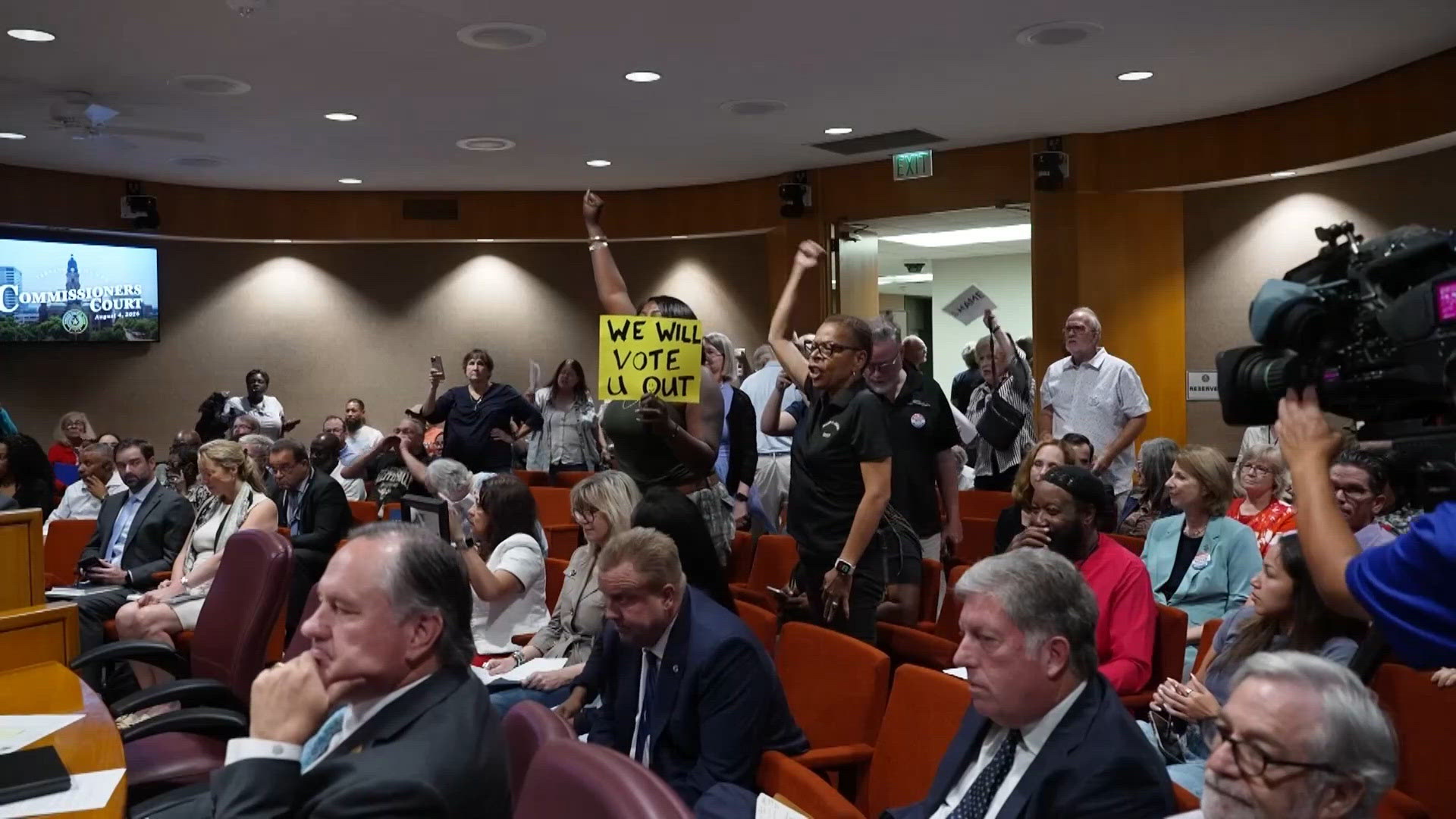
Tarrant County polling locations are on the agenda Tuesday as commissioners prepare to vote on a revised plan that trims fewer sites than the version floated earlier. The scaled-back proposal has not settled the argument. Democrats and civil rights organisations say it still cuts too deep in a county approaching 1.4 million registered voters.
What Changed Between the Two Proposals
The original plan drew immediate criticism for its scope.
- First proposal: 176 Election Day sites, 42 early voting sites
- Revised proposal: 224 Election Day sites, 47 early voting sites
That amounts to 48 additional Election Day locations and five more early voting locations compared with the initial version.
County Judge Tim O’Hare, the Republican who serves as the county’s top elected official, said he had pushed for the revision himself. He noted that when the first draft came before Commissioners Court, he stated on the record that it did not include enough locations and asked staff to rework it.
O’Hare emphasised that the new figure sits 54 above the statutory minimum required by law.
The Comparison That Fuels the Objection
Critics are measuring against a different benchmark. In 2022, Tarrant County operated 316 Election Day polling places and 50 early voting sites.
Against that baseline, the revised plan still removes 92 Election Day locations.
County officials frame the reduction as an efficiency measure, arguing that resources are better spent when sites with consistently low turnout are consolidated. Elections administrator Clint Ludwig told commissioners during a previous meeting, which stretched close to seven hours, that he built his recommendation by analysing turnout data from the 2022 midterms.
O’Hare also pointed to practical constraints, saying some locations changed because buildings are no longer usable or because of accessibility requirements under the ADA. He argued that every voter deserves a safe, accessible site with secure equipment and that the plan delivers that.
The Opposition’s Case
Democratic US Senate candidate James Talarico joined demonstrators on Sunday to press against the cuts. He called the removal of 92 Election Day sites an extraordinary reduction, noting it represents close to a third of the county’s polling places.
His concerns centred on practical consequences: longer trips to vote, longer queues once there, and depressed turnout. He argued the effects would fall hardest on Black and Hispanic communities.
Talarico appeared alongside Tarrant County Commissioner Alisa Simmons, who is running for county judge, at the University of Texas Arlington. The campus previously hosted a polling site that has since been eliminated, a detail the two used to illustrate their argument about access for younger and lower-income voters.
Simmons rejected the emphasis on exceeding the legal floor, saying the minimum has never been her standard and should not be the standard for a county of this size.
Civil Rights Groups Weigh In
On Friday, the NAACP and the American Civil Liberties Union joined voting rights organisations in signing a letter asking the county to reject the proposal. Their argument was that closures would be felt most acutely in areas with high concentrations of minority voters.
Census figures show roughly a third of county residents are Hispanic and about 19.2 percent are Black.
The Wider Texas Context
Tarrant County is not acting in isolation. Texas law leaves the decision on how many polling places to operate to each of the state’s 254 counties, producing considerable variation.
Election officials say reductions have been building as a trend for several reasons:
- Adoption of countywide voting, which lets residents cast ballots at any site rather than an assigned precinct
- Persistent difficulty recruiting and retaining poll workers
- Cost and equipment considerations
Tarrant County moved to countywide voting in 2019 but did not begin cutting locations right away.
Other counties across Texas have taken different paths this cycle. Some have reduced sites for November, while others have added them.
Rep. Matt Shaheen, the Republican who chairs the House Elections Committee, dismissed the framing offered by opponents, saying there is clearly no attempt to suppress votes and calling the accusation silly.
The Underlying Disagreement
The dispute turns on a genuine question rather than a simple one.
Supporters of consolidation argue that countywide voting fundamentally changes the maths. If any voter can use any site, the county can operate fewer, better-staffed locations without stranding anyone in their home precinct.
Opponents counter that flexibility on paper does not translate evenly on the ground. Voters without cars, with inflexible work schedules, or with caregiving responsibilities are the ones for whom an extra few miles becomes a real obstacle. They also point out that fewer sites means longer queues at the ones that remain, particularly during peak evening hours.
Neither argument is easily dismissed, which is partly why the previous meeting ran nearly seven hours.
The Political Backdrop
Talarico’s involvement carries an additional layer. In November he faces Republican Attorney General Ken Paxton for a US Senate seat.
Federal election records show Paxton trailing significantly in fundraising and television advertising. President Trump travelled to Houston last Thursday to help raise money for him, and Paxton has said he is not overly concerned.
The Real Clear Politics polling average currently puts Talarico ahead 46 percent to 44 percent, a margin narrow enough that turnout mechanics in a county the size of Tarrant could matter.
Commissioners are expected to take up the proposal Tuesday.
Author