The Iran war cost has now reached $37.5 billion, and after a long day of testimony on Capitol Hill Tuesday, nobody in the room could say what the money is supposed to buy or when the spending stops.
That was the real story of the hearing. Not the shouting at the end, not the partisan framing, but the silence where an answer should have been.
A Blunt Demand for Straight Talk
Republican Sen. John Kennedy set the tone early, dropping the down-home delivery he’s known for.
“We need some hard answers and some straight talk,” he said.
He was speaking for a lot of people. Americans want to know how long President Trump’s war will run and what it will ultimately cost them. Defense Secretary Pete Hegseth was the man positioned to answer.
He didn’t.
The Question Hegseth Wouldn’t Touch
The sharpest exchange of the day belonged to Democratic Sen. Jon Ossoff, who pressed Hegseth on a claim the secretary had made two weeks into the conflict, when he told the country Iran’s military had been destroyed and rendered combat ineffective.
“You will not answer whether your statement made on the 14th day of the war that Iran’s military had been quote destroyed and made combat ineffective was a truthful statement to the American people as you sit here and ask for tens of billions more,” Ossoff told him.
The Georgia senator’s questioning was flat in tone and impossible to shake off. It surfaced the day’s central problem in plain terms: an administration seeking an enormous sum of money for a conflict it has never explained clearly, cannot control, has no benchmarks for winning, and has no plan for leaving.
The Numbers on the Table
Hegseth and Joint Chiefs Chairman Gen. Dan Caine arrived with an $87.6 billion supplemental request. More than $67 billion of that goes to the war effort and other Pentagon needs.
Meanwhile, the conflict keeps widening:
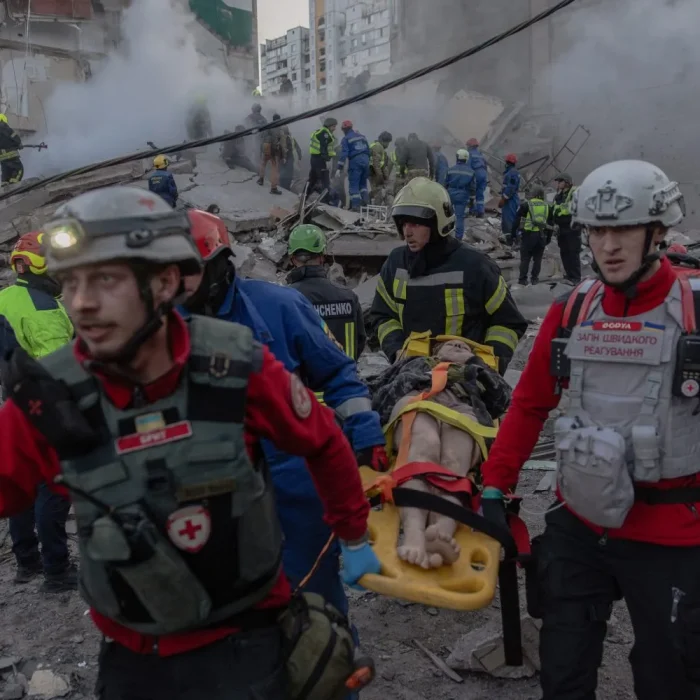
- Eighteen US troops have now been killed, several of them over the weekend
- Roughly 100 American personnel have been injured since early July
- Iran has effectively shut down commercial shipping through the Strait of Hormuz
- Houthi forces in Yemen are menacing alternative Red Sea routes
- Trump warned Tuesday that another escalation is coming soon, targeting Pickaxe Mountain, a suspected Iranian nuclear facility
The costs are rising in both dollars and lives, and the map of the war is getting bigger, not smaller.
Dodging, With a Side of Farm Aid
Hegseth and Caine largely deflected. The secretary credited Trump for launching the campaign and pinned blame for the underlying situation on the Biden administration. Caine steered carefully around anything that might pull him into partisan territory.
The White House also made a shrewd staffing choice by sending Agriculture Secretary Brooke Rollins to testify alongside them. The supplemental includes $11 billion for producers hit by winter storms, and Rollins is a skilled political operator. Every senator on that panel has farmers to answer to.
Still, more came out of the session than the administration probably wanted.
Goals That Have Quietly Shrunk and Stretched
The collapse of the Memorandum of Understanding that briefly paused the fighting has narrowed what the administration says it wants while making the timeline dramatically more open ended.
There was a time when Trump talked about regime change, about Iranians reclaiming their own country, about remaking the Middle East. Asked repeatedly Tuesday what victory actually looks like now, Hegseth offered something far smaller.
“You asked me what the overarching objective is, and I would say ensuring Iran never has a nuclear weapon,” he said. He later added that many of the strikes are aimed at stripping Iran of its ability to see and sense activity in the Strait of Hormuz.
Two problems jump out of that.
The administration insisted last year that strikes on Iranian nuclear plants had obliterated the country’s ability to ever build a weapon. If that was accurate, the current war needs a different justification. If it wasn’t, then the United States is signing up for open-ended military action to keep Iranian nuclear work suppressed indefinitely.
The second issue is the Strait itself. It was open when this war started. Even if the bombardment succeeds, keeping shipping lanes clear of missile and drone attacks on tankers could require permanent vigilance and repeated strikes. That’s not a war that ends. That’s a commitment.
Trump Signals No Rush
The president reinforced that impression Tuesday. Speaking in the Oval Office, he said November’s midterms would not shape his strategy.
“I don’t view it as ‘Gee we’re having an election in a period of time,'” he said.
For Republicans on the ballot, that’s a difficult message, given that polling shows most Americans oppose the war.
Later, Trump appeared to minimize the human cost by placing the 18 combat deaths alongside losses from earlier conflicts, citing the 58,000 killed in Vietnam and casualty figures in the low thousands from Iraq and Afghanistan. Critics found the comparison callous. He is scheduled to attend a dignified transfer ceremony Wednesday at Dover Air Force Base for troops killed over the weekend.
Trump reverses course frequently, and a spike in gas prices or a serious economic shock could change his calculus overnight. But the administration has stopped talking in weeks. Nobody is promising anyone will come home soon.
Democrats Road-Test a Midterm Argument
The hearing doubled as a preview of how Democrats plan to campaign this fall, connecting an unpopular war to the cost of living. Sen. Kirsten Gillibrand made the case most directly.
“Secretary Hegseth, you’re requesting billions of dollars in supplemental funding for a war that you said would last for weeks and that the president has no plan or ability to end,” she said, arguing that voters watching grocery and gas bills climb are being told an unauthorized foreign war matters more than feeding their families or covering health care for sick relatives.
Hegseth countered that governing means trade-offs, and that stopping a nuclear Iran saves money and lives over the long term. There’s a legitimate argument in there, both strategically and fiscally. But telling struggling households to accept present-day pain in exchange for averting a future threat is a hard sell in an election year.
Republicans Hold the Line, Mostly
Despite the murky answers, most Republicans in the room backed Hegseth and supported the supplemental.
The session avoided the theatrical collapse that swallows so many hearings now, at least until the closing rounds, when Michigan Sen. Gary Peters called Hegseth a failure and Hegseth fired back by accusing Democrats of cowardice.
Senate Appropriations Chair Susan Collins kept things civil throughout. She also happens to be the most vulnerable Republican senator heading into the midterms, and nothing she heard Tuesday suggested this war wraps up before voters weigh in.
The Real Political Risk
The lasting damage may not come from any single answer Hegseth gave. It comes from the growing suspicion that the administration won’t discuss an exit strategy because one doesn’t exist.
That perception travels well beyond Maine. If it takes hold, it could shape which party controls the Senate next year, and Collins’ seat may be only the first casualty.
Author
-
Lucienne Albrecht is Luxe Chronicle’s wealth and lifestyle editor, celebrated for her elegant perspective on finance, legacy, and global luxury culture. With a flair for blending sophistication with insight, she brings a distinctly feminine voice to the world of high society and wealth.