The Arizona secretary of state race just became one of the most consequential contests on the 2026 map, and not because of anything either candidate said this week. It’s because of what one of them tried to do six years ago.
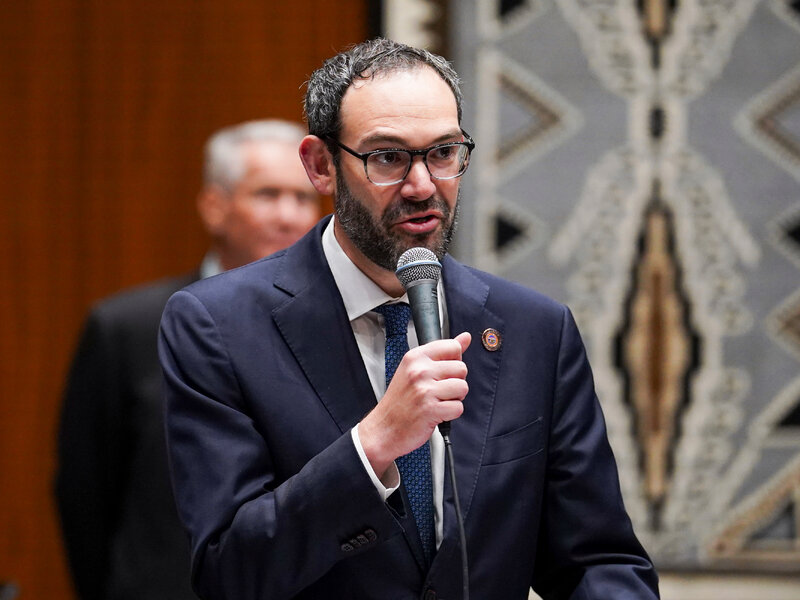
Republican state Rep. Alexander Kolodin won his party’s nomination for secretary of state, NBC News projects, setting up a November showdown with Democratic incumbent Adrian Fontes. Kolodin defeated former Arizona GOP chair Gina Swoboda to get there.
A Candidate With a Litigation History
Kolodin is not a newcomer to Arizona’s election fights. He is a veteran of them, and he fought on a very specific side.
He led multiple lawsuits attempting to overturn results in Arizona in both 2020 and 2022. Those efforts did not go well. Judges pushed back on them, and the state bar association issued its own rebuke over his conduct.
He has also questioned the outcome of past elections repeatedly in interviews, making the subject something closer to a signature issue than a passing remark.
That record didn’t hurt him in the primary. If anything, it defined the campaign that got him here. He entered the race with backing from the conservative nonprofit Turning Point USA and support from several Arizona Republicans in Congress.
Why This Office Matters More Than Most
Secretary of state contests rarely command national attention. This one will, and the reason is straightforward.
In Arizona, the secretary of state serves as the chief election officer. According to the office’s own description, its responsibilities include certifying voting equipment, certifying election results, placing candidates and ballot measures before voters, and finalizing the outcomes of statewide contests.
Put plainly, the person in that chair sits at the point where votes become official.
Now consider the timing. The winner in November will hold that authority through the 2028 presidential campaign, in a state that has swung between the parties and decided national outcomes by painfully small margins.
Arizona is not a place where election administration is an afterthought. It’s a place where it becomes the story.
Kolodin’s Pitch: Transparency and Observers
Kolodin has framed his candidacy around the argument that Arizona voters have lost faith in how their elections are run.
Appearing alongside Fontes in a joint PBS interview, he said residents want more openness and transparency in the process.
“They are not getting that from Adrian Fontes; they will get that from me,” Kolodin said.
He went further, arguing that concerns about election administration are widespread rather than isolated.
“I think voters in this primary and across this state have serious concerns with the way their elections are being administered,” he said.
His proposed remedy centers heavily on access. Kolodin has argued that Arizonans cannot have real confidence in their elections until more observers are permitted at polling locations.
Whether that message extends past a Republican primary electorate into a general election is the question his campaign now has to answer.
Fontes Has Been Running Against This Argument for Years
If Kolodin has built a career questioning election results, Fontes has built one defending them.
Before winning statewide office, Fontes ran elections in Maricopa County, by far Arizona’s largest and the epicenter of nearly every dispute over the state’s voting process. He knows the mechanics of the job at the county level, which is where most election administration actually happens.
Since taking office, he has been vocal in pushing back on efforts by President Trump and his allies to cast doubt on results in Arizona and elsewhere. That’s not a position he stumbled into. It has been central to his public identity.
Voters have already weighed in on this contrast once. Fontes won the office in 2022 by beating a Trump-endorsed Republican, in a cycle where election skepticism was a defining theme.
The 2024 Test Case
There’s one detail in this race that complicates the simple narrative, and it deserves attention.
Fontes administered Arizona’s 2024 election. Trump carried the state that year and won a second term as president. Trump had narrowly lost Arizona in 2020.
That matters because it undercuts the idea that the current administration of Arizona elections tilts toward one party. The system Fontes oversaw delivered a Republican presidential victory in the state, certified without a crisis.
Kolodin’s argument, then, isn’t that a specific result was stolen under Fontes. It’s a broader claim about transparency and public confidence. Whether voters find that distinction persuasive or evasive will likely shape the race.
What the November Contest Really Decides
Strip away the personalities and this race presents Arizona voters with a genuinely stark choice about who administers their elections.
On one side is an incumbent whose entire public argument is that the system works and that attacks on it are corrosive. On the other is a challenger who went to court trying to undo two separate election outcomes and who believes the process needs fundamental change.
Both men are essentially running on the same subject from opposite ends of it.
A few things are worth watching as the campaign develops.
The first is money. Election administration races have attracted significant outside spending in recent cycles, and a battleground state ahead of a presidential year will draw plenty.
The second is turnout composition. Primary electorates and general electorates in Arizona often look meaningfully different, and the state has a large bloc of independent voters who don’t reliably follow either party.
The third is tone. Kolodin’s court record gives Fontes an obvious line of attack, and how Kolodin handles that history in a general election setting may matter more than any policy he proposes.
Arizona has spent six years as a focal point in the national argument over whether elections can be trusted. In November, the state will choose who gets to answer that question from the inside.
Author
-
Lucienne Albrecht is Luxe Chronicle’s wealth and lifestyle editor, celebrated for her elegant perspective on finance, legacy, and global luxury culture. With a flair for blending sophistication with insight, she brings a distinctly feminine voice to the world of high society and wealth.