The debate over Haitian deportation TPS protections has taken a dramatic turn, with a prominent Florida Republican breaking ranks to warn against sending Haitians back to their troubled homeland. As the fallout from a significant Supreme Court decision unfolds, questions about America’s obligations to vulnerable immigrants have moved squarely into the national spotlight.
A Republican Voice of Caution
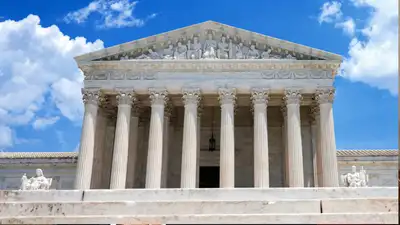
Florida Representative Carlos Giménez raised eyebrows this Sunday when he pushed back against efforts to deport Haitians in the wake of a Supreme Court ruling. That decision upheld the Trump administration’s move to rescind Temporary Protected Status, commonly known as TPS, for certain immigrant groups.
Speaking on CBS News’s “Face the Nation,” Giménez didn’t mince words about his concerns. He described Haiti as unquestionably a failed state and argued that returning Haitians currently protected under TPS to such conditions would amount to a serious error in judgment.
His stance is notable given his party affiliation, offering a rare instance of a Republican publicly challenging the practical consequences of the administration’s immigration approach.
The Purpose Behind TPS
Giménez went further, reminding listeners why the TPS program was created in the first place. He emphasized that the entire point of the program is to shield people from returning to dangerous or unstable situations.
He drew a parallel to the situation facing Venezuelans, who have also lost their TPS protections. According to Giménez, that status should be reinstated for Venezuelans as well, particularly in light of the devastation caused by recent earthquakes. He framed the United States as a nation that should serve as a safeguard for those genuinely in need.
Understanding Haiti’s Ongoing Crisis
To appreciate why Giménez feels so strongly, it helps to understand the dire circumstances gripping Haiti. The nation remains trapped in a profound humanitarian emergency, shaped by a devastating combination of natural disasters and the near-total breakdown of governance.
Several overlapping crises have left the country in turmoil:
- Catastrophic earthquakes that have flattened communities and displaced populations
- A collapse of political systems and institutional order
- Widespread violence carried out by armed paramilitary groups controlling much of the country
Together, these factors have left millions of Haitians in an incredibly precarious position, prompting international organizations to repeatedly raise urgent warnings about the situation.
A History of Compounding Tragedy
Haiti’s recent history reads like a series of overlapping catastrophes. In 2021, the country endured the assassination of President Jovenel Moïse, a shocking event that plunged the nation deeper into political chaos.
That same year, a powerful 7.2 magnitude earthquake struck the southern peninsula, displacing hundreds of thousands of people. The disaster intensified already severe shortages of food and clean water.
These challenges built upon an even earlier tragedy. Back in 2010, a 7.0 magnitude earthquake devastated the country, claiming the lives of more than 200,000 people and reducing much of the capital, Port-au-Prince, to rubble. The cumulative weight of these disasters has left Haiti struggling to recover on virtually every front.
The Administration’s Counterargument
Not everyone shares Giménez’s perspective. Homeland Security Secretary Markwayne Mullin offered a different view during a recent appearance on CNN’s “State of the Union.”
Mullin suggested that many individuals who arrived under TPS years ago had ample opportunity to change their legal status. He pointed out that some people came to the United States under the program 15 or 20 years ago and have since transitioned to different immigration statuses.
His central argument focused on the choices available to TPS holders. According to Mullin, throughout their time in the country under temporary protection, these individuals could have pursued other pathways, including:
- Applying for a visa
- Seeking lawful permanent residency
The implication was clear: those who failed to secure a more permanent status had, in his view, missed available opportunities to do so.
Hundreds of Thousands at Risk
The stakes of this debate are enormous. Following the Supreme Court ruling, roughly 350,000 Haitians who had found refuge in the United States now face an uncertain future.
These individuals risk losing their employment authorization documents and could ultimately face deportation. However, the situation is complicated by the fact that many are simultaneously navigating the U.S. asylum system, pursuing separate legal avenues to remain in the country.
For these families, the ruling introduces significant anxiety about whether they can continue building their lives in America or will be forced to return to a homeland in crisis.
Balancing Principle and Compassion
Giménez attempted to strike a nuanced position on the issue. He acknowledged that the TPS program should not be exploited or misused, emphasizing that the “temporary” in Temporary Protected Status carries real meaning.
He suggested that individuals who have lived in the country for many years should take steps to transition from TPS to another, more permanent status rather than relying indefinitely on temporary protections.
Yet he balanced this expectation with genuine compassion. Giménez stressed that the program exists precisely to protect people fleeing failed states or nations unable to safely receive them. He cited both Haiti and Venezuela as examples of places where returning residents would face serious peril.
The Broader Immigration Debate
This clash of perspectives highlights the deeper tensions running through America’s immigration conversation. On one side sits the argument that temporary protections must remain genuinely temporary, encouraging recipients to pursue permanent legal status over time.
On the other side rests the humanitarian concern that deporting people to genuinely dangerous conditions contradicts the very purpose of programs like TPS. Giménez’s willingness to voice this concern, despite being a Republican, underscores just how complicated and emotionally charged the issue has become.
What Lies Ahead
As the consequences of the Supreme Court decision continue to ripple outward, hundreds of thousands of Haitians remain caught in limbo. Their fate now depends on a mix of policy decisions, ongoing asylum proceedings, and the broader political will to address their circumstances.
Giménez’s comments may signal growing unease among some lawmakers about the human cost of strict enforcement, particularly when the destination countries face such severe instability. Whether his warnings will influence the administration’s approach remains to be seen.
Final Thoughts
The situation surrounding Haitian TPS holders captures a fundamental question at the heart of immigration policy: how does a nation balance the enforcement of its laws with compassion for those fleeing genuine danger? For Giménez, deporting Haitians to a failed state represents a line that shouldn’t be crossed.
As Haiti continues to grapple with disaster, violence, and political collapse, the debate over what America owes to those who sought safety within its borders is far from settled. For the 350,000 Haitians whose futures hang in the balance, the outcome of this ongoing discussion could hardly be more consequential.
Author