The Annie Andrews South Carolina Senate race took an unexpected turn this month, but the Democratic candidate says her own campaign has not moved an inch. Sen. Lindsey Graham, who had represented the state since 2003, died July 11 from an aortic dissection at 71.
His death upended Republican planning. Graham had already won his primary and was running for reelection, leaving the GOP without a nominee weeks before a special election.
Andrews’ Framing
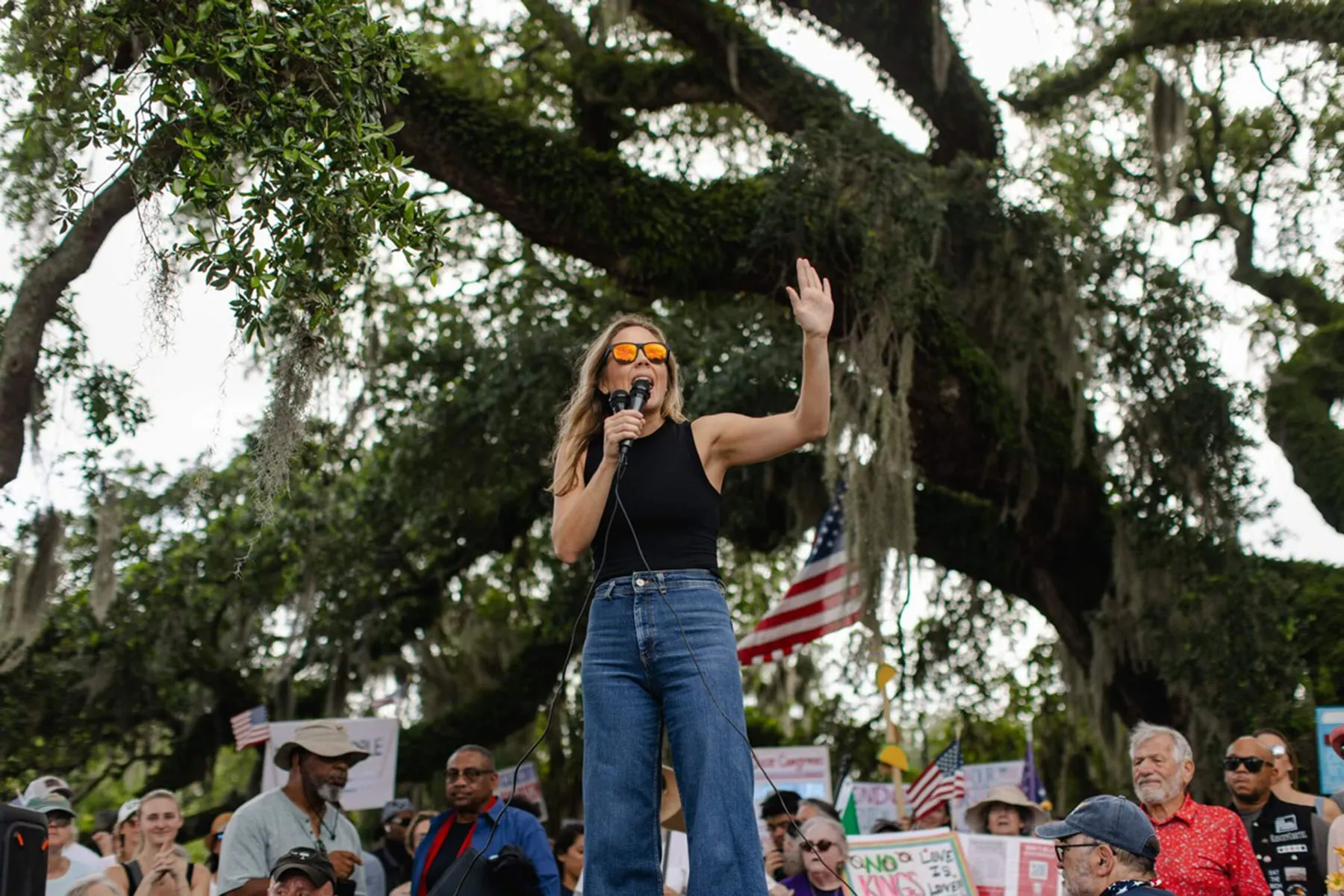
Andrews, a pediatrician who won her own primary in June, described the situation in personal terms during a phone interview with Newsweek on Friday morning.
She called it a substantial political shake-up, particularly for Republicans, but drew a distinction that has become her core message: the weekend changed who she is running against, not who she is running for. The problems South Carolinians face did not shift. Neither did her reasons for entering politics or her intended focus in Washington.
Seeing an Opening in Deep Red Territory
South Carolina has not backed a Democrat for president since Jimmy Carter in 1976. Trump carried it by 18 points in 2024. Andrews nonetheless believes 2026 could be different.
Her argument rests on conversations she says she has at nearly every campaign event with Republican voters. Many tell her they no longer recognize their own party and want it to return to a center-right identity — what she describes as the party of John McCain.
Her pitch to those voters is unusual: that supporting a Democrat is the mechanism by which Republicans force their own party to self-correct. She frames it as a defense of a functioning two-party system, and argues bipartisanship should again be treated as an asset for a lawmaker rather than a career-ending liability.
A Timing Advantage
Andrews sees a tactical benefit in the chaos.
Republicans, she noted, will spend the coming weeks fighting one another over a nomination that rarely becomes available. Open Senate seats in South Carolina are unusual, and the field of interested candidates is large. Whoever emerges will be starting from zero while she runs what she calls a forward-focused campaign.
On Graham Himself
Andrews, 45 and a mother of three, struck a different tone when discussing Graham personally.
She said that when someone dies, it is worth remembering shared humanity and the fragility of life — that life is larger than politics. Her hope, she said, is that Graham is remembered for loving South Carolina and for his record of service to the state.
Why She Ran in the First Place
Andrews traces her decision to run to a specific day: the nomination of Robert F. Kennedy Jr. to lead the Department of Health and Human Services.
She described Kennedy bluntly as her professional arch-nemesis, citing decades of what she characterized as anti-vaccine conspiracy theories.
If elected, she said her priorities would include:
- Pursuing Kennedy’s impeachment
- Blocking upcoming Medicaid budget cuts
- Funding the CDC and the National Institutes of Health
She pointed to a measles outbreak in South Carolina that produced nearly 1,000 documented cases, attributing it to rising vaccine refusal among parents and describing children as suffering unnecessarily.
Andrews previously ran against Rep. Nancy Mace in the 1st District in 2022, losing by roughly 14 points.
The Republican Scramble
As of Friday, only Mark Lynch, a Greenville-area businessman, had confirmed plans to run. He challenged Graham in the primary and took just under 29 percent. He told The New York Times he would put an additional $5 million into finishing the race he started.
Several others are circling. Rep. Ralph Norman said on Fox Business that he is interested but has made no formal announcement. Mace is widely viewed as a possibility without having committed. Both lost gubernatorial primaries in June.
Lt. Gov. Pamela Evette told CBS News she found it disheartening that the conversation turned political so quickly after Graham’s death, saying there would be a time for that later. She has not ruled anything out.
Sen. Darline Graham, appointed to serve out her brother’s term, has not said whether she will seek a full term. Trump posted on Truth Social that he asked her to run, writing that nobody would be better positioned to honor her brother’s legacy.
Rep. Russell Fry and former Rep. Trey Gowdy have also surfaced as possibilities. Rep. William Timmons, former Gov. Nikki Haley, and Treasury Secretary Scott Bessent have all ruled themselves out.
An Emerson College poll released this week — the first since Graham’s death — found Norman leading at 16 percent, Lynch at 13, and Mace and Evette tied at 10. It surveyed 500 likely voters on July 14 and 15 with a margin of error of 4.3 points.
The Special Election Calendar
South Carolina law fills Senate vacancies through a special election, with the governor appointing an interim senator in the meantime.
Key dates from the State Election Commission:
- Candidate filing: July 21 to July 28
- Absentee ballot application deadline: July 31
- Early voting: August 5 to 7
- Election day: August 11
- Runoff if needed: August 25, with early voting August 19 to 21
Avoiding a runoff requires 50 percent plus one vote.
How Hard Is the Climb?
Justin Vaughn, a political science professor at Coastal Carolina University, previously told Newsweek that the eventual Republican nominee remains favored. Despite the disruption Graham’s death caused, he considers it a safe Republican seat in a state Trump carried easily.
The available polling is thin and comes from Democratic sources. An Impact Research survey conducted June 17-22 among 700 likely voters showed Graham ahead of Andrews 48 to 45 — close, but from an internal poll.
History leans heavily against her. South Carolina has not elected a Democratic senator since Ernest Hollings in 1998. Republican presidential margins have run in double digits for cycles.
The Structural Problem
Democrats in South Carolina tend to have a high floor and a low ceiling.
The state has a large Black population, and Charleston and Columbia lean Democratic. But rural areas, suburbs, and pronounced racial polarization consistently deliver Republican advantages.
Jaime Harrison’s 2020 campaign against Graham drew enormous national attention and money before losing by about 10 points. Even in the 2018 blue wave, Republican Gov. Henry McMaster won by 8 — a narrow result by local standards.
Andrews is betting that an unsettled Republican field and a compressed timeline change the arithmetic. The next three weeks will show whether that bet has any foundation.
Author