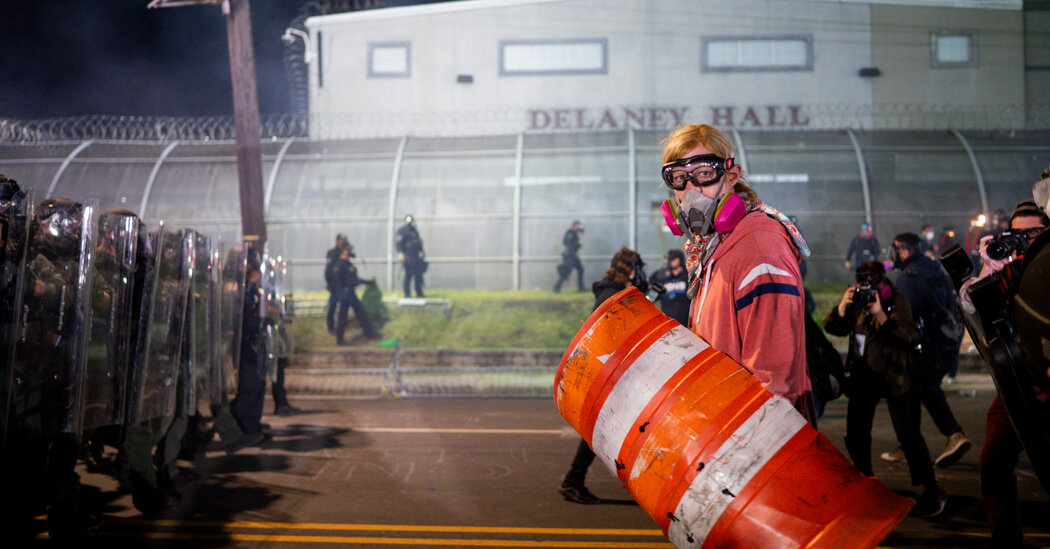
The Delaney Hall protests have become the newest flashpoint in the national fight over President Donald Trump’s immigration crackdown. Since late May, repeated clashes between demonstrators and law enforcement outside the New Jersey immigration detention center have led to more than 80 arrests — and turned a quiet corner of Newark into a tense battleground.
At the heart of the confrontation is a simple question: are detainees inside the facility being mistreated? Protesters say yes. The Trump administration says no. And the gap between those two answers has fueled weeks of unrest.
What’s Driving the Protests
Demonstrators say they are showing up in solidarity with the people held inside Delaney Hall, a 1,000-bed facility owned by Geo Group, a private prison contractor that operates detention centers across the country.
The accusations against the facility are serious. According to the immigrant advocacy group Cosecha, detainees launched a hunger strike last month and smuggled out handwritten letters laying out their demands. Among them: better living conditions and improved medical care, with some detainees claiming they’re being denied medication.
The specific complaints from inside Delaney Hall are grim. Detainees say they’re being served:
- Moldy and expired food, some of it reportedly containing maggots
- Meals so poor that a hunger strike felt like their only option
They also describe overcrowded cells with no air conditioning. These allegations aren’t isolated. Detainees at other facilities around the country have made similar claims of medical neglect for serious and chronic conditions, and hunger strikes have been announced elsewhere as well.
Adding weight to the accusations, Democratic members of Congress from New York City visited the facility early in the protests and said the detainees’ accounts were credible.
How the Trump Administration Responded
Trump and his deputies have firmly pushed back, denying that there is any hunger strike, abuse, or substandard treatment inside the center.
Homeland Security Secretary Markwayne Mullin dismissed the complaints, insisting detainees are getting the calories they want and bluntly noting that the facility “isn’t Holiday Inn.” Tom Homan, Trump’s border czar, went a step further after a recent visit, praising the food and saying the spaghetti was good.
Geo Group, for its part, brushed off the criticism as a politically motivated effort by outside groups. The company framed the campaign as an attempt to dismantle ICE and federal immigration detention by going after the contractors who run the government’s facilities.
A Standoff That Turned Violent
What began as a protest has repeatedly spilled into physical confrontation.
Some demonstrators have shown up wearing gas masks and helmets, using traffic cones, trash cans, and other improvised objects as shields. At times, they’ve tried to block vehicles from entering or leaving the facility.
The response from law enforcement has been forceful. Videos circulating on social media show officers in riot gear firing tear gas and swinging batons to push back the crowds, with police on horseback at one point riding directly into the demonstrators.
The injuries have gone both ways. Acting U.S. Attorney General Todd Blanche posted images online of bloody wounds and bruises suffered by ICE officers. On a recent Friday night, ICE arrested four people on charges including assaulting law enforcement, obstruction, and making threats, according to Mullin. Separately, Newark police charged a man from Seattle with criminal mischief for smashing car windows.
Newark Public Safety Director Emanuel Miranda issued a sharp warning, saying no one has the right to come into the city, destroy property, or incite violence. He urged anyone arriving with an agenda beyond peaceful protest to think twice.
A Troubling Incident Involving a Journalist
One especially striking episode involved a member of the press.
A law enforcement official was charged with stealing roughly $10,000 worth of camera equipment from an Associated Press photojournalist, Angelina Katsanis, who had been injured while covering the standoff. According to the state’s attorney general, Katsanis was struck in the knee by a wood beam during a clash between police and demonstrators.
After seeking medical attention, she used a geo-tracking device to trace her missing equipment — and the trail led directly to the official’s home.
How New Jersey Officials Stepped In
State and local leaders have struggled to find the right balance between allowing protest and restoring order.
Democratic Governor Mikie Sherrill was initially hesitant to get involved. But as the violence escalated, she declared the situation had grown unsafe and unacceptable, and called in the state police. Troopers responded by setting up designated protest zones and vehicle checkpoints, while ICE officers who had been stationed in front of the facility agreed to stand down.
Newark Mayor Ras Baraka took his own steps, imposing a 9 p.m. curfew and deploying city police to enforce it. Yet just a week later, he announced the city would scale back its police presence. His reasoning was practical: arrests had dropped, and he was reluctant to keep spending taxpayer money to guard a privately owned facility.
The legal pressure is mounting too. This week, the state’s attorney general filed a lawsuit against Geo Group, alleging that the facility denied state health inspectors full access to investigate the allegations.
Why This Matters
The Delaney Hall standoff captures the larger tensions running through the country’s immigration debate. On one side are activists, detainees, and some elected officials who say the conditions inside represent a humanitarian failure. On the other is an administration determined to defend its enforcement approach and dismiss the criticism as politically driven.
A few threads make this situation especially volatile:
- A private contractor, Geo Group, profits from running the facility, raising questions about oversight and accountability.
- State inspectors say they’ve been blocked from fully investigating, deepening suspicions.
- The clashes have produced injuries, arrests, and even the theft of a journalist’s equipment, turning the protest into a story about civil liberties as much as immigration.
What Comes Next
For now, the situation remains unresolved. The lawsuit against Geo Group could force a closer look at what’s actually happening inside Delaney Hall, while the scaled-back police presence may ease the nightly confrontations.
But the underlying dispute — over how detainees are treated and how far the government’s immigration crackdown should go — is far from settled. As long as those questions linger, the Delaney Hall protests are likely to remain a powerful symbol of a nation deeply divided over immigration.
Author