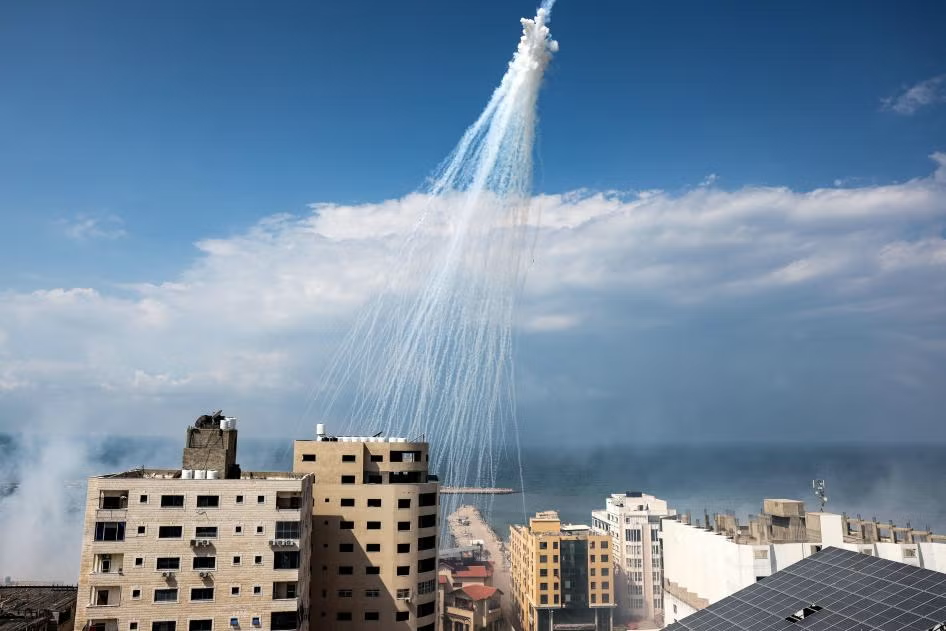
Reports of white phosphorus in Lebanon have drawn international scrutiny, with human rights groups and major news outlets saying they have documented Israel’s use of the chemical over civilian areas. White phosphorus is a substance capable of causing severe burns, respiratory damage, and even death — which is exactly why its use near populated areas raises such serious alarm.
What the Reports Say
The New York Times reported on Saturday that Israel deployed white phosphorus in the Lebanese town of Nabatieh on May 30, basing its conclusion on verified social media footage. The claim adds to a growing body of allegations from rights organizations about how the substance has been used during the current conflict.
It’s worth noting that not every outlet has independently confirmed these accounts. NPR, for instance, has not verified the claims on its own, and Israel denies using white phosphorus in any way that breaks the law.
How the Conflict Reached This Point
To understand the backdrop, it helps to trace the recent escalation.
Israel resumed its strikes on the Iran-backed group Hezbollah in Lebanon shortly after Israel and the United States jointly struck Iran at the end of February. The cross-border fighting had reignited when Hezbollah fired projectiles at communities in northern Israel in early March.
Diplomacy has struggled to keep up. Although Lebanon and Israel agreed to a ceasefire on Wednesday, Hezbollah rejected the deal. Since then, continued Israeli airstrikes have killed nine people, including three members of the Lebanese military.
Why White Phosphorus Is So Dangerous to Civilians
The core problem with white phosphorus is that it does not discriminate. When used over populated areas, it can harm anyone in its path.
According to Human Rights Watch, a single white phosphorus artillery projectile can scatter the substance across an area between 125 and 250 meters in diameter if it bursts in the air overhead. That wide spread makes it nearly impossible to limit the damage to a specific target.
Once it reaches the ground, the effects are brutal. The substance clings to skin and clothing and can cause severe burns that penetrate all the way to the bone. It also produces particles that damage the eyes and the upper respiratory tract, and these injuries can be fatal.
The danger doesn’t end quickly, either. White phosphorus is notoriously hard to put out and can reignite whenever it’s re-exposed to oxygen.
A researcher with Amnesty International, Budour Hassan, described how persistent the substance can be, noting that it can keep burning for days or even weeks. Hassan said investigators who visited sites in Gaza days after white phosphorus had been dropped found that it was still there.
The key dangers can be summarized this way:
- It spreads across a wide area, making it indiscriminate.
- It sticks to skin and clothing and burns deep into the body.
- It harms the eyes and respiratory system, with potentially deadly results.
- It is difficult to extinguish and can reignite when exposed to air.
What’s Known About Israel’s Use of the Substance
The current reporting points to several locations.
The New York Times said Israel used white phosphorus in Nabatieh, a town of roughly 40,000 people. It also verified footage showing the substance being used near the city of Tyre, along with three other towns, since March.
Human Rights Watch separately confirmed the use of incendiary weapons over homes in southern Lebanon on March 3. The group has gone further, stating that the Israeli military used the substance in Lebanese civilian areas during an earlier conflict with Hezbollah in 2023, as well as in Gaza.
According to HRW, the impact extends beyond physical injury. The organization said white phosphorus forced Lebanese civilians living near the Israeli border to flee their homes, leaving them displaced.
A History That Goes Back Years
This is not the first time questions have surrounded Israel’s use of the substance.
A previous Human Rights Watch investigation found that Israel used white phosphorus in Gaza back in 2009. In response to mounting criticism, Israel pledged in 2013 to significantly cut back on its use of the material.
Israel Is Not the Only User
It’s important to recognize that Israel is far from the only military to deploy white phosphorus.
The United States has used it as well, most recently in Iraq. American forces employed the substance during the fight against the Islamic State in Mosul, saying it was used to provide cover for civilians fleeing west Mosul while US and Iraqi forces battled the militants inside the city.
That context highlights an uncomfortable reality: white phosphorus sits in a gray zone where it is used by multiple militaries, often justified on tactical grounds, even as rights groups warn about its devastating effects on civilians.
The Bigger Picture
The debate over white phosphorus touches on a deeper tension in modern warfare. The substance can serve legitimate military purposes, such as creating smoke screens, but those same properties make it horrifying when it lands in or near civilian areas.
That dual nature is precisely why its use generates such controversy. When deployed over towns and cities, the line between a tactical tool and an indiscriminate weapon becomes difficult to defend.
What Comes Next
For now, the allegations remain contested. Israel denies any unlawful use, while human rights organizations and journalists continue to document and verify incidents. The lack of full independent confirmation across all outlets means the full scope of what happened is still coming into focus.
What is clear is that the reports of white phosphorus in Lebanon have added a grim new dimension to an already volatile conflict. As airstrikes continue and the ceasefire remains rejected by Hezbollah, the use of such a dangerous substance near civilian populations is likely to remain a flashpoint for international concern in the days ahead.
Author