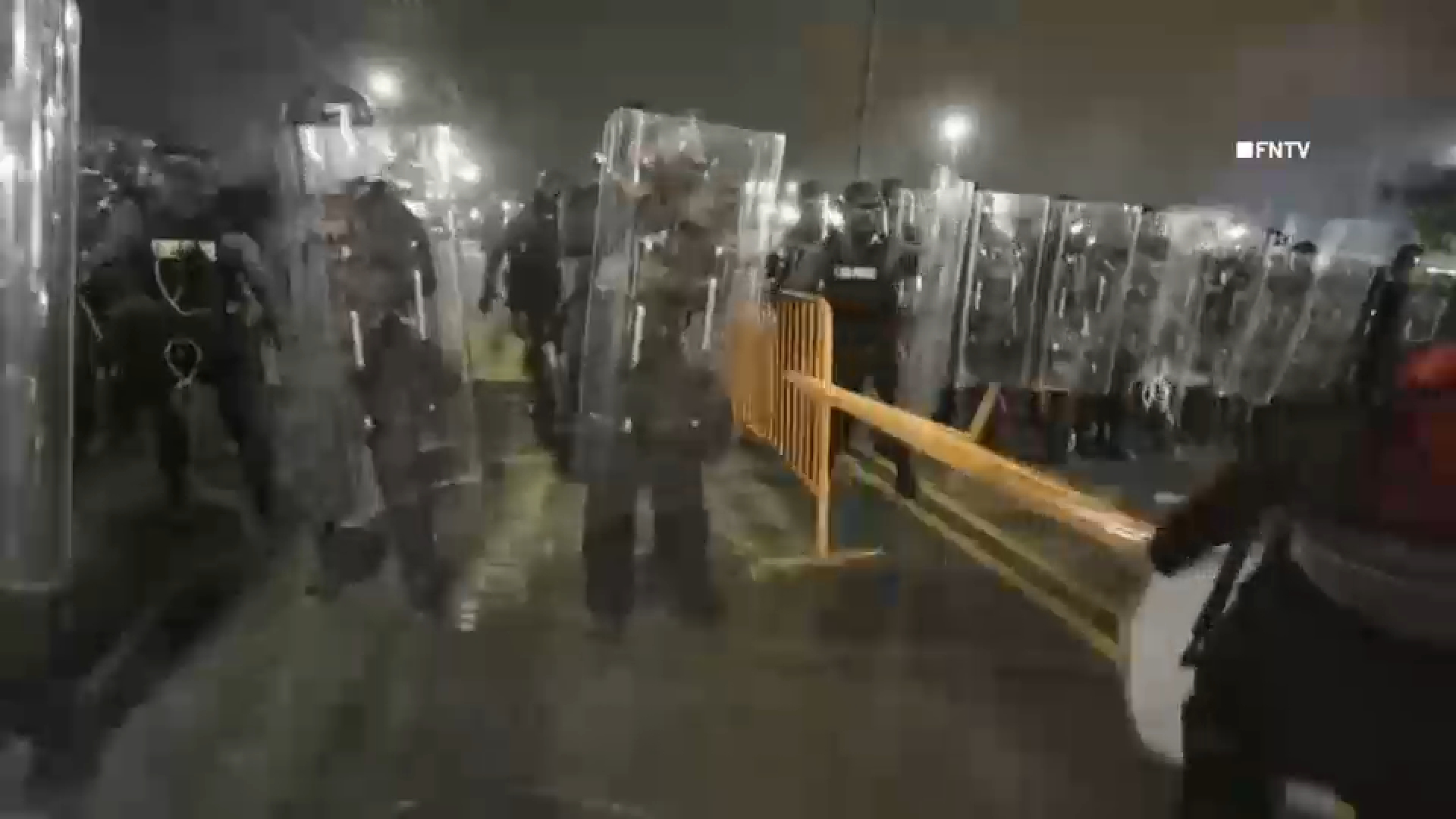
The Delaney Hall curfew marks a dramatic escalation in the standoff over immigration enforcement in New Jersey. Newark Mayor Ras Baraka has imposed nighttime movement restrictions around the controversial detention center, which has become a central flashpoint in the fierce national debate over President Donald Trump’s mass deportation agenda.
The move reflects just how volatile the situation outside the facility has become, as protesters, detainees, and law enforcement collide night after night.
A Curfew Born of Crisis
Baraka announced the curfew on Sunday morning amid a sharp spike in tensions outside Delaney Hall, which is operated by private contractor GEO Group under a 15-year agreement with Immigration and Customs Enforcement.
In his statement, the mayor pointed to the deteriorating conditions on the ground, citing an escalating situation and a growing need for police intervention. He noted that multiple people had already been arrested and found carrying weapons, a detail he used to underscore the seriousness of the threat to public safety.
The restrictions are specific and firmly enforced:
- Movement is limited within half a mile of the detention center.
- The curfew runs from 9 p.m. to 6 a.m. Eastern time.
- Nearby Doremus Avenue is closed to pedestrians and vehicles that cannot verify a legitimate need to be in the area.
A Persistent Flashpoint
Delaney Hall has been a source of conflict ever since it reopened as an immigration detention facility last year. Confrontations between law enforcement and protesters have become a recurring feature, with Mayor Baraka himself caught up in the tensions on more than one occasion.
The most recent surge has been especially intense. The month of May saw more than a week of daily protests outside the facility, sparked by news that detainees inside had launched a hunger strike.
Allegations of Harsh Conditions
The hunger strike grew out of mounting grievances from those held at Delaney Hall. Detainees have described troubling conditions to human rights groups, including:
- Expired food being served.
- A lack of adequate medical care.
- Alleged abuse at the hands of authorities.
These accounts have fueled public anger and drawn growing crowds of demonstrators determined to show solidarity with the people inside.
Who Is Actually Being Detained?
The Trump administration has defended its sweeping deportation campaign as an effort to remove what it calls “the worst of the worst,” portraying undocumented immigrants as a criminal threat.
Critics, however, paint a very different picture. They note that many detainees have no criminal record at all, and that some who do have been cited only for minor offenses. Supporting that argument, data from the Transactional Records Access Clearinghouse at Syracuse University found that, as of April, roughly 71 percent of people in ICE detention had no criminal conviction.
That gap between the administration’s rhetoric and the data has become a central pillar of the protests.
Protests Meet Force
To stand with the hunger strikers, demonstrators have gathered outside Delaney Hall, linking arms to form human chains and building barricades to block access to the facility.
Those tactics have repeatedly led to tense confrontations. Law enforcement officers have responded with batons and pepper spray in attempts to clear the roads leading to the center. Despite calls for calm, the clashes have persisted, with six protesters arrested during an overnight confrontation just last Wednesday.
Politicians Caught in the Fray
The conflict at Delaney Hall has not spared elected officials. A year ago, a protest there resulted in trespassing charges against Mayor Baraka and assault charges against U.S. Representative LaMonica McIver, following a dispute over which officials were permitted to enter the facility for an inspection.
While the charges against Baraka were eventually dropped, McIver continues to face legal proceedings. She has denied the allegations and condemned the prosecution as politically motivated.
In a defiant social media post on Saturday, McIver said the Trump administration had brought baseless charges against her for conducting oversight meant to protect immigrants at Delaney Hall. She insisted that despite attempts to silence her and rising stakes, she would never back down from speaking up.
The Governor Steps In
New Jersey Governor Mikie Sherrill has also become deeply involved. She has called for the creation of designated protest zones to reduce the chances of violent encounters between officers and demonstrators, framing the measures as a way to protect peaceful protesters.
Sherrill herself was denied access to the facility this past week, an experience that prompted her to call outright for Delaney Hall to be shut down.
At a Saturday news conference, she placed much of the blame for the escalating unrest on what she described as national extremist groups traveling in from out of state to inflame tensions. She urged demonstrators to lower the temperature so that attention could remain on the detainees and their families.
A Delicate Balancing Act
Sherrill’s remarks revealed the difficult line state and local leaders are trying to walk. She made clear she did not want to hand ICE any justification to expand its operations, declaring that she would not give the agency a pretext to grow its presence at Delaney Hall or elsewhere in the state, and that she would not put lives at risk.
At the same time, she expressed gratitude to the many protesters who have assembled peacefully to raise their voices about conditions inside the facility, drawing a clear distinction between them and those she accused of stoking conflict.
An Uncertain Road Ahead
For now, the curfew represents an attempt to restore order to a situation that has grown increasingly combustible. Yet the underlying tensions, the hunger strike, the allegations of mistreatment, the broader fight over deportation policy, remain unresolved.
As long as Delaney Hall stands at the intersection of national immigration politics and local community anger, the standoff is unlikely to fade quietly. The Delaney Hall curfew may calm the nights, but the daytime battle over what the facility represents shows no sign of ending.
Author