The U.S.-Iran peace talks have barely begun, and already they have stumbled. What was meant to be a smooth diplomatic march toward a final accord has instead turned into a stop-start scramble, exposing just how much distrust and difficulty stand between the two sides before any lasting peace can take hold.
A 60-Day Sprint That Got Off to a Shaky Start
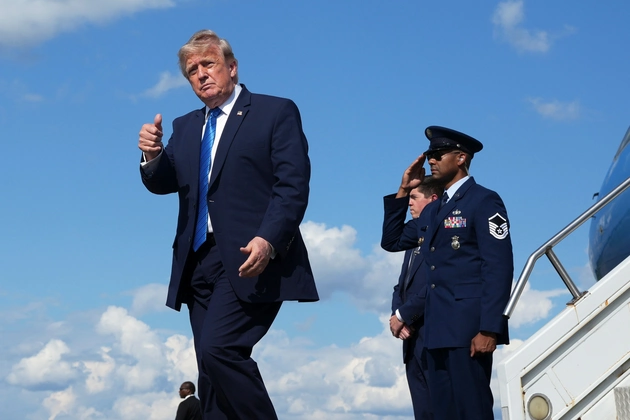
Negotiators from Washington and Tehran gave themselves just sixty days to transform a loosely worded Memorandum of Understanding into a complete peace agreement. President Donald Trump signed that document with a felt-tipped flourish on Wednesday, setting the clock ticking.
But the early chaos quickly made one day feel like a wasted opportunity. With so much riding on the timeline, the confusion that followed underscored how many unresolved issues remain, including the thorny question of Iran’s nuclear program and the broader effort to end the war for good.
The plan looked orderly on paper. Diplomats, journalists, and activists gathered in Zurich for the kickoff of the next phase. There was supposed to be a signing ceremony featuring Vice President JD Vance and Iranian Foreign Minister Abbas Araghchi, after which negotiating teams would settle in at Bürgenstock, a Swiss mountaintop resort long associated with sensitive diplomacy.
When the Plan Fell Apart
Instead of ceremony, there was cancellation. Iran pulled its delegation, pointing to Israeli attacks in southern Lebanon. Hours before he was set to leave Washington, Vance scrapped his own trip. By midmorning, the Swiss government confirmed there would be no talks at all that day, with no clear word on when they might resume.
A White House spokesperson acknowledged the difficulty, noting that the logistics of these negotiations had never been simple or predictable. Behind the scenes, mediators who had spent months nurturing the process raced to keep the rift from sinking everything.
Their efforts showed some results. By Friday afternoon in the Middle East, a renewed truce between Israel and Hezbollah appeared to be holding. By Saturday, plans were taking shape for talks to proceed in a smaller format involving Araghchi, Trump’s envoy Steve Witkoff, and the president’s son-in-law Jared Kushner. Yet overnight Israeli strikes that killed several people in southern Lebanon threatened to create yet another obstacle.
The Mediators Holding It Together
Pakistan has played a central role in keeping the dialogue alive. As a follow-up to the signing of the Islamabad Memorandum of Understanding, technical-level talks were scheduled in Bürgenstock on June 21, with representatives of the United States and Iran joined by mediators from Pakistan and Qatar. The Tribune
A Pakistani official familiar with the discussions described the situation candidly, saying Islamabad was in touch with both Tehran and Washington and trying to smooth over the disruptions. The key, the official suggested, was for both parties to honor the MOU. Still, given the troubled history between the two nations and the war that just unfolded, hurdles could not be ruled out.
By Sunday, momentum had clearly returned. Iran’s delegation, led by lead negotiator and parliament speaker Mohammad Bagher Ghalibaf, landed in Switzerland, with Foreign Minister Araghchi and several banking and oil officials among the group. Vice President Vance and his wife arrived at Emmen Air Base early Sunday morning to take part in the negotiations. CNNIran International
Why Neither Side Wants Total Collapse
Despite the friction, analysts believe both governments have strong reasons to keep the process alive.
For Washington, the priorities are concrete. The White House wants to reopen the Strait of Hormuz and get oil tankers moving again. For Tehran, the appeal is just as practical: a deal that lifts sanctions, leaves its leadership in place, and unfreezes billions in assets is hard to abandon, even amid loyalty to Hezbollah.
That math leads many to conclude the agreement will survive the turbulence. As one former Pentagon official put it, the Lebanon theater, however volatile, is unlikely to dramatically shift Iran’s strategic thinking, because the MOU itself is simply too valuable for Iran to trade away over Hezbollah.
Notably, the criticism has come from multiple directions. Many analysts, including some Israelis and even certain congressional Republicans, have argued that Trump secured a weak bargain, faulting the 14-point MOU for asking too little of Iran.
A Deep Well of Distrust
Even if an implementation plan comes together, lingering suspicion clouds the long-term outlook. Iran, in particular, views Trump as a serial wrecker of agreements, and Switzerland has often been the backdrop for those broken deals.
Araghchi knows this history personally. He took part in talks last winter that were reportedly making progress on limiting Iran’s nuclear program, only for Trump to abandon those negotiations days later and order strikes on Tehran. He was also involved in earlier diplomacy with the Obama administration that produced a nuclear deal Trump later tore up.
That track record shapes Iran’s caution. An Iran specialist who spoke with senior officials described how Tehran sees Trump as unreliable and erratic. This time, the Iranians hope that Trump’s costly and largely unsuccessful war against them will change his calculations.
A central Iranian goal is holding Trump accountable for keeping Israel and Prime Minister Benjamin Netanyahu bound to the agreement, even though Israel never signed it and has openly condemned it. Tehran reportedly views the MOU as a test of whether Trump can rein in Netanyahu, since renewed Israeli bombing months from now would shatter any sense of progress.
The Versailles Surprise
The diplomatic theater also took an unexpected turn. Administration officials had wanted a formal signing ceremony in Switzerland to elevate the deal as a major achievement, with leaders like Pakistani Prime Minister Shehbaz Sharif planning to attend.
But Trump upstaged that moment. At a candlelit dinner at the Palace of Versailles outside Paris, seated beside French President Emmanuel Macron, he signed a copy of the document with his trademark Sharpie. He handed the paper to Secretary of State Marco Rubio, gestured downward as if to say “oil,” then upward toward “stock market.” The planned ceremony was downgraded, and dignitaries canceled their travel as the gathering was recast as a working negotiation.
Claiming Victory From the Rubble
In the end, Iran’s willingness to return to the table appears tied to its ability to declare triumph. Tehran’s hard-line leadership wants to frame the conflict as a moment when it stood firm against two of the world’s most powerful militaries and survived.
The current Strait of Hormuz dispute feeds into that narrative, even as the U.S. insists traffic is flowing freely. U.S. Central Command reported that safe passage remained intact, with dozens of merchant ships moving cargo and more than 17 million barrels of oil to global markets. Fox News
As one analyst summarized it, Trump once believed he could pressure Iran into surrender without consequence. Now the alternative is no longer hypothetical, he has tried force, and he has learned that it delivers pain rather than results. Whether that lesson translates into a durable peace will become clearer in the days ahead at Bürgenstock.
Author