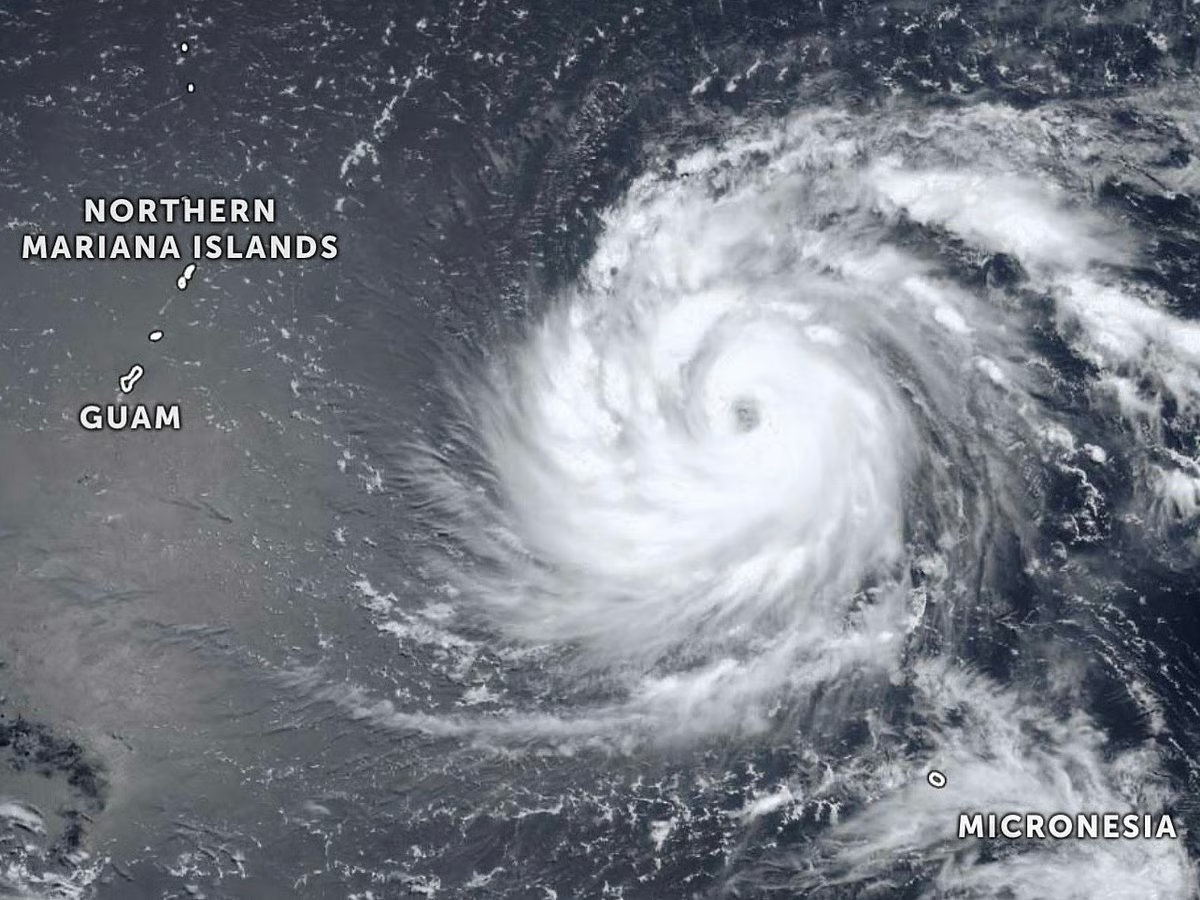
Super Typhoon Bavi has unleashed its fury on the US Pacific islands, pounding Guam and the Northern Mariana Islands with ferocious winds and torrential rain as it made landfall. The monstrous storm has left communities scrambling for safety and officials bracing for the worst.
A Storm of Terrifying Strength
The scale of Super Typhoon Bavi is difficult to overstate. According to the US National Weather Service, the storm carried sustained winds approaching 290 kilometers per hour, roughly 180 miles per hour, with gusts climbing as high as 350 kilometers per hour as it swept across the islands.
Forecasters didn’t mince words when describing the threat. They labeled the system extremely dangerous and cautioned that it had the power to inflict catastrophic destruction. Adding to the alarm, the storm threatened to whip up towering ocean waves reaching nearly 11 meters, or about 35 feet, high.
Reports of serious damage began surfacing quickly. One official told AFP that they had already received word of major destruction across the Northern Mariana Islands as the typhoon barreled through.
A Region Built for Cyclones
The western Pacific has long been one of the most storm-prone corners of the planet, regularly enduring tropical cyclones. However, storms reaching Bavi’s intensity are far from typical for these particular US territories.
Scientists point to a troubling trend behind the shift. They warn that a warming climate is fueling stronger, more frequent typhoons, meaning events once considered rare may become increasingly common in the years ahead.
Residents Race to Prepare
As Bavi approached, people across the region moved swiftly to protect themselves. Many relocated to emergency shelters, while others made frantic last-minute arrangements before conditions worsened.
Among the hardest-hit areas was Rota, the southernmost inhabited island in the Northern Marianas, situated roughly 50 kilometers northeast of Guam. The weather service confirmed the island was absorbing a direct blow from the storm.
Local authorities issued urgent warnings. The mayor’s office advised residents to brace for destructive winds and cautioned that conditions would deteriorate so rapidly that stepping outdoors would become dangerous.
A spokesperson for Rota’s mayor described the situation on the ground as tense but holding, noting they were dealing with powerful winds and flooding. Some residents, the spokesperson added, had already reported significant damage to their properties.
Compounding Misery Across the Islands
Further north on Saipan, the airport recorded wind gusts exceeding 161 kilometers per hour, according to meteorologist Marcus Landon Aydlett. But for many islanders, Bavi arrived while they were still reeling from an earlier disaster.
A previous super typhoon named Sinlaku had struck Guam and the Northern Mariana Islands back in April, and its aftermath lingered. Here’s what that earlier storm left behind:
- Seventeen lives lost across the affected islands
- Roughly $1.5 billion in damage
- Widespread power outages that persisted for many residents
That meant countless people faced Bavi without electricity, making an already frightening situation even more perilous.
The weather service offered little immediate relief in its forecast. Officials warned that winds would not drop below typhoon strength until early Monday afternoon, and would not fall below tropical storm force until after midnight.
Guam Opens Its Doors to the Vulnerable
Guam, home to about 170,000 people and normally known as a sunny tourist getaway, transformed into a defensive stronghold. The island opened five evacuation centers inside its schools, designed to shelter those most at risk.
These facilities could accommodate around 1,700 people combined. By early Sunday afternoon, however, demand was already testing their limits. The island’s civil defense office reported that one shelter had reached full capacity, forcing officials to redirect arriving evacuees to another location.
Understanding the “Super Typhoon” Label
Bavi earned its formidable classification from the Joint Typhoon Warning Center, a US military division tasked with tracking storms across the western Pacific.
So what does the designation actually mean? A super typhoon is defined by winds surpassing 240 kilometers per hour. To put that in familiar terms, the weather service considers such storms comparable in destructive potential to a category four or five hurricane, placing Bavi firmly among the most dangerous systems on Earth.
Voices from the Ground
Behind the statistics are real people facing real fear and hardship. Pinky Cubacub, a 55-year-old business owner in Guam, described spending $500 on plywood to board up her small eatery.
Her frustration was palpable. She explained that losing days of business was a painful blow, especially since her venture was still new. Every dollar she earned, she said, went toward rent, utilities, supplies, and paying her staff, leaving nothing yet for herself.
Tourists were caught in the chaos too. Miku Sakurai, a 25-year-old visitor from Japan, shared that her return flight to Tokyo had been canceled. With no way home, she planned to ride out the storm in her hotel, admitting openly that she was frightened.
A Disturbing Pattern Emerges
Bavi is more than a single catastrophic event, it represents part of an alarming climatic trend. The storm marks the eleventh category four or five tropical cyclone to strike US territory within the past decade.
To grasp how dramatic that shift is, consider this comparison: that single decade has now produced one more such storm than the entire 57 years that came before it combined.
Experts tie this surge to shifting ocean and atmospheric conditions. A strong El Niño event, which involves the periodic warming of surface waters in the Pacific, is expected to drive more tropical storms toward these extreme intensities.
The mechanics are straightforward but sobering. Warmer sea surface temperatures pump additional moisture into the atmosphere, effectively supercharging storms and giving them the fuel to grow more powerful.
Looking Ahead
As Super Typhoon Bavi continues its assault, the immediate priority remains keeping people safe until the winds finally subside. Yet the storm also serves as a stark reminder of a changing world, where once-rare disasters are striking these Pacific islands with unsettling regularity.
For the residents of Guam and the Northern Marianas, the coming hours will test their resilience yet again. And for the wider world, Bavi stands as another warning sign of the intensifying storms that scientists say lie ahead.
Author