The latest Iran war live update reveals a region still on edge, with multiple flashpoints unfolding simultaneously across the Middle East. From rising tensions in the Strait of Hormuz to relentless Israeli strikes on Lebanon, the situation remains volatile despite ongoing diplomatic efforts. Threats from Iran’s elite military force, cautious optimism from Washington, and active US naval operations have combined to create one of the most precarious moments the region has faced this year.
Israel Continues Heavy Strikes on Lebanon
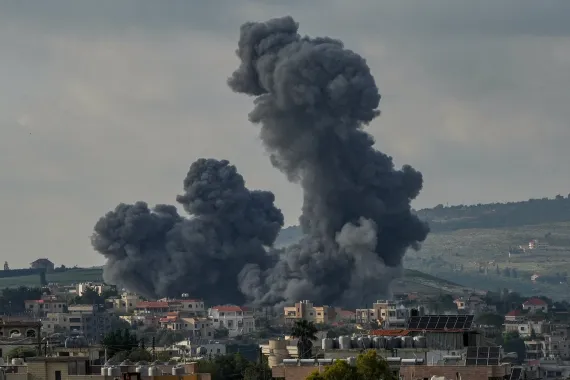
Israel has shown no signs of slowing down its aerial campaign across Lebanon. On Saturday alone, Israeli airstrikes claimed the lives of at least 24 people, marking yet another deadly day in what has become a sustained and brutal bombardment.
The strikes, which have hit multiple parts of the country, are part of a broader military operation that has drawn growing international concern. Civilian infrastructure, residential neighborhoods, and key transit routes have all been impacted, leaving humanitarian conditions deteriorating rapidly.
While Israeli officials maintain that their operations are aimed at military targets, reports from the ground paint a different picture, with rising civilian casualties fueling regional and global outrage.
Fragile Ceasefire Between Iran and the US
Despite the chaos surrounding Israel’s military activity, the ceasefire between Iran and the United States is still holding — at least technically. However, sporadic skirmishes in the Strait of Hormuz threaten to undo months of careful diplomacy.
This narrow waterway, considered one of the most strategically important shipping passages in the world, has once again emerged as a central point of friction. Roughly a fifth of the world’s oil supply passes through the strait, making any disturbance there a global concern. Even small clashes can send ripples through international markets and diplomatic channels.
IRGC Issues Stark Warning to Washington
Iran’s Islamic Revolutionary Guard Corps (IRGC) has issued a sharp warning to the United States. According to a statement from the IRGC, any attack on Iranian oil tankers or commercial vessels will trigger immediate retaliation. Iran has threatened to respond by striking US military bases in the region as well as targeting what it called “enemy ships.”
The warning underscores Iran’s growing frustration with what it perceives as US-led pressure on its maritime trade. Tehran has long maintained that its commercial activity in international waters is legal and protected, and any move to obstruct it would amount to an act of aggression.
Washington Stays Cautiously Optimistic
In contrast, the US administration has expressed cautious optimism about the path forward. Officials in Washington have stated that they expect Tehran to respond to a recent proposal designed to end the war and reopen direct negotiations.
Although the details of the proposal have not been fully made public, sources suggest it includes provisions for de-escalation in maritime activity, restrictions on certain regional military deployments, and the possible resumption of broader nuclear talks. Whether Iran will accept the offer remains an open question, but US diplomats appear willing to keep the door open for dialogue.
CENTCOM’s Aggressive Maritime Operations
While diplomacy continues on one front, the US military is taking a hard line at sea. According to US Central Command (CENTCOM), American forces have actively disabled four ships and prevented 58 commercial vessels from entering or leaving Iranian ports since April 13.
These operations are part of Washington’s broader strategy to choke off what it considers illicit Iranian shipping activity, particularly the export of sanctioned oil and the movement of materials suspected of supporting Iran-backed armed groups in the region.
For Tehran, however, these actions are seen as direct provocations — a viewpoint that increases the risk of further confrontation, even as the ceasefire technically remains intact.
The Strait of Hormuz: A Powder Keg
The Strait of Hormuz has long been described as one of the most dangerous chokepoints in modern geopolitics. Iranian officials have repeatedly emphasized its strategic significance, with one senior figure even comparing its importance to that of an atomic bomb.
Any disruption here can have global economic consequences, particularly affecting oil prices and shipping routes that connect Asia, Europe, and the Americas. With both sides continuing to operate in close proximity, even minor miscalculations could spark a wider crisis.
Mounting Casualties Across the Region
Across the Middle East, casualty figures continue to climb. Tracking systems monitoring the conflict report rising numbers of deaths and injuries from US and Israeli operations targeting Iran-linked positions, as well as from Iran’s responses and the broader fallout in Lebanon.
Civilians are bearing the brunt of the violence, with humanitarian organizations warning of an emerging crisis. Hospitals in conflict zones are reportedly overwhelmed, supply lines have been disrupted, and displaced families are struggling to find safety amid ongoing airstrikes and military operations.
A Region Holding Its Breath
The current Iran war live update paints a picture of a region simultaneously seeking peace and bracing for further conflict. On one hand, diplomatic conversations remain alive, with both Washington and Tehran signaling — at least cautiously — that talks could restart. On the other hand, military operations are intensifying, threats are escalating, and civilian suffering continues to grow.
The coming days are likely to be critical. Whether the IRGC follows through on its threats, whether Israel scales back its bombing campaign in Lebanon, and whether Iran formally responds to Washington’s latest proposal will shape the trajectory of this conflict in major ways.
What’s at Stake Globally
Beyond the immediate human cost, the world is watching closely because of the global implications. Oil markets remain volatile, international shipping routes are at risk, and major powers — including China, Russia, and European nations — are quietly recalibrating their positions.
A miscalculation in the Strait of Hormuz, an unexpected escalation in Lebanon, or a breakdown in US-Iran communications could quickly transform the current standoff into a much larger regional war.
For now, fragile diplomacy holds, but the warnings from Iran’s IRGC, the continued bombing of Lebanon, and the aggressive posture of US naval forces all suggest that the situation remains one wrong move away from full-scale escalation. The world watches, hopes, and prepares for whatever comes next.
Author